How to Light Wall Art in Any Room Like a Gallery
The Heva Team
Art Curators & Interior Design Enthusiasts · February 20, 2026 · 15 min read
The right lighting transforms wall art from background decoration to gallery-quality centerpiece.
You finally hung that canvas you love, but something feels off. The colours look flat, shadows mask the details, and the piece disappears into the wall after sunset. The problem is almost never the art itself. It is the lighting. This guide walks you through professional techniques for illuminating wall art at home, from choosing the right fixture type to dialling in colour temperature, so every piece commands the attention it deserves.
Ready to browse? Explore our full canvas art collection, or keep reading for our top picks and expert tips on gallery-quality lighting.
Picture Lights: The Classic Gallery Look
Picture lights are the most recognisable art lighting fixture, and for good reason. A picture light mounts directly above the frame and casts a focused downward beam that bathes the canvas in even illumination. Most models clamp onto the frame itself or attach to the wall with a small bracket, keeping the installation clean.
When sizing a picture light, aim for a fixture that spans 50 to 75 percent of the artwork width. For a canvas that measures 76 cm (30 inches) wide, that means a light between 38 and 57 cm (15 to 22 inches). Position the light 10 to 15 cm (4 to 6 inches) above the top edge of the frame so the beam fans out evenly before it reaches the lower corners.
Brass and matte black finishes remain the most popular choices in 2026 because they complement both traditional oil-style prints and contemporary abstracts. According to Mullan Lighting's complete guide to picture lights, the ideal beam angle for a picture light is between 30 and 45 degrees, wide enough to cover the canvas without spilling excess light onto the surrounding wall.
If you already have art hanging and want to learn more about the display process, our complete guide to hanging wall art covers every fastener and placement technique you need.
Track Lighting: Flexible Spotlight Control
Track lighting gives you the ability to reposition individual heads whenever you rearrange your gallery wall. A single track rail mounted on the ceiling can hold three to five adjustable heads, each aimed at a different piece. This flexibility makes track systems ideal for collectors who rotate artwork regularly or add new pieces throughout the year.
Install the track 90 to 120 cm (36 to 48 inches) out from the wall so the light strikes each canvas at roughly a 30-degree angle. That 30-degree sweet spot, recommended by lighting designers and confirmed by Alcon Lighting's art lighting guide, minimises glare on the canvas surface while keeping frame shadows from creeping across the image.
Choose heads with a narrow beam spread of 10 to 25 degrees for spotlighting individual works, or switch to a wider 40-degree flood head when you want to wash an entire gallery wall evenly. Most modern LED track heads let you swap beam angles by changing a simple snap-on lens.
For inspiration on arranging multiple pieces under track lighting, take a look at our gallery wall layout guide for step-by-step placement rules.
Recessed Ceiling Spots and Wall Washers
Recessed downlights sit flush with the ceiling and disappear into the architecture, making them a favourite in modern and minimalist interiors. An adjustable gimbal recessed spot can tilt up to 35 degrees, letting you aim the beam precisely at a canvas without any visible hardware cluttering the sightline.
Position each recessed spot 60 to 90 cm (24 to 36 inches) from the wall. If the light is too close, you get a harsh hot spot at the top of the canvas and a dim fade at the bottom. Too far away and the beam misses the artwork entirely, lighting the floor instead. A spacing of 75 cm (30 inches) works well for standard 2.4-metre (8-foot) ceilings.
Wall washers are a variation that use an asymmetric reflector to spread light evenly from ceiling to baseboard. They are excellent when you have a long hallway or accent wall with several pieces at varying heights. Because the light is so uniform, wall washers reduce the drama of a single spotlight but make every canvas equally visible.
Working with Natural Light
Natural daylight offers the highest colour rendering of any light source, which is why museums with skylights often look so vivid. However, direct sunlight is the enemy of canvas prints. Prolonged UV exposure can cause colours to shift over 18 to 24 months, and even modern UV-resistant inks benefit from indirect light rather than a blast of midday sun.
Place canvas art on walls that receive reflected daylight rather than direct beams. A north-facing wall in the Northern Hemisphere gets steady, diffused light throughout the day without harsh glare. If your only available wall faces a window, hang sheer curtains or UV-filtering blinds that block at least 95 percent of ultraviolet radiation while still allowing soft ambient light through.
Pair natural light with a picture light or track head set to a warm 2700K. During the day the room feels bright and airy from the window. In the evening the dedicated art light takes over, keeping the canvas visible and creating a warm, inviting focal point.
LED vs Halogen: Which Bulb Wins?
Halogen bulbs were the gallery standard for decades because they produce a warm, continuous spectrum that makes reds and oranges pop. They render colour beautifully, with a perfect CRI of 100. The downside is heat. A single 50-watt halogen MR16 generates enough warmth to raise surface temperature on a nearby canvas by 5 to 8 degrees Celsius, and they consume five to seven times more electricity than an equivalent LED.
LED technology has closed the quality gap dramatically. Modern LEDs with a CRI above 90 and an R9 value above 80 reproduce deep reds and warm tones almost as faithfully as halogen. They run cool to the touch, last 25,000 to 50,000 hours compared to halogen's 2,000 to 4,000 hours, and consume a fraction of the energy. For home art lighting in 2026, LED is the clear winner on every practical metric.
When shopping for LED bulbs, look for three numbers on the box: CRI of 90 or higher, colour temperature between 2700K and 3500K, and wattage equivalent that matches the fixture lumen output to your room size. A 7-watt LED that produces 500 lumens is enough to light a canvas up to 76 cm (30 inches) wide in a room with moderate ambient light.
Colour Temperature and CRI Explained
Colour temperature is measured in Kelvin (K) and describes how warm or cool a light source appears. At 2700K the light is a cosy amber, similar to candlelight. At 4000K it shifts to a crisp neutral white, closer to midday sunlight. For wall art in living rooms and bedrooms, 2700K to 3000K creates the most flattering glow. In a home office or gallery-style corridor, 3500K adds clarity without feeling clinical.
CRI, or Colour Rendering Index, measures how accurately a light source reproduces the full spectrum of colours compared to natural sunlight. A CRI of 100 is perfect. Most standard household LEDs score around 80, which is acceptable for general use but makes artwork look slightly washed out. Art-grade LEDs score 93 to 97, and the difference is immediately visible in rich blues, deep reds, and subtle gradients.
Think of colour temperature as the mood and CRI as the truthfulness. You can have a warm 2700K bulb with a poor CRI of 75 that casts a nice glow but makes your navy-blue abstract look brownish. Or you can have the same 2700K with a CRI of 95 that keeps every shade exactly as the artist intended. Always prioritise CRI when lighting artwork.
Choosing the right size canvas also matters, so if you are still deciding on proportions, our wall art sizing guide breaks down the formulas for every room.
6 Canvas Prints That Shine Under Great Lighting
The following picks span a range of styles, palettes, and moods. Each one responds beautifully to dedicated lighting because of its colour depth, texture, or tonal contrast.
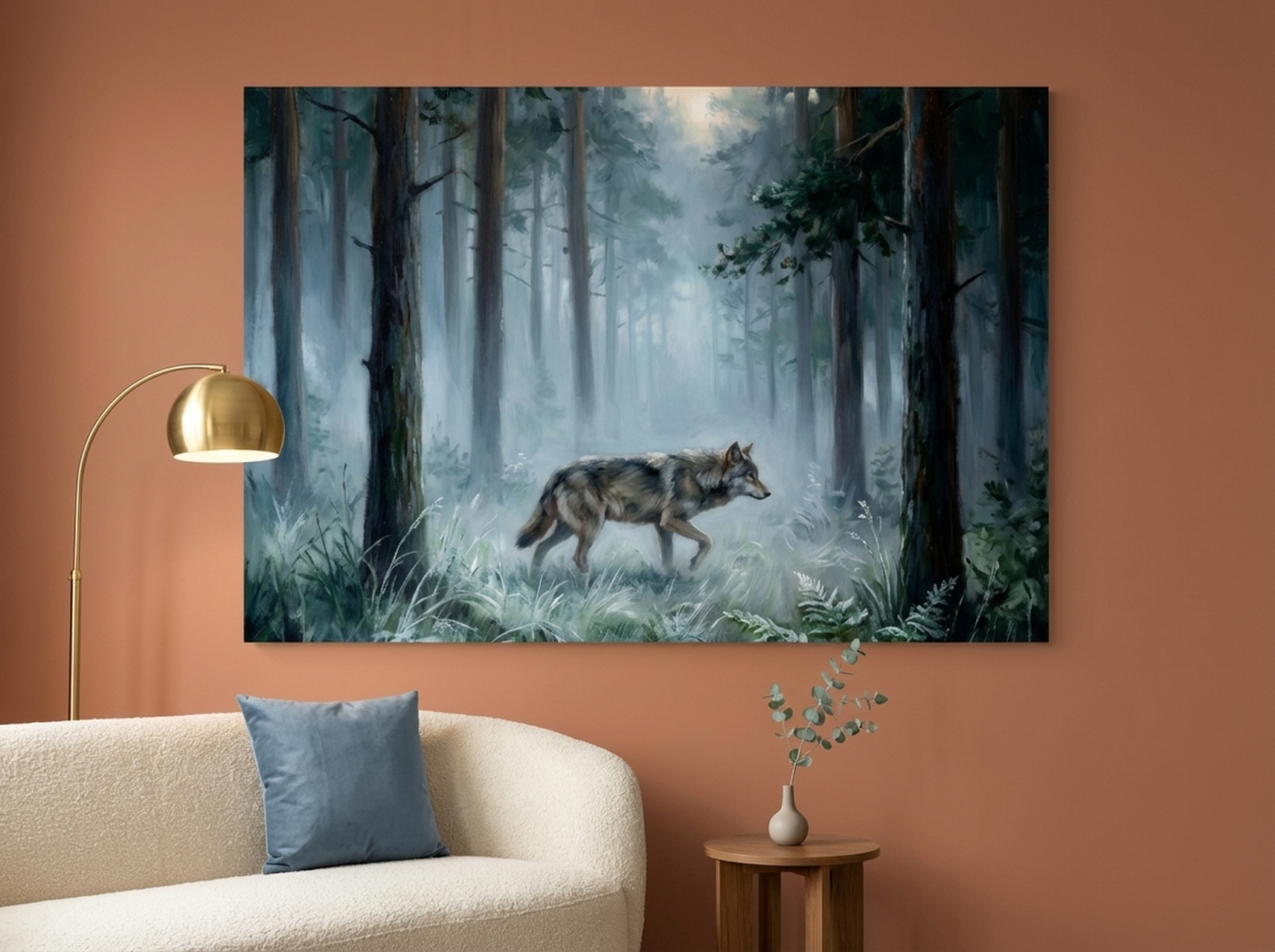
1. Wolf Canvas Wall Art | Atmospheric Moonlit Forest Painting
This atmospheric wolf portrait uses a moody palette of midnight blue, silver mist, and soft moonlight whites. A picture light set to 3000K draws out the silver fur detail without washing out the dark forest backdrop. Hang it in a dimly lit living room or reading nook where the contrast between shadow and highlight creates a sense of depth. The cool tones make it an excellent partner for grey or navy accent walls.
2. Lotus Flower Canvas Wall Art | Gold Leaf Black Minimalist Print
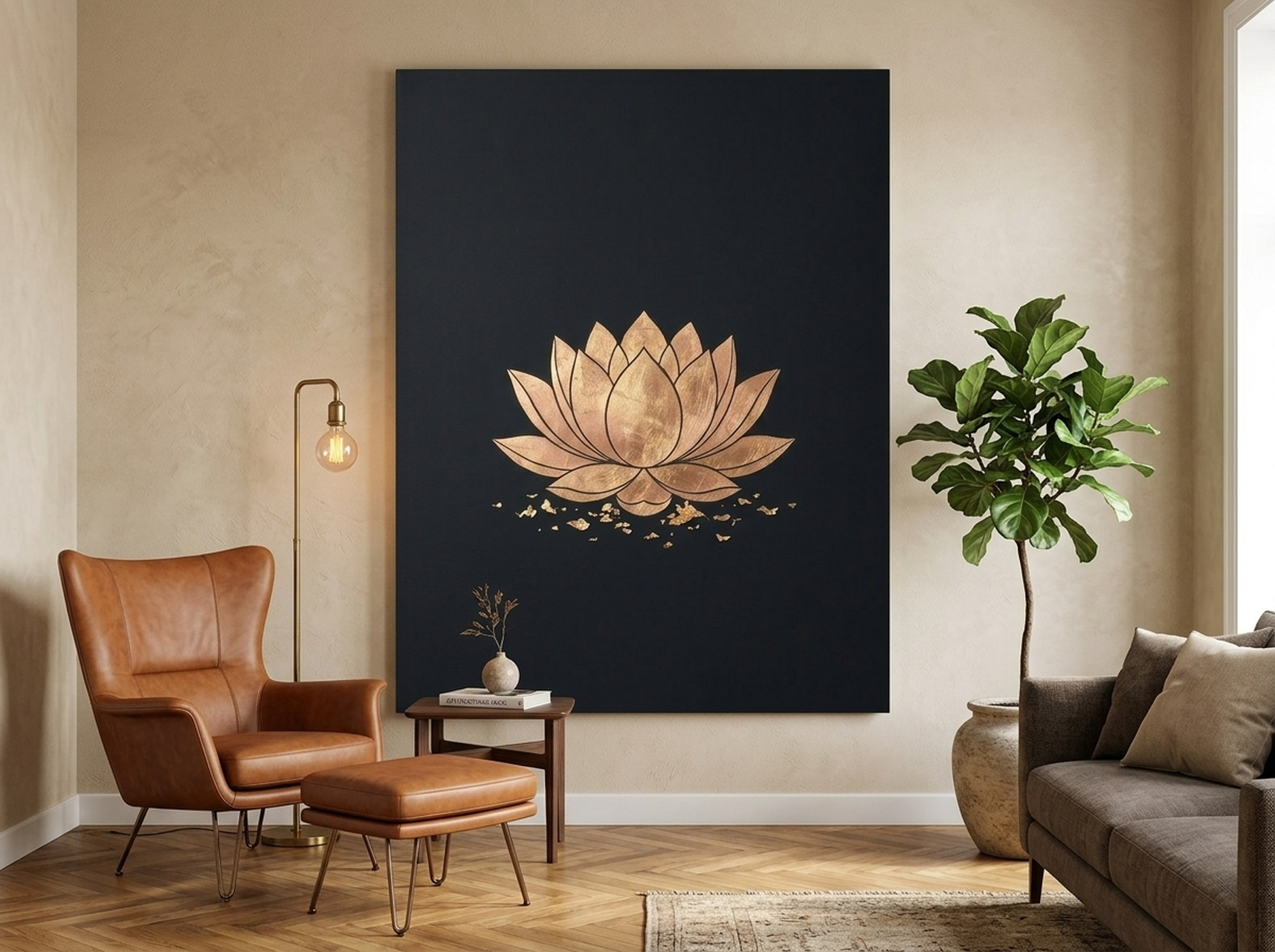
The deep black background of this lotus print absorbs ambient light, making the gold leaf details shimmer under a focused spotlight. Use a narrow 15-degree beam LED track head at 2700K to create a jewel-like glow across the metallic accents. This piece thrives in bedrooms and meditation spaces where low ambient light lets the gold leaf catch every photon. Position the spotlight 75 cm (30 inches) from the wall for even coverage.
View the Lotus Flower Canvas Wall Art
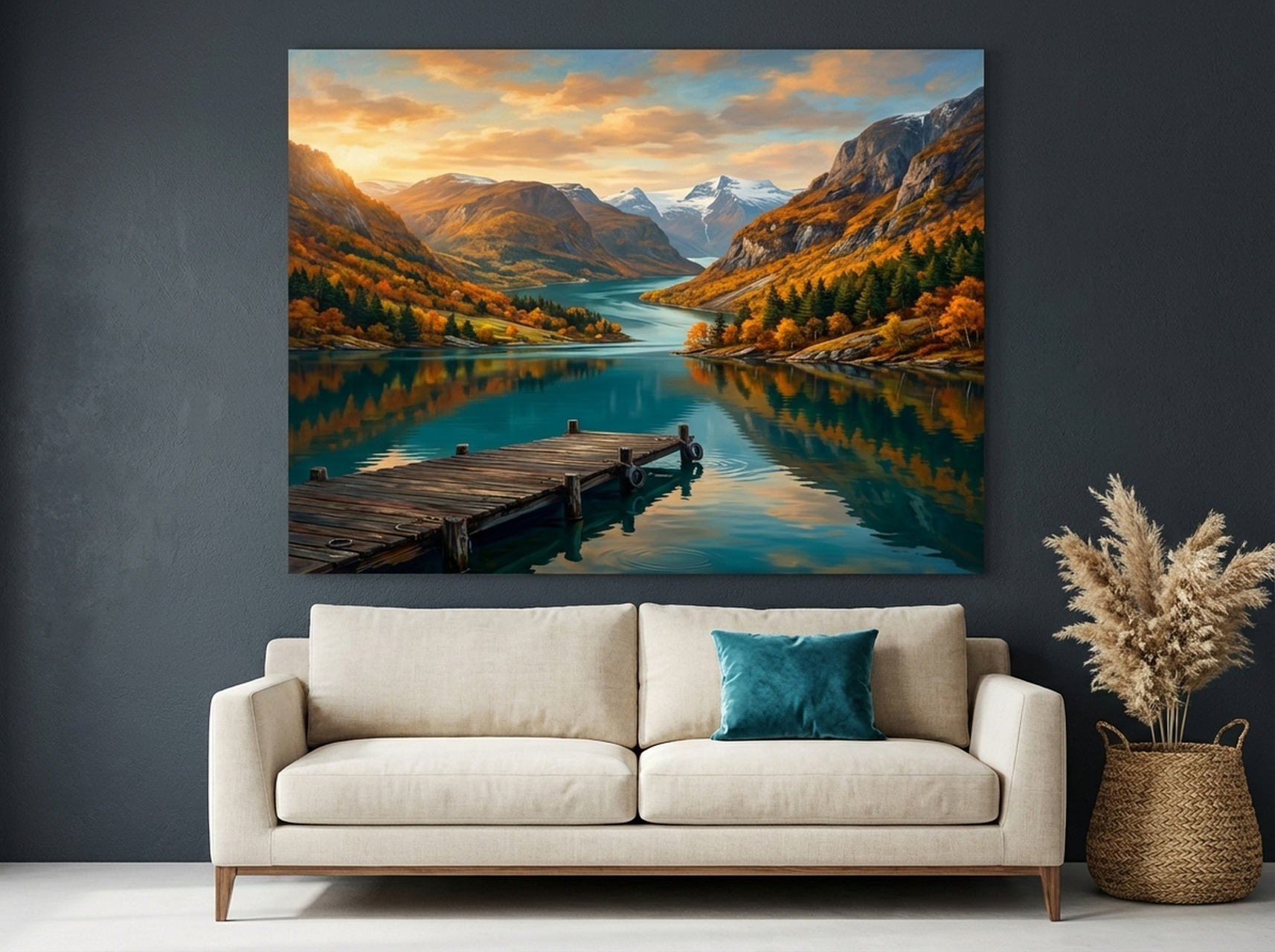
3. Landscape Canvas Wall Art | Norwegian Fjord Mountain Painting
Rich crimson peaks and molten gold reflections make this fjord landscape a masterclass in warm colour response. A wall washer set to 3000K with a CRI above 93 will bring out every layered mountain ridge and make the water glow. Pair it with a wide living room wall that catches indirect daylight during the afternoon. The warm palette makes this piece a natural anchor above a sofa in earth-toned or Scandinavian-style rooms.
View the Norwegian Fjord Canvas Wall Art
4. Geometric Texture Panels Canvas Wall Art | Walnut Gold Abstract Print
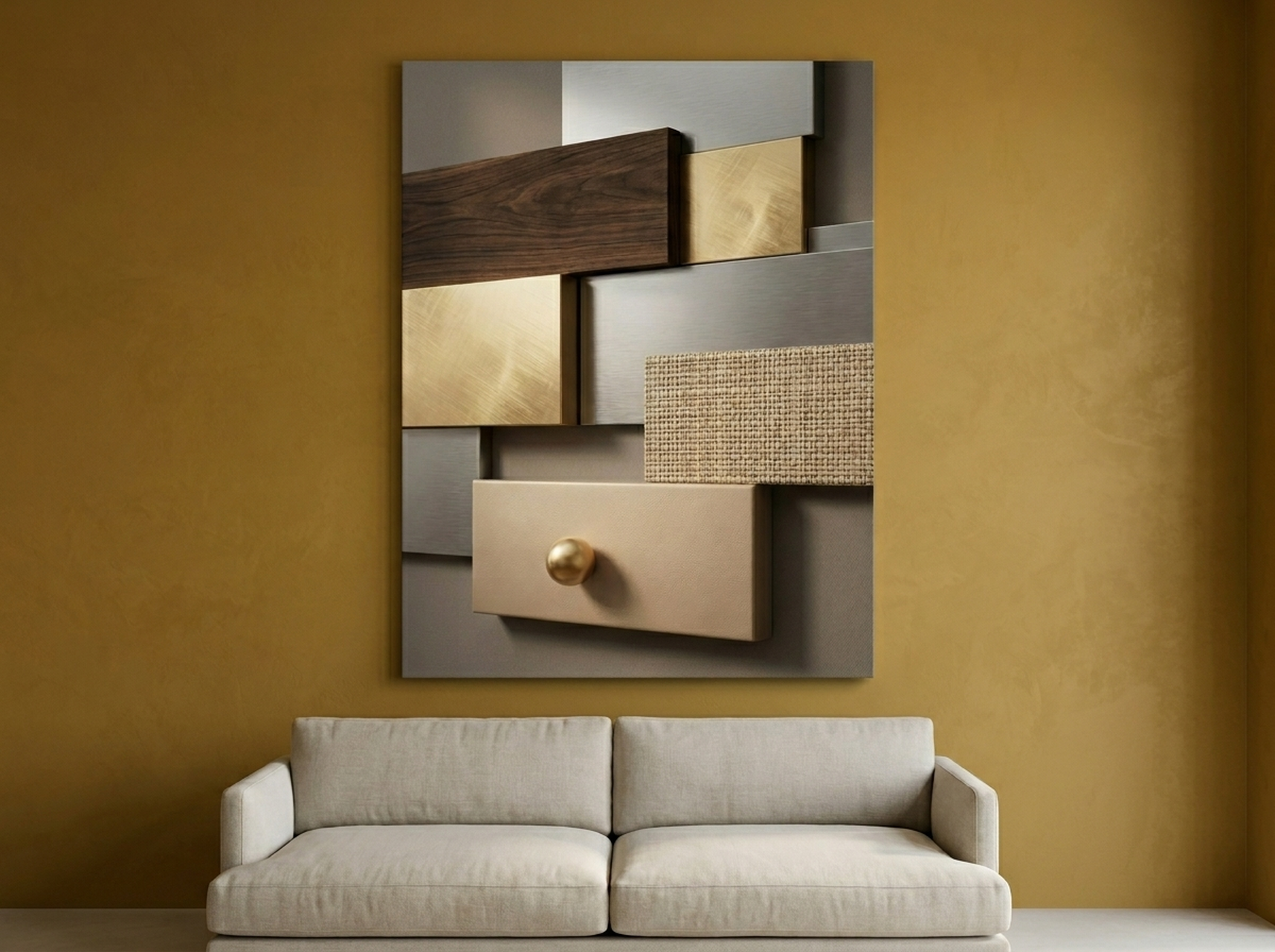
The interplay of matte walnut tones and brushed gold lines gives this geometric abstract a tactile quality that changes with light angle. Side-lighting or angled track heads reveal the texture in the brushwork, casting micro-shadows that make the panels look three-dimensional. Use two track heads at opposing 20-degree angles for a cross-lit effect. This piece suits modern living rooms, loft spaces, and home offices where architecture is clean and angular.
View the Geometric Texture Panels Canvas Wall Art
5. Red Stag Canvas Wall Art | Autumn Forest Oil Painting
Deep amber foliage and the stag's warm russet coat reward high-CRI lighting. A picture light at 2700K turns this autumn forest scene into a glowing window to the outdoors. The rich red tones benefit specifically from an R9 value above 80 on your LED, which preserves the distinction between the stag's mahogany antlers, the burnt-orange leaves, and the mossy green undergrowth. Hang it in a hallway or dining room where it can serve as a conversation anchor under warm evening light.
View the Red Stag Canvas Wall Art
6. Cherry Blossom Canvas Wall Art | Sculptural Relief White Gold Print
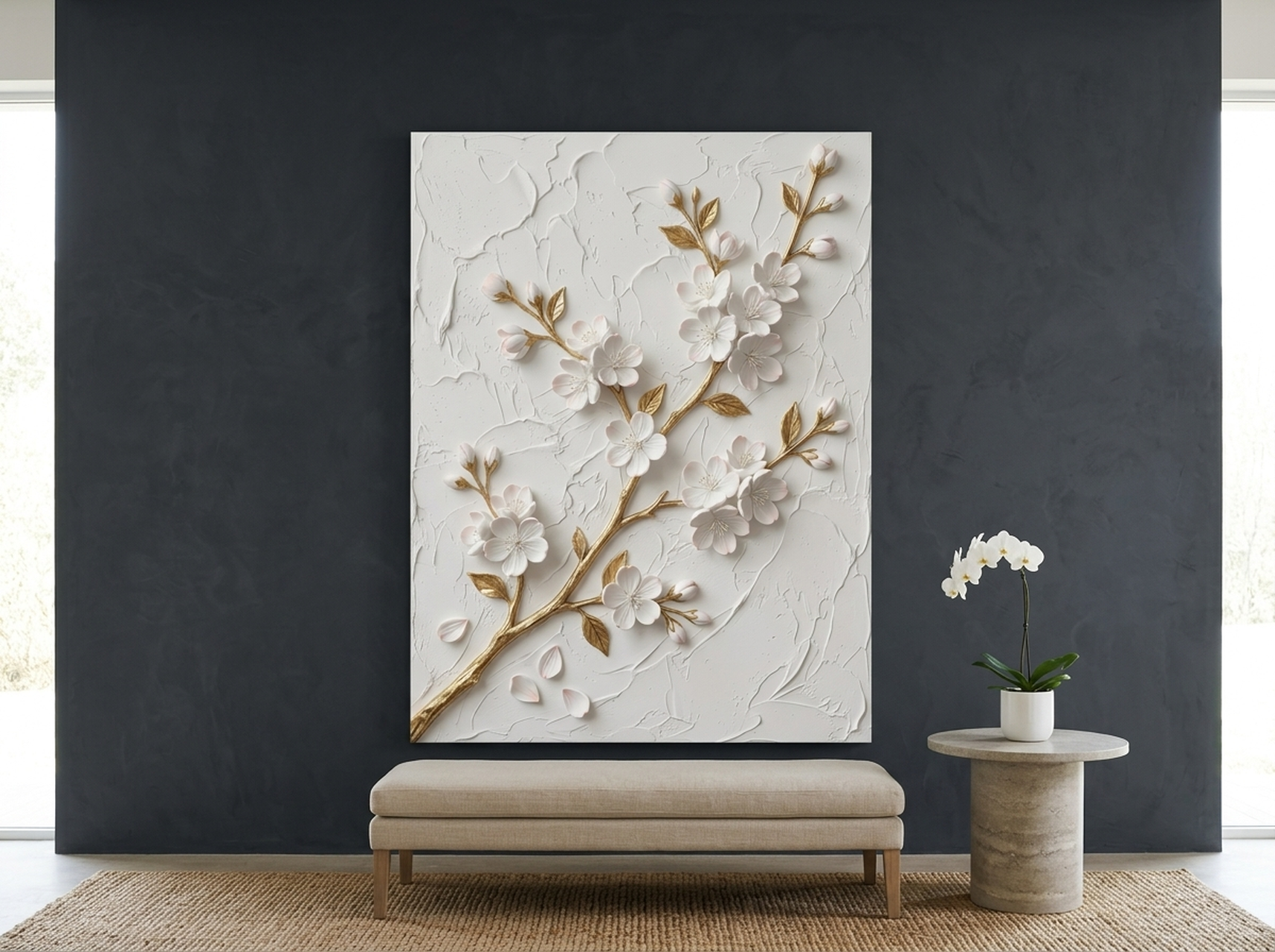
This cherry blossom print mimics sculptural bas-relief with raised-texture effects in cream and soft gold. Under a picture light, the raised elements catch light along their upper edges and cast gentle shadows below, creating a three-dimensional illusion. Set your bulb to 3000K for a warm daylight feel that enhances the soft pink blossoms. It pairs beautifully in bedrooms, spa-inspired bathrooms, or feminine office spaces alongside blush and ivory decor.
View the Cherry Blossom Canvas Wall Art
Lighting Placement Guide with Measurements
Getting the angle and distance right is more important than buying the most expensive fixture. Here are the key numbers every homeowner should know.
The 30-Degree Rule
Aim your light so that the beam hits the centre of the canvas at a 30-degree angle from vertical. On a standard 2.4-metre (8-foot) ceiling with art centred at 150 cm (59 inches) from the floor, that puts your ceiling fixture about 75 cm (30 inches) out from the wall. This angle prevents glare on glass-covered prints and keeps frame shadows off the canvas surface.
Picture Light Distance
Mount a picture light 10 to 15 cm (4 to 6 inches) above the top edge of the frame. If the light sits too close, the top third of the canvas will be over-exposed while the bottom fades into shadow. If it is too far above, you lose intensity and the beam may spill onto the wall above the frame.
Track Head Spacing
For a gallery wall with multiple canvases, space track heads 60 to 90 cm (24 to 36 inches) apart. Each head should light one piece. If two canvases are hung close together, you can split the difference with a wider flood head centred between them, but the result is always more dramatic with individual spots.
Recessed Spot Offset
Recessed gimbal spots work best 60 to 90 cm (24 to 36 inches) from the wall on a 2.4-metre (8-foot) ceiling. For higher ceilings of 2.7 to 3 metres (9 to 10 feet), move the spot to 90 to 120 cm (36 to 48 inches) from the wall to maintain the 30-degree angle.
Lumen Guidelines by Canvas Size
A small canvas under 50 cm (20 inches) needs 300 to 400 lumens. A medium canvas of 50 to 100 cm (20 to 40 inches) needs 500 to 700 lumens. A large canvas over 100 cm (40 inches) needs 800 to 1,200 lumens. These figures assume a room with moderate ambient lighting. In a dark hallway or media room, you can reduce intensity by 20 to 30 percent for a more intimate effect.
5 Common Lighting Mistakes to Avoid
1. Using Cool White Bulbs in Warm-Toned Rooms
A 5000K daylight bulb above a warm-toned oil painting will make the reds look grey and the golds look green. Always match the bulb temperature to the artwork palette. Warm art (reds, ambers, golds) looks best under 2700K to 3000K. Cool art (blues, silvers, whites) can handle 3500K to 4000K.
2. Mounting Fixtures Too Close to the Canvas
When a picture light sits directly against the frame, it creates a bright hot spot at the top and leaves the bottom two-thirds in shadow. Keep at least 10 cm (4 inches) of clearance between the fixture and the frame edge for even light distribution.
3. Ignoring Glare on Glass or Glossy Finishes
Canvas prints from HEVA ship unglazed, so glare is rarely an issue. But if you add a protective acrylic sheet or frame under glass, you must adjust the light angle to avoid a white reflection blocking the image. Tilting the artwork forward by 5 to 10 degrees or raising the light source often solves the problem.
4. Forgetting the Dimmer
A dimmer switch costs less than a dinner out and transforms how your art looks at different times of day. Full brightness for daytime viewing, 60 percent for evening relaxation, and 30 percent for a soft nighttime glow. Make sure your LED bulbs are labelled as dimmable before installing a dimmer switch.
5. Lighting Art from Below
Uplighting wall art creates unnatural shadows that reverse the visual weight of the composition. Gallery professionals almost always light from above because it mimics natural overhead sunlight, which our eyes expect. The only exception is floor-standing sculptures or very large leaning canvases that benefit from a low accent spot.
Frequently Asked Questions
What is the best colour temperature for lighting canvas wall art?
For most canvas prints, 2700K to 3000K provides a warm, inviting glow that enhances rich colours without distortion. If your art has predominantly cool tones like blues and silvers, you can go up to 3500K for added clarity. Avoid anything above 4000K in a residential setting as it creates an institutional feel.
How far should a picture light be from the top of the frame?
Mount the picture light 10 to 15 cm (4 to 6 inches) above the top edge of the frame. This gap allows the beam to spread evenly across the full height of the canvas. Closer than 10 cm causes hot spots; farther than 15 cm wastes light intensity on the wall above.
Do LED picture lights damage canvas prints?
LED lights emit virtually no ultraviolet radiation and very little heat, making them safe for prolonged use near canvas prints. Halogen bulbs, by contrast, produce both UV and significant heat that can degrade inks and warp canvas over time. LED is the recommended choice for art preservation.
Can I use recessed ceiling lights to illuminate wall art?
Yes, provided you use adjustable gimbal recessed spots rather than fixed downlights. Fixed downlights point straight down and miss the wall entirely. Gimbal spots tilt up to 35 degrees, letting you aim the beam precisely at the canvas. Position them 60 to 90 cm (24 to 36 inches) from the wall on a standard ceiling.
How many lumens do I need to light a large canvas?
A canvas over 100 cm (40 inches) wide needs 800 to 1,200 lumens from its dedicated light source. This assumes moderate room lighting. In a dark room or hallway, 600 to 800 lumens is sufficient. For a small piece under 50 cm (20 inches), 300 to 400 lumens works well.
Should I light every piece of art on a gallery wall?
Not necessarily. In a gallery wall arrangement, lighting two or three anchor pieces creates visual hierarchy and keeps the display from looking like a showroom. Use a wider wall washer for overall illumination and add individual spots only on the pieces you want to emphasise most.
Quick Reference Table
| Product | Best For | Dominant Colours | Link |
|---|---|---|---|
| Wolf Moonlit Forest | Living room, reading nook | Midnight blue, silver, white | View |
| Lotus Flower Gold Leaf | Bedroom, meditation space | Black, gold, deep green | View |
| Norwegian Fjord Mountains | Living room, above sofa | Crimson, gold, deep blue | View |
| Geometric Texture Panels | Home office, loft space | Walnut, gold, charcoal | View |
| Red Stag Autumn Forest | Hallway, dining room | Amber, russet, mossy green | View |
| Cherry Blossom Relief | Bedroom, spa bathroom | Cream, blush pink, soft gold | View |
Light Your Art, Love Your Space
Great lighting is the difference between wall art that fades into the background and a canvas that stops guests in their tracks. Start with one dedicated picture light or track head, set it to 2700K to 3000K with a CRI above 90, and aim it at a 30-degree angle. You will notice the transformation the moment you flip the switch.
Ready to find the perfect canvas to light? Browse the HEVA Unique Art Gallery collection and discover prints crafted to look extraordinary under any light.