Modern Wall Art Color Guide: Colors That Pop
The Heva Team
Art Curators & Interior Design Enthusiasts · March 14, 2026 · 15 min read
The secret to wall art that pops is color contrast. Here is exactly how to match art to your walls, furniture, and existing decor using proven color wheel strategies.
You found the perfect piece of wall art online, but when it arrived, something felt off. The colors clashed with your sofa, fought against your wall paint, and turned your carefully designed room into a visual argument. The problem was not the art itself. It was a color mismatch between the art and the room it entered.
This guide gives you a practical framework for picking wall art colors that actually work with your walls, furniture, and existing decor. No art degree required. Just proven color pairing strategies that interior designers use every day.
Ready to browse? Explore our full wall art collection or keep reading for our top picks and expert tips.
What You Will Find in This Guide
- Color Wheel Basics for Wall Art Buyers
- Complementary vs. Analogous Color Schemes
- Matching Art to Your Wall Paint Color
- Creating Focal Points With Contrast
- Our Top 6 Color-Forward Art Picks
- Wall Color Pairing Guide
- 5 Common Color Mistakes to Avoid
- Frequently Asked Questions
- Quick Reference Table
Color Wheel Basics Every Wall Art Buyer Needs
The color wheel is the single most useful tool for choosing art that coordinates with your room. Developed from Isaac Newton's original 1704 optics experiments, the modern 12-hue wheel organizes colors by their relationship to one another. You do not need to memorize the entire wheel. You just need to understand three relationships.
Primary colors (red, blue, yellow) sit evenly spaced around the wheel. Secondary colors (orange, green, purple) are created by mixing two primaries. Tertiary colors fill the gaps between primaries and secondaries, giving us shades like teal, coral, and chartreuse. Every color in your room and in your art falls somewhere on this wheel.
The practical value of the color wheel is that it reveals which colors will harmonize and which will clash. Colors that sit near each other feel calm together. Colors that sit across from each other create energy and contrast. Both are useful, depending on the effect you want. According to the Rocky Mountain College of Art and Design, understanding these basic relationships is the foundation of every successful interior color scheme.
One crucial detail most guides skip: every color has a temperature. Warm colors (reds, oranges, yellows) advance toward the viewer and make spaces feel cosier. Cool colors (blues, greens, purples) recede and make spaces feel larger. When choosing art, matching the temperature of the art to the temperature of the room matters as much as matching specific hues.
Complementary vs. Analogous: Which Color Scheme Fits Your Room?
These two color relationships are the workhorses of wall art selection. Understanding when to use each one will solve 90 percent of your color-choice dilemmas.
Complementary Colors: High Energy, High Impact
Complementary colors sit directly across from each other on the color wheel. Blue and orange. Red and green. Yellow and purple. When placed side by side, they intensify each other and create visual vibration. In wall art, complementary schemes make a piece "pop" off the wall with maximum impact.
Use complementary color art when you want the piece to be the undeniable focal point of the room. A painting with deep blue and burnt orange tones will command attention on a neutral wall. The contrast is immediate and exciting.
The risk with complementary colors is overstimulation. If your room already has a lot of pattern and color, adding complementary-color art can tip the room into visual chaos. The solution: let the art carry the complementary pairing while keeping the rest of the room relatively neutral. The industry standard is the 60-30-10 rule, where 60 percent of the room uses a dominant neutral, 30 percent uses a secondary color, and 10 percent uses an accent. Your art can deliver that powerful 10 percent accent through complementary contrast.
Analogous Colors: Effortless Harmony
Analogous colors sit next to each other on the wheel. Blue, blue-green, and green. Red, red-orange, and orange. Yellow, yellow-green, and green. These combinations feel natural and soothing because they share underlying pigments.
Art with an analogous palette is the safest choice for rooms that already have strong color. A living room with sage green walls and a teal rug pairs beautifully with art that moves through blue-green to emerald tones. There is no competing contrast, just a gentle flow of related hues that makes the room feel intentional. If you want to learn more about how specific colors affect mood, our Psychology of Colors in Wall Art guide goes deeper into the emotional side.
Triadic Colors: Balanced Boldness
A triadic scheme uses three colors equally spaced around the wheel, forming a triangle. Red, blue, and yellow is the classic triad. Orange, green, and purple is another. Triadic schemes deliver visual richness without the tension of a direct complementary clash. They work well in social spaces like living rooms and dining rooms where you want energy without aggression.
The key to a successful triadic scheme in art is letting one color dominate (roughly 60 percent of the canvas), using the second as support (30 percent), and reserving the third as a small but vivid accent (10 percent). Art that spreads all three colors equally can look busy rather than bold.
Matching Wall Art to Your Wall Paint Color
Your wall color is the single biggest factor in how your art will look once it is hung. A painting that looks stunning in a gallery or on a website can fall flat against the wrong wall. Here is how to match art to the most popular wall colours.
White and off-white walls are the easiest to work with. Nearly any art color pops against white because the wall provides maximum contrast without competing. The danger is choosing art that is also very pale, which can look washed out. Go bold. Rich jewel tones, deep earth colours, and saturated primaries all sing on white walls.
Gray walls have a hidden trick: every gray leans either warm (toward beige) or cool (toward blue). Check your gray's undertone by holding a pure white card against it. If the gray looks slightly pink or yellow by comparison, it is warm. If it looks slightly blue or green, it is cool. Match your art's colour temperature to your gray's undertone. Warm art on warm gray walls. Cool art on cool gray walls. Mismatching temperatures is the number one reason art looks "off" on gray walls.
Beige and cream walls pair best with art that includes warm earth tones: terracotta, amber, olive, warm gold, and burnt sienna. Avoid art with heavy blue or cool gray tones unless you want deliberate contrast. The safest approach is art where at least one dominant color falls in the warm neutral family.
Navy and dark walls need art with enough lightness to stand out. Pieces with white, gold, cream, or bright saturated accents work well. Avoid art that is mostly dark toned because it will blend into the wall and lose all visual definition. Light-framed art on a dark wall creates an elegant gallery effect. For more on matching art to your room's furniture, see our guide on how to choose wall art that matches your furniture.
Green walls (sage, olive, forest) are trending strongly in 2026 interiors. Green walls pair beautifully with art featuring warm metallics (gold, copper, bronze), complementary reds and pinks, or analogous blue-green tones. Avoid art that is the exact same shade of green as your wall because it creates a flat, camouflaged look.
Creating Focal Points With Contrast
Contrast is what makes art visible on a wall. Without sufficient contrast between the art and its surroundings, even a beautiful painting becomes wallpaper that nobody notices. There are three types of contrast to manage.
Value contrast (light vs. dark) is the most important. The human eye perceives value differences before it perceives colour differences. Art that is significantly lighter or darker than the wall it hangs on will always stand out, regardless of color. If your walls are pale, darker art creates a natural focal point. If your walls are dark, lighter art draws the eye. A good rule: the art should be at least three to four shades lighter or darker than the wall on a standard value scale (0 to 10).
Colour contrast comes from hue differences. A warm-toned painting on a cool-toned wall, or vice versa, creates instant visual interest. The larger the distance between the art's dominant colour and the wall's colour on the colour wheel, the stronger the contrast.
Saturation contrast is about intensity. A highly saturated, vivid painting against a muted, desaturated wall creates a spotlight effect. This is why a bright abstract piece can transform a room with pale greige walls. The art is not just a different colour; it is a different level of colour intensity entirely.
For the strongest focal point, combine all three: an art piece that is darker, warmer, and more saturated than its surrounding wall. For a subtle focal point, use just one type of contrast while keeping the other two similar to the wall.
Our Top 6 Color-Forward Art Picks
Each of these pieces demonstrates a different colour strategy. Use them as templates for thinking about how colour relationships work in real rooms.
1. Nefertiti Stained Glass Canvas Wall Art
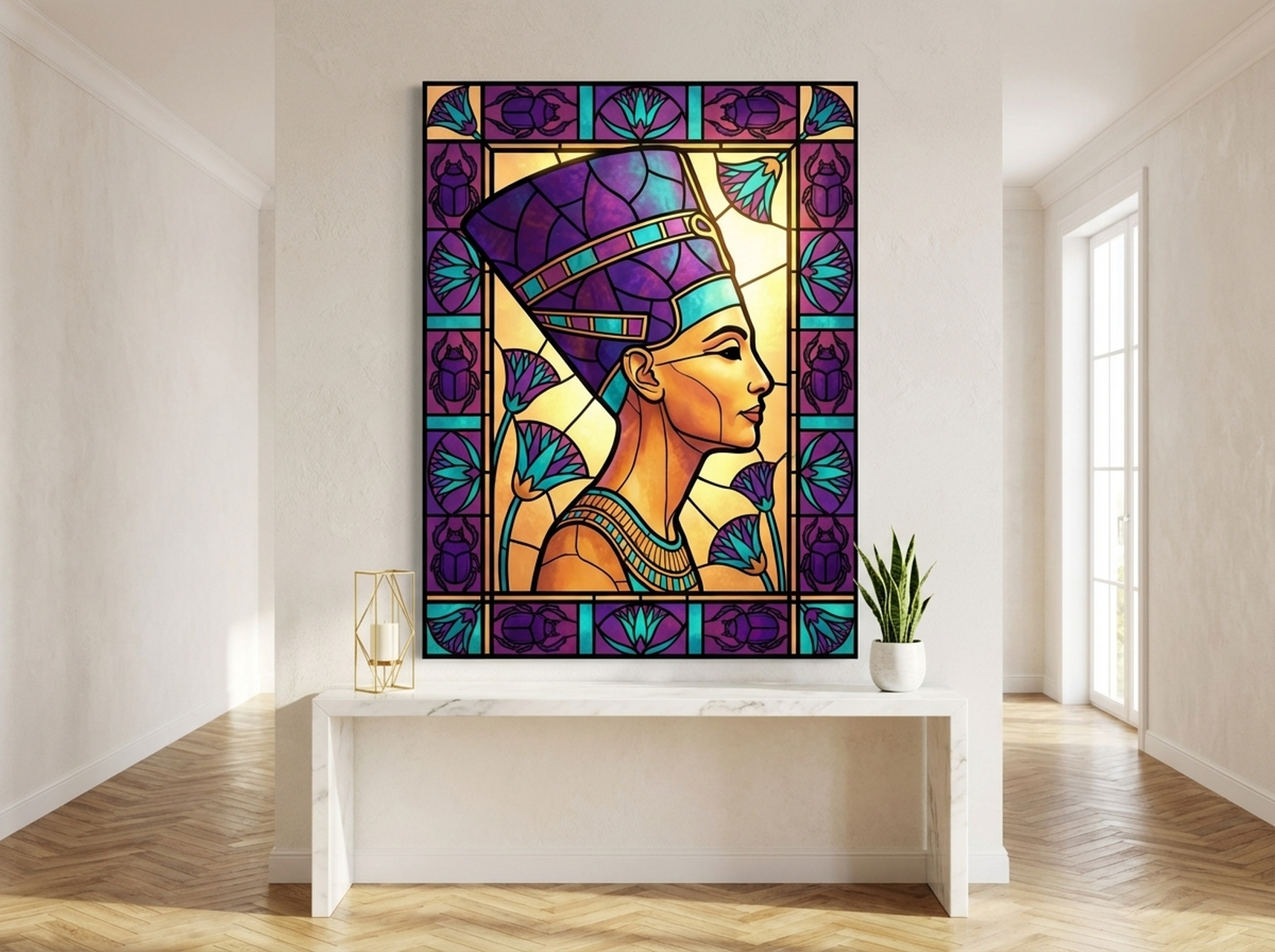
This piece is a masterclass in triadic colour. Purple, turquoise, and gold are distributed across the composition with the confidence of a stained glass window. The purple dominates, the turquoise accents, and the gold highlights create sparkle. Hang this on a white or cream wall and it becomes the room's jewel box. The triadic balance means it introduces multiple colours without feeling chaotic, making it easy to pull accent cushions or vases in any one of those three hues. It suits bold living rooms, eclectic dining spaces, and hallways where you want a conversation starter.
View the Nefertiti Stained Glass
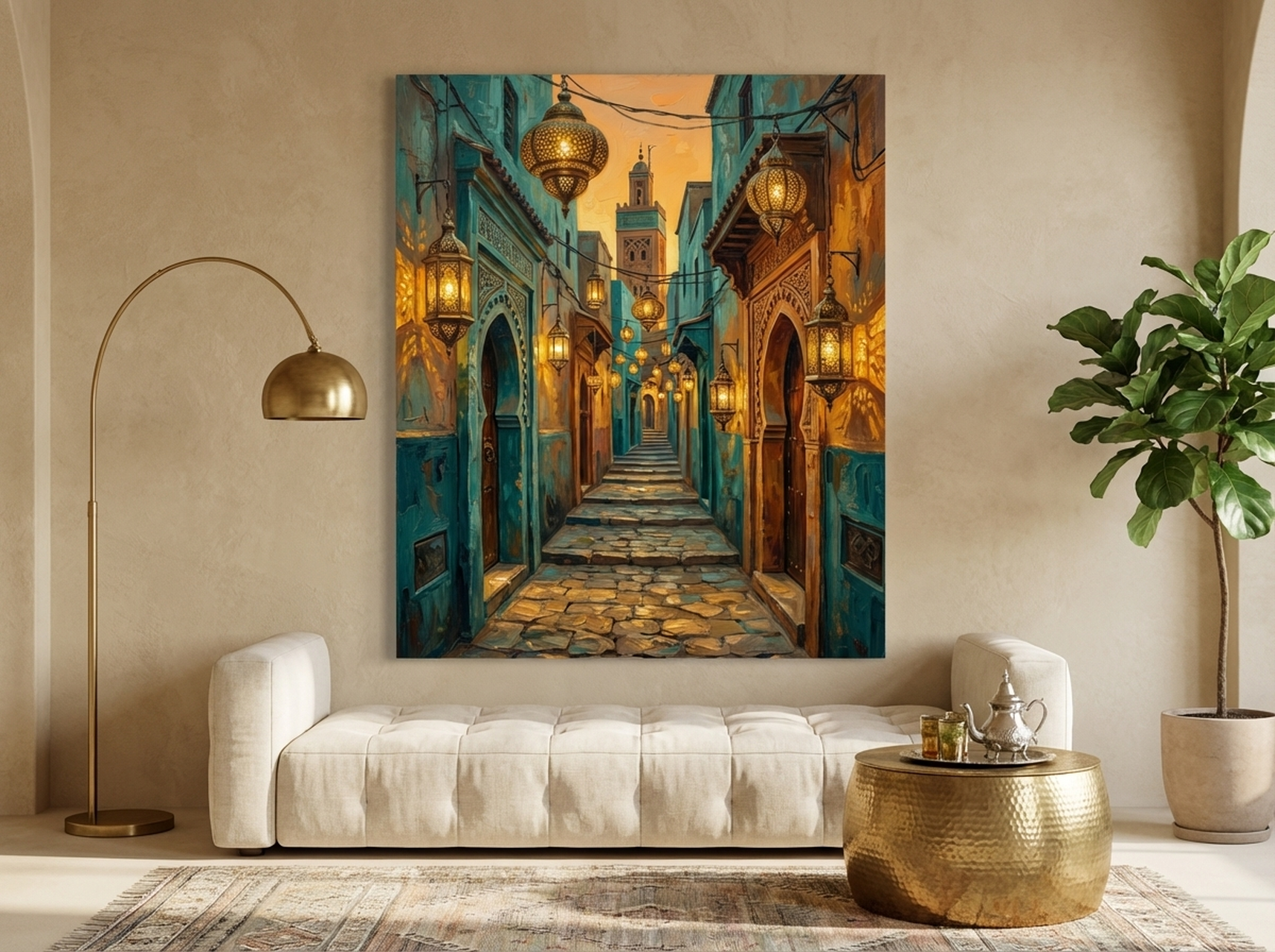
2. Moroccan Medina Canvas Wall Art
Warm analogous colours at their finest. This piece flows from teal through gold to orange and terracotta in a natural gradient that mirrors a Moroccan sunset. The colour temperature is overwhelmingly warm, making it an ideal partner for beige, cream, or terracotta walls. The small touches of teal prevent it from feeling one-note and give you a cool accent to echo in a throw pillow or ceramic vase. This is the kind of piece that makes a neutral room feel instantly warm and travelled. Best suited for living rooms, dining rooms, and entryways where you want an inviting atmosphere.
3. Northern Lights Canvas Wall Art
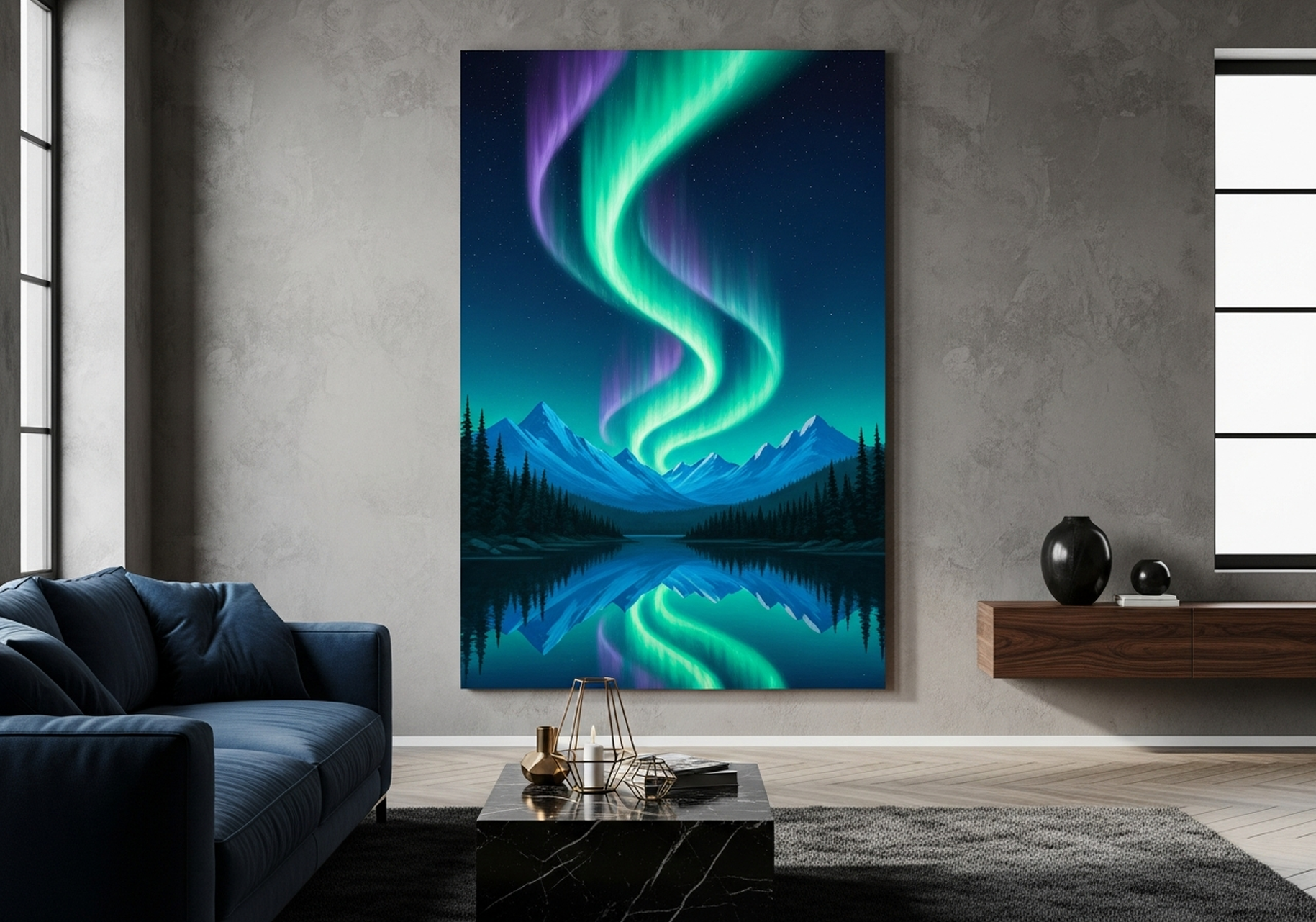
Cool analogous perfection. Navy, turquoise, green, and purple flow into each other exactly as they do in a real aurora. Every colour in this piece sits on the cool side of the wheel, creating a deeply calming effect that is ideal for bedrooms and meditation spaces. The dark value range means it works especially well on light walls where its deep tones create natural contrast. Pair it with silver or brushed nickel hardware, cool-toned textiles, and a white or pale blue duvet for a cohesive, restful bedroom palette.
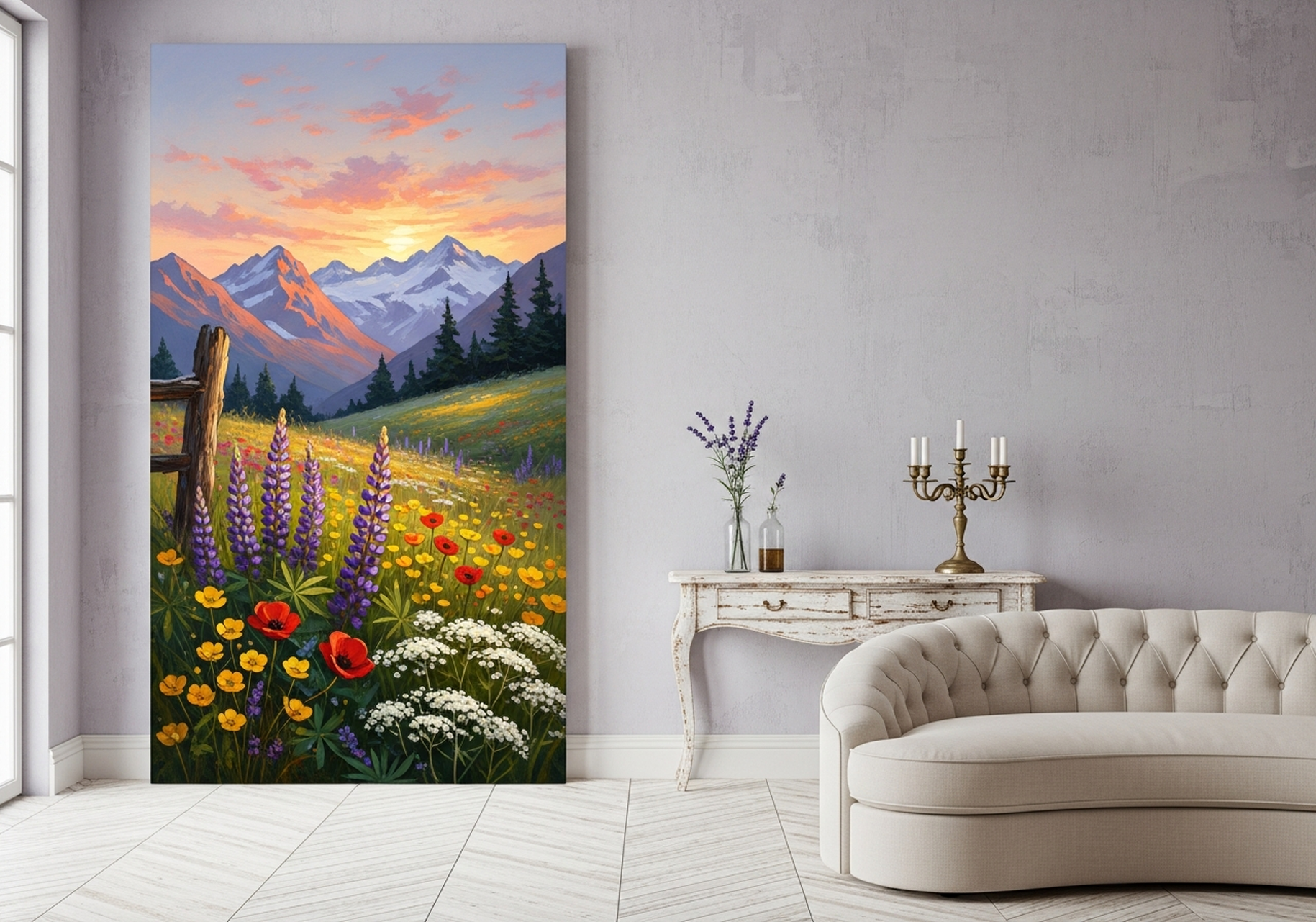
4. Wildflower Meadow Canvas Wall Art
This piece demonstrates how a busy multicolour palette can still feel harmonious when grounded by nature. The purples, lavenders, reds, yellows, and oranges all reference real wildflower pigments, which gives the eye permission to accept the variety. The key lesson here: nature-based colour palettes rarely clash because our brains have evolved to read them as coherent. Hang this in a room with one dominant neutral and pull a single accent colour from the painting for your throw pillows. Lavender is the most versatile choice. This piece shines in living rooms, sunrooms, and any space where you want a burst of seasonal energy.
5. Fluid Abstract Landscape Canvas Wall Art
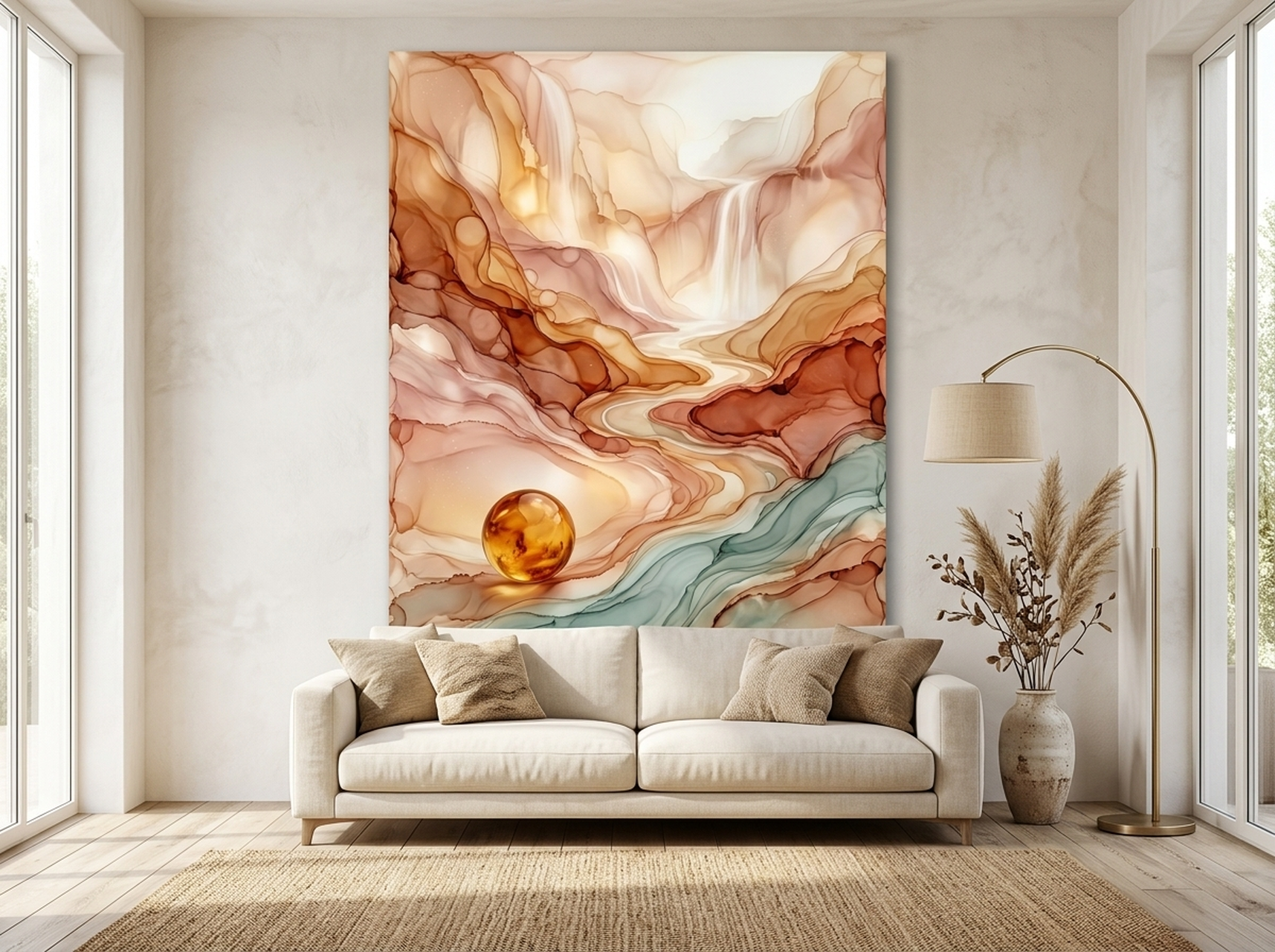
When you want colour that feels elevated but not aggressive, tonal art like this is the answer. Gold, cream, terracotta, and pink share a warm base, creating a monochromatic-adjacent palette that reads as luxurious and refined. The small teal accents provide just enough cool relief to keep the eye moving. This is the perfect piece for rooms where you want warmth without loudness. It pairs beautifully with linen upholstery, warm wood furniture, and brass accents. Ideal for master bedrooms, formal living rooms, and offices where sophistication matters.
View the Fluid Abstract Landscape
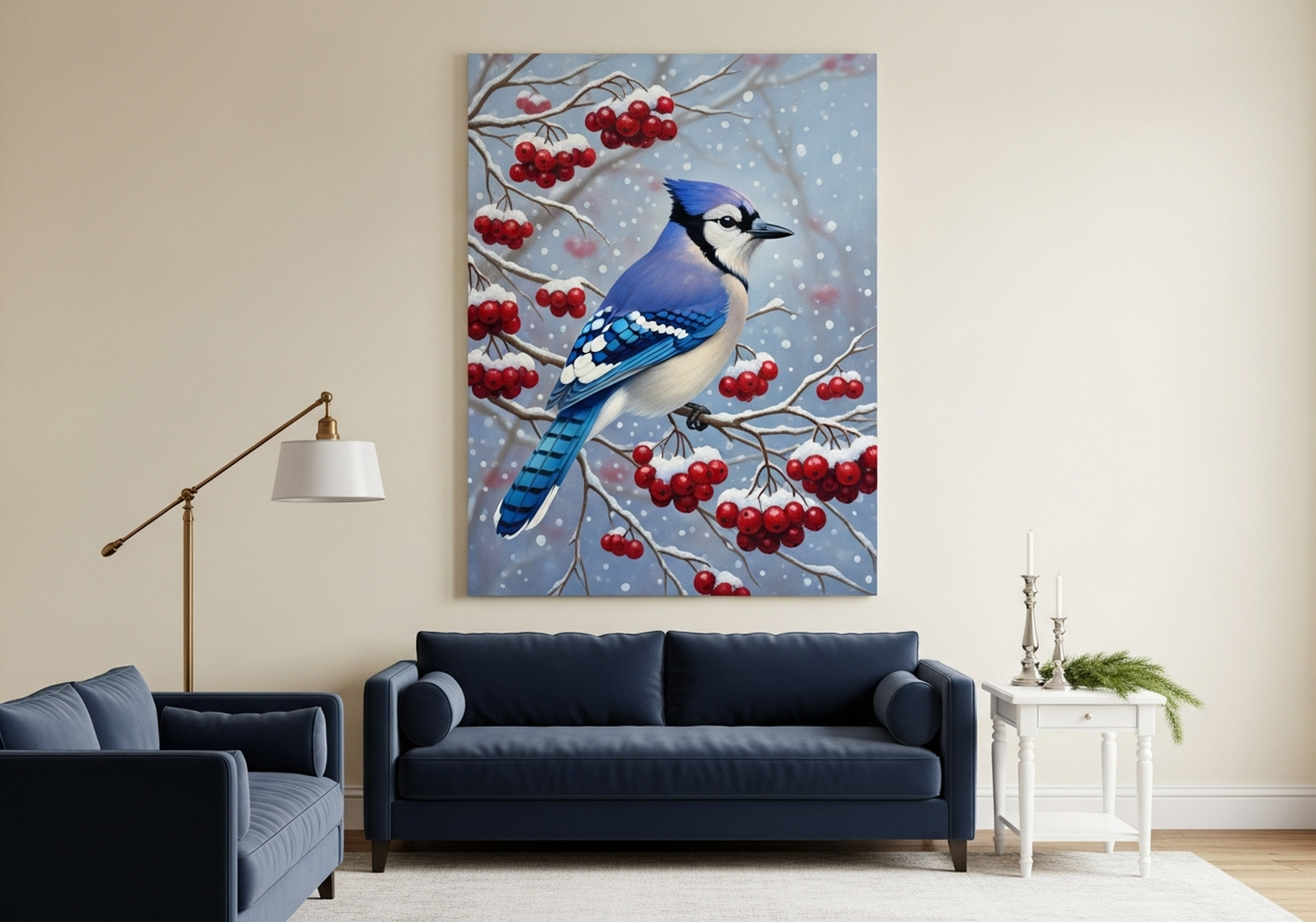
6. Blue Jay Winter Berry Canvas Wall Art
A textbook complementary pairing in nature: the blue jay's vivid blue feathers against red winter berries. Blue and red are near-complements on the colour wheel, and this piece uses the contrast to create energy that feels natural rather than forced. The white and cream in the background provide breathing room so the complementary pair does not overwhelm. This piece works in rooms with cool-toned walls where you want a controlled pop of warmth from the red berries. It is also seasonally flexible, looking equally at home in summer and winter settings. Perfect for hallways, reading nooks, and bedrooms where you want gentle colour interest.
View the Blue Jay Winter Berry
Wall Color Pairing Guide
Use this as a quick reference when shopping for art. Match your wall colour in the left column to the recommended art colour strategy on the right.
| Your Wall Colour | Best Art Colour Strategy | Colours to Avoid |
|---|---|---|
| White / Off-White | Bold saturated colours, jewel tones, deep earth tones | Very pale pastels (look washed out) |
| Warm Gray | Warm-toned art: terracotta, gold, blush, rust | Cool blues and purples (temperature clash) |
| Cool Gray | Cool-toned art: navy, teal, lavender, silver | Warm oranges and yellows (temperature clash) |
| Beige / Cream | Warm earth tones, warm metallics, olive, burgundy | Icy blues, stark white (looks cold) |
| Navy / Dark Blue | Gold, cream, bright saturated accents, light frames | Dark-toned art (disappears into wall) |
| Sage / Olive Green | Warm metallics, complementary pinks, analogous blue-greens | Same-shade green (camouflages) |
| Blush / Dusty Pink | Complementary greens, warm golds, neutral creams | Bright hot pink (clashes with muted tone) |
5 Common Colour Mistakes When Choosing Wall Art
1. Exact-Matching Art to Your Sofa
Trying to find art that is the identical shade of your sofa or curtains looks forced and retail-coordinated. Instead, choose art with colours in the same family but a different shade or saturation. If your sofa is navy, look for art with cobalt, steel blue, or denim tones rather than identical navy. Close relatives create a sophisticated connection. Exact matches create a showroom feeling.
2. Ignoring Colour Temperature
A piece of art can be the "right" colour on paper but feel completely wrong on the wall because its temperature clashes with the room. A cool-toned gray art print on a warm-toned greige wall will always look slightly off. Before buying, determine whether your room leans warm or cool, then choose art that matches that temperature. Hold a pure white card against your wall to reveal its undertone.
3. Choosing Colour in the Wrong Lighting
Art that looks perfect under the bright LEDs in a showroom can look completely different under the warm incandescent bulbs in your living room. North-facing rooms get cool, blue-tinted natural light. South-facing rooms get warm, golden light. Incandescent bulbs add yellow warmth. Cool-white LEDs add blue. Always evaluate art colour in the actual lighting of the room where it will hang, or at minimum, look at photos taken under similar conditions.
4. Using Too Many Unrelated Colours
Art with six or seven different colours that do not share a relationship on the colour wheel can overwhelm a room, especially if those colours do not relate to the existing palette. The strongest art typically uses two to four colours in a clear relationship (complementary, analogous, or triadic). Complexity should come from how those colours interact, not from the sheer number present.
5. Forgetting the 15 cm (6 Inch) Rule
When evaluating how art colours will work in your room, do not just look at the art in isolation. Hold the artwork (or a printed sample) at least 15 cm (6 inches) away from your wall, furniture, and textiles. Colours interact differently at different distances, and what looks like a match at arm's length may reveal a clash when placed directly next to your decor. This quick test takes seconds and prevents expensive mistakes. For help with sizing, see our guide to choosing the perfect wall art size.
Frequently Asked Questions
What is the easiest colour scheme for beginners choosing wall art?
Analogous colour schemes are the safest starting point. Pick art that features colours sitting next to each other on the colour wheel, such as blue, blue-green, and green, or red, orange, and yellow. These combinations feel naturally harmonious and are almost impossible to get wrong. If your room already has a dominant colour, choose art that includes that colour plus its two nearest neighbours on the wheel.
Should wall art match the wall paint or contrast with it?
Both approaches work, but for different effects. Matching (analogous) art to your wall colour creates a calm, unified feel and works best in bedrooms and relaxation spaces. Contrasting art against your wall colour creates a focal point and works best in living rooms, dining rooms, and hallways. The key is choosing intentional contrast rather than accidental clash. Make sure the art is at least three to four value steps lighter or darker than the wall for visible contrast.
How do I choose art colours for a room with lots of existing colour?
In a colourful room, choose art that acts as a "bridge" between your existing colours rather than introducing entirely new ones. Identify the two or three most prominent colours in your room (wall, sofa, rug) and look for art that contains at least two of those colours. This ties the room together without adding colour chaos. Neutral-toned art with small accents of your room's dominant colour is another safe option.
Does frame colour affect how art colours look on the wall?
Absolutely. The frame acts as a border between the wall and the art, and its colour influences how both are perceived. A black frame adds definition and weight, making art feel more graphic and formal. A white frame lightens the piece and blends with light walls. Espresso (dark brown) frames add warmth and pair well with earth-toned art. Natural wood frames feel casual and organic. As a general rule, match the frame to the coolest or warmest tone in the art for the most cohesive look.
Can I mix complementary and analogous colour schemes in the same room?
Yes, but do it with intention. A common professional approach is to use an analogous scheme for the room's base palette (walls, large furniture, textiles) and then introduce one complementary accent through your wall art. For example, a room with blue-green walls and teal upholstery (analogous) could feature art with warm coral or amber accents (complementary to teal). This gives you harmony in the big pieces and energy in the focal point.
How many colours should a piece of wall art have to look good?
The strongest wall art typically features two to four dominant colours in a clear relationship. Art with more colours can work beautifully if those colours follow a recognisable pattern from the colour wheel (triadic, split-complementary) or if they come from a natural scene where the brain accepts colour variety automatically, such as a garden, sunset, or forest scene. Avoid art with five or more unrelated colours unless it is abstract work where the colour chaos is intentional and the room is otherwise neutral. As noted by Wit and Delight, understanding the relationships between colours matters more than limiting the count.
Quick Reference Table
| Product | Best For | Dominant Colours | Link |
|---|---|---|---|
| Nefertiti Stained Glass | Triadic colour pop on white walls | Purple, turquoise, gold | View |
| Moroccan Medina | Warm analogous on beige or cream walls | Teal, gold, orange, terracotta | View |
| Northern Lights | Cool analogous for bedrooms | Navy, turquoise, green, purple | View |
| Wildflower Meadow | Nature-based multicolour on neutral walls | Purple, lavender, red, yellow, gold | View |
| Fluid Abstract Landscape | Tonal luxury in formal spaces | Gold, cream, terracotta, pink | View |
| Blue Jay Winter Berry | Natural complementary for cool-toned rooms | Blue, navy, red, white | View |
Find Your Perfect Colour Match
The difference between art that pops and art that falls flat almost always comes down to colour relationships. Now that you understand complementary contrast, analogous harmony, triadic balance, and how wall paint affects every decision, you have the tools to choose with confidence. Start by identifying your wall colour's temperature, decide whether you want harmony or contrast, and let the colour wheel guide you to art that transforms your space.
Every piece in our collection ships as a gallery-quality framed canvas print, ready to hang, with free US shipping on all orders.
Browse the full wall art collection and find colours that pop