Minimalist Wall Art: Less Is More for Your Walls
The Heva Team
Art Curators & Interior Design Enthusiasts · February 27, 2026 · 14 min read
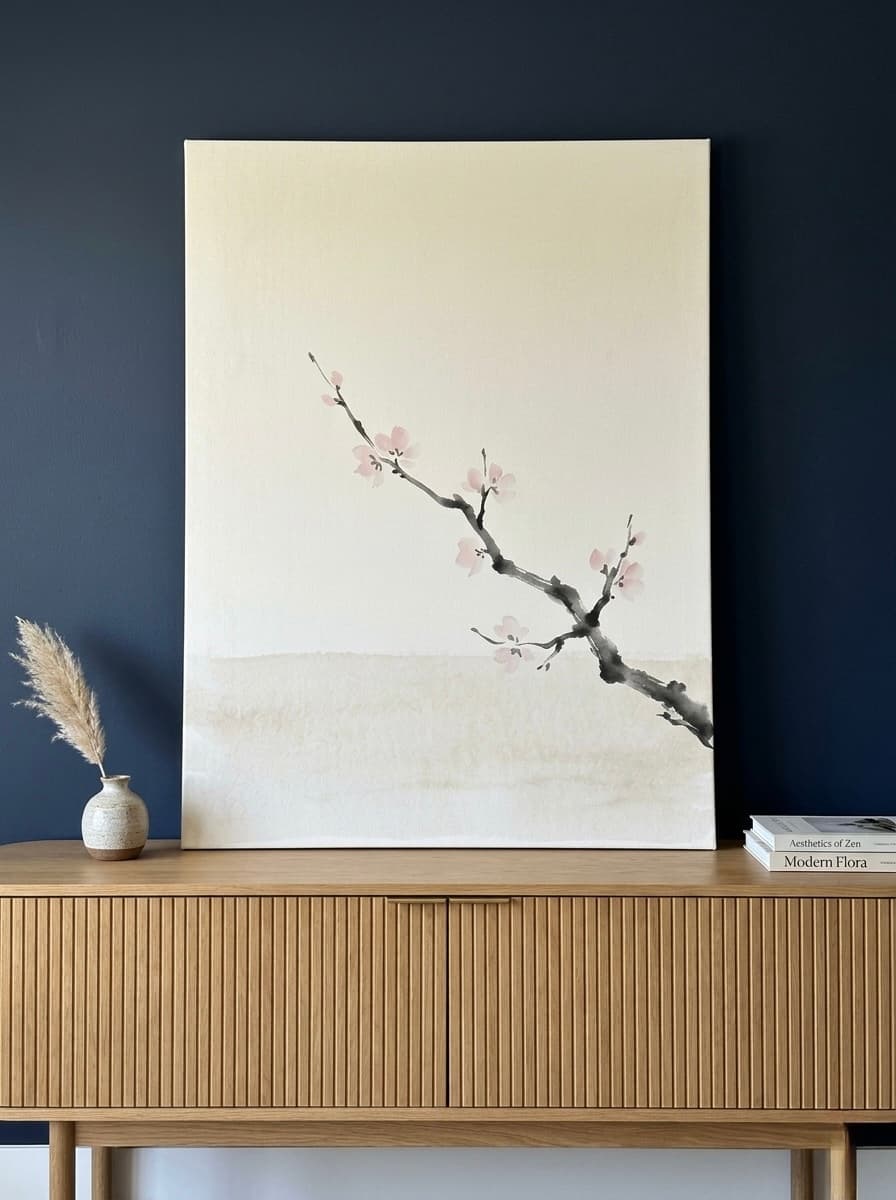
Minimalist wall art proves that simplicity is the ultimate sophistication on your walls.
You stare at a blank wall and feel the pull to fill it with something bold, layered, or dramatic. Minimalist wall art asks you to resist that impulse and embrace the quiet power of restraint. This guide walks you through the principles behind minimalist art, how to choose pieces that anchor a room without overwhelming it, and the exact measurements and placement rules that make simple art look intentional rather than bare.
Ready to browse? Explore our minimalist collection, or keep reading for our top picks and expert tips.
The Four Principles of Minimalist Wall Art
Minimalist art is not about having nothing on the walls. It is about choosing every element with purpose and eliminating everything that does not earn its place. Four principles guide every successful minimalist interior.
1. Intentional simplicity. Every line, colour, and shape serves a role. A minimalist canvas might feature a single botanical silhouette, a pair of cranes in ink, or a horizon rendered in just two tones. The goal is to strip away ornament until only the essential idea remains. The Japanese aesthetic concept of wabi-sabi, which finds beauty in imperfection and simplicity, has influenced Western minimalist art since the mid-twentieth century.
2. Restrained colour palette. Most minimalist pieces work within two to four colours. Neutrals such as charcoal, ivory, sand, and slate form the backbone, with a single accent colour (a brushstroke of gold, a wash of teal) providing contrast. According to colour psychology research, neutral tones lower perceived visual complexity by roughly 30 percent compared to multicolour compositions, making a room feel calmer the moment you walk in.
3. Clean lines and geometry. Whether the subject is organic (a bird, a flower) or abstract (overlapping rectangles, concentric circles), minimalist art relies on crisp edges and deliberate composition. Avoid art where the eye has nowhere to rest. If you can trace the main shape in under three seconds, the piece probably qualifies as minimalist.
4. Quality materials over quantity. One well-framed 61 by 91 cm (24 by 36 inch) canvas has more visual authority than a cluster of small unframed prints. Minimalism rewards investment in fewer, better pieces. All our canvases ship in a solid frame, ready to hang, so the piece looks finished the day it arrives.
Interior designers at Homes & Gardens note that the key to minimalist spaces is understanding that not every surface needs to be filled. The art of restraint turns each chosen piece into a deliberate focal point.
Why Negative Space Is Your Most Powerful Tool
Negative space is the empty area surrounding your art: the bare wall above the canvas, the gap between the frame edge and the nearest shelf, the breathing room between a print and the ceiling. Most people treat negative space as something to fill. Minimalist design treats it as an active element that amplifies whatever it surrounds.
When you hang a single 76 by 102 cm (30 by 40 inch) canvas on a 3-metre (10-foot) wall, the remaining space does the visual equivalent of turning down the volume in a noisy room. Your eye is drawn directly to the art because there is nothing competing with it. This is the principle behind gallery hanging: museums place major works with generous margins on every side, typically 60 to 90 cm (24 to 36 inches) of clear wall around each piece.
To use negative space well at home, follow the 60/40 rule. Roughly 60 percent of the wall should remain empty, with the art and any furniture occupying the remaining 40 percent. If you are working with a living room accent wall that measures 3 by 2.4 metres (10 by 8 feet), your art should occupy no more than 1.2 by 1 metre (4 by 3.3 feet) of that surface.
This matters for your wellbeing too. A 2019 study published in the Journal of Environmental Psychology found that rooms rated as visually simple scored significantly higher on occupant relaxation scales than cluttered equivalents. Negative space around art contributes directly to that simplicity.
If you are looking for guidance on how big your art should be relative to your wall and furniture, our guide to choosing the right wall art size breaks it down room by room.
Choosing a Single Focal Point
Minimalism lives or dies by the focal point. In a maximalist room, the eye bounces between objects, colours, and textures. In a minimalist room, the eye lands on one thing and stays. Your wall art is almost always that thing.
To choose the right focal point, start with the room's function. A bedroom benefits from soft, calming subjects: a single lotus flower in gold leaf on black, a fluid abstract landscape in muted amber and ivory. A living room can handle slightly more visual weight: a pair of cranes in ink, geometric texture panels in walnut and gold. A bathroom or hallway suits smaller, nature-inspired pieces: a teal egret, a sea turtle rendered in soft greys and blues.
Placement matters as much as the piece itself. Centre the canvas at 145 to 150 cm (57 to 60 inches) from the floor to the middle of the frame. This is the standard gallery hanging height, and it ensures the art sits at natural eye level for most adults. If you are hanging above a sofa, leave 15 to 20 cm (6 to 8 inches) of space between the top of the sofa back and the bottom edge of the frame.
One strong piece beats three mediocre ones. If you are torn between hanging two small canvases or one larger one, minimalism nearly always favours the single statement. You can always explore our gallery wall guide later if you decide to build outward from that anchor piece.
Minimalism vs Empty Walls: The Crucial Difference
There is a persistent misunderstanding that minimalism means bare white walls and an absence of personality. Nothing could be further from the truth. An empty wall is a wall that has not been designed. A minimalist wall is one where every decision, from the art to the paint colour to the amount of surrounding space, has been made deliberately.
Dezeen's 2026 interiors roundup highlights a shift toward what designers are calling intelligent restraint: spaces that borrow warmth from maximalism while stripping away its excess. That means your minimalist wall can include natural wood frames, a warm off-white background, and art that references organic forms. The key is that each element is there because you chose it, not because the shelf at the home store had a three-for-two deal.
Here are three signs your wall is minimalist (not just empty):
- The art has breathing room. At least 30 cm (12 inches) of clear wall on every side of the frame.
- The colour palette is cohesive. The art tones connect to the wall colour, furniture, and textiles within two or three steps on the colour wheel.
- The piece tells a story. Even a single abstract brushstroke conveys movement, energy, or calm. If someone asks why you chose that piece, you have a reason beyond matching the cushions.
If you want to learn more about how colour choices affect mood in any art style, read our guide to abstract wall art for living rooms.
Our 6 Minimalist Canvas Picks
Each piece below ships framed and ready to hang. We chose these six because they represent the full range of minimalist expression: botanical, geometric, figurative, abstract, and nature-inspired.
1. Lotus Flower Gold Leaf Canvas
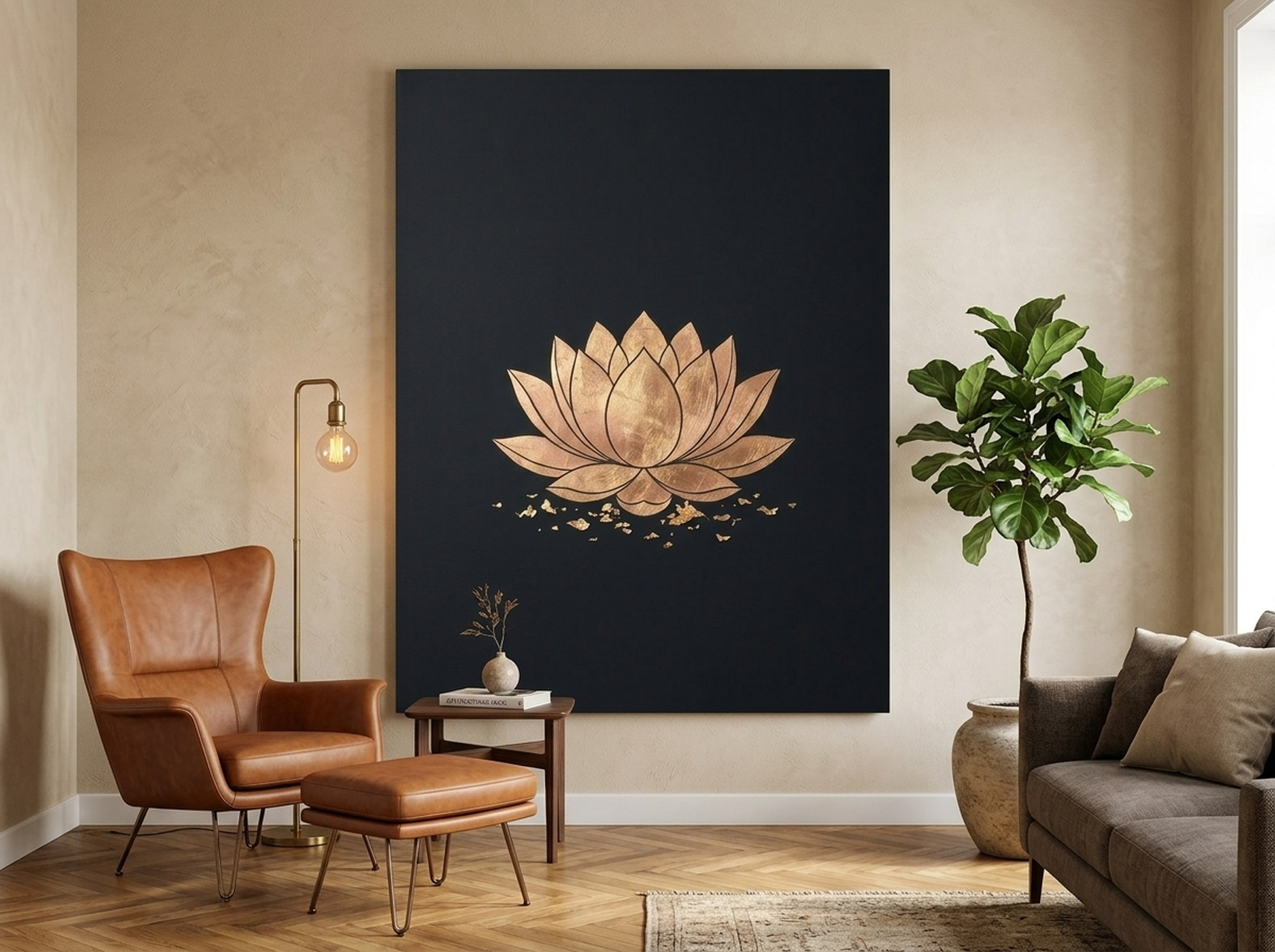
A single lotus rendered in luminous gold leaf against deep black. The contrast is striking without being loud: the gold catches ambient light throughout the day, shifting from warm honey in the morning to a cool metallic gleam at night. This piece works best in bedrooms, meditation spaces, or any room where calm is the priority. The black background absorbs visual noise, making surrounding furniture and textiles feel more deliberate. Pair it with linen bedding in ivory or sand for a cohesive zen atmosphere.
2. Yin Yang Cranes Japanese Ink Canvas
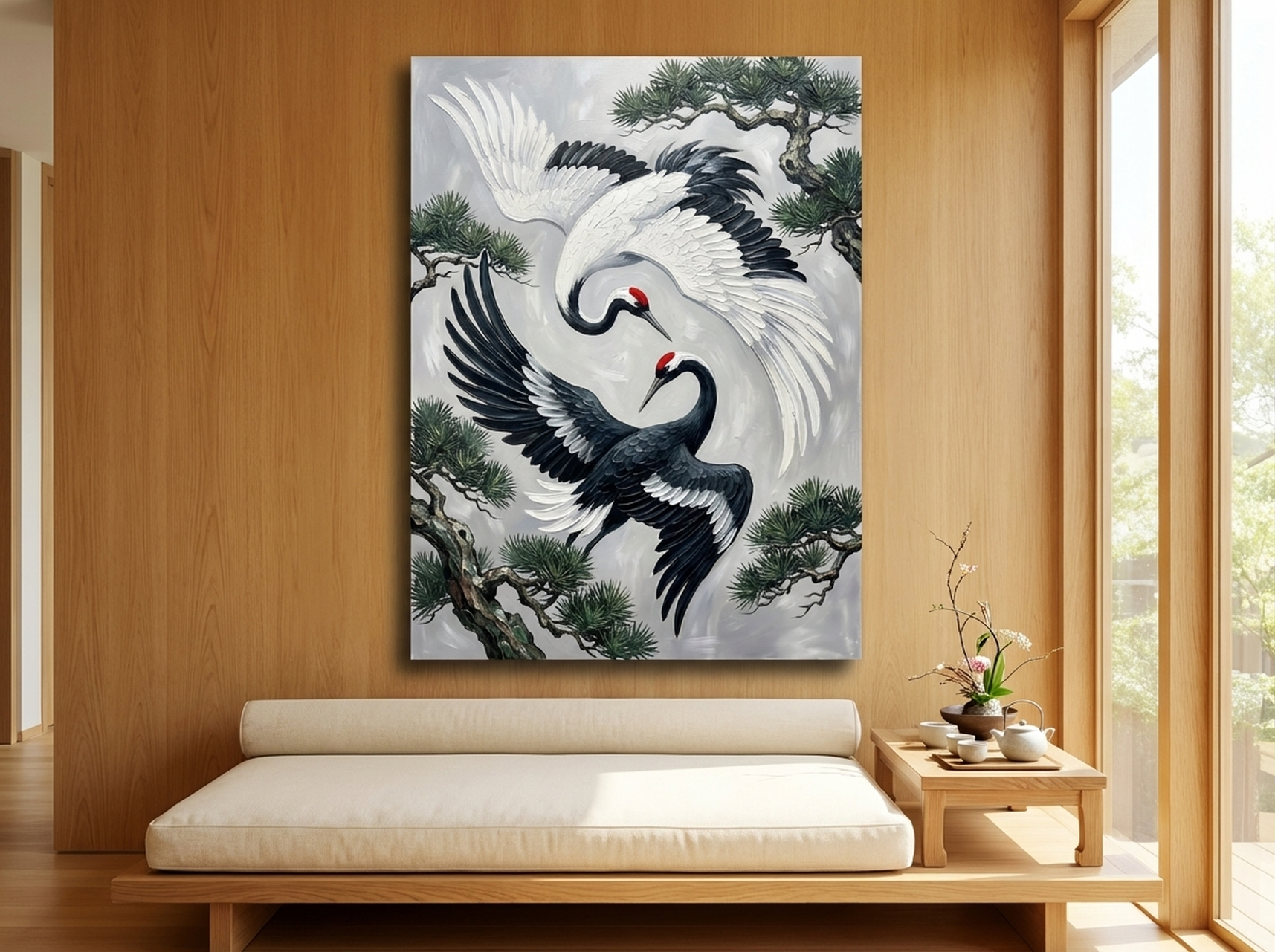
Two cranes form the yin-yang symbol in traditional Japanese ink style, using just three colours: black, white, and a controlled touch of red. The composition draws on centuries of East Asian brush painting, where every stroke is deliberate and unretouched. The circular arrangement guides the eye in a continuous loop, creating a meditative quality that suits living rooms, studies, and entryways. Hang it at standard gallery height, 145 to 150 cm (57 to 60 inches) from floor to centre, on a white or light grey wall to let the ink tones breathe.
View the Yin Yang Cranes Canvas
3. Egret in Flight Canvas
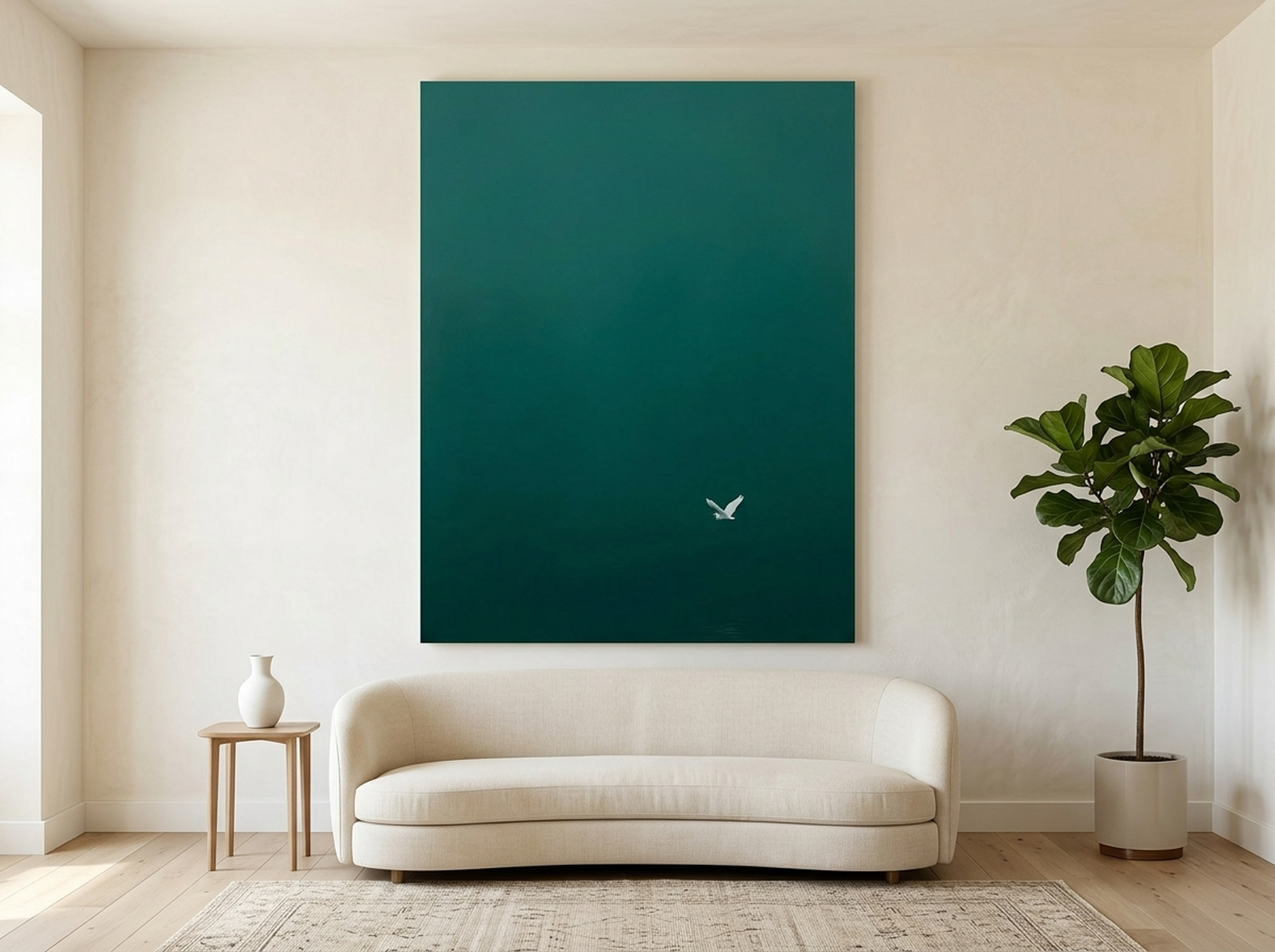
A white egret glides across a field of muted teal green, capturing movement with the fewest possible visual elements. The composition is deceptively simple: the bird's outstretched wings create a natural diagonal that pulls the eye from lower left to upper right, adding energy to an otherwise tranquil palette. This canvas works beautifully in coastal-themed bedrooms, guest rooms, or bathrooms. The teal background pairs with warm wood tones (oak, walnut, bamboo) and white ceramics for a relaxed seaside feel without the cliches of shells and anchors.
4. Sea Turtle Minimalist Canvas
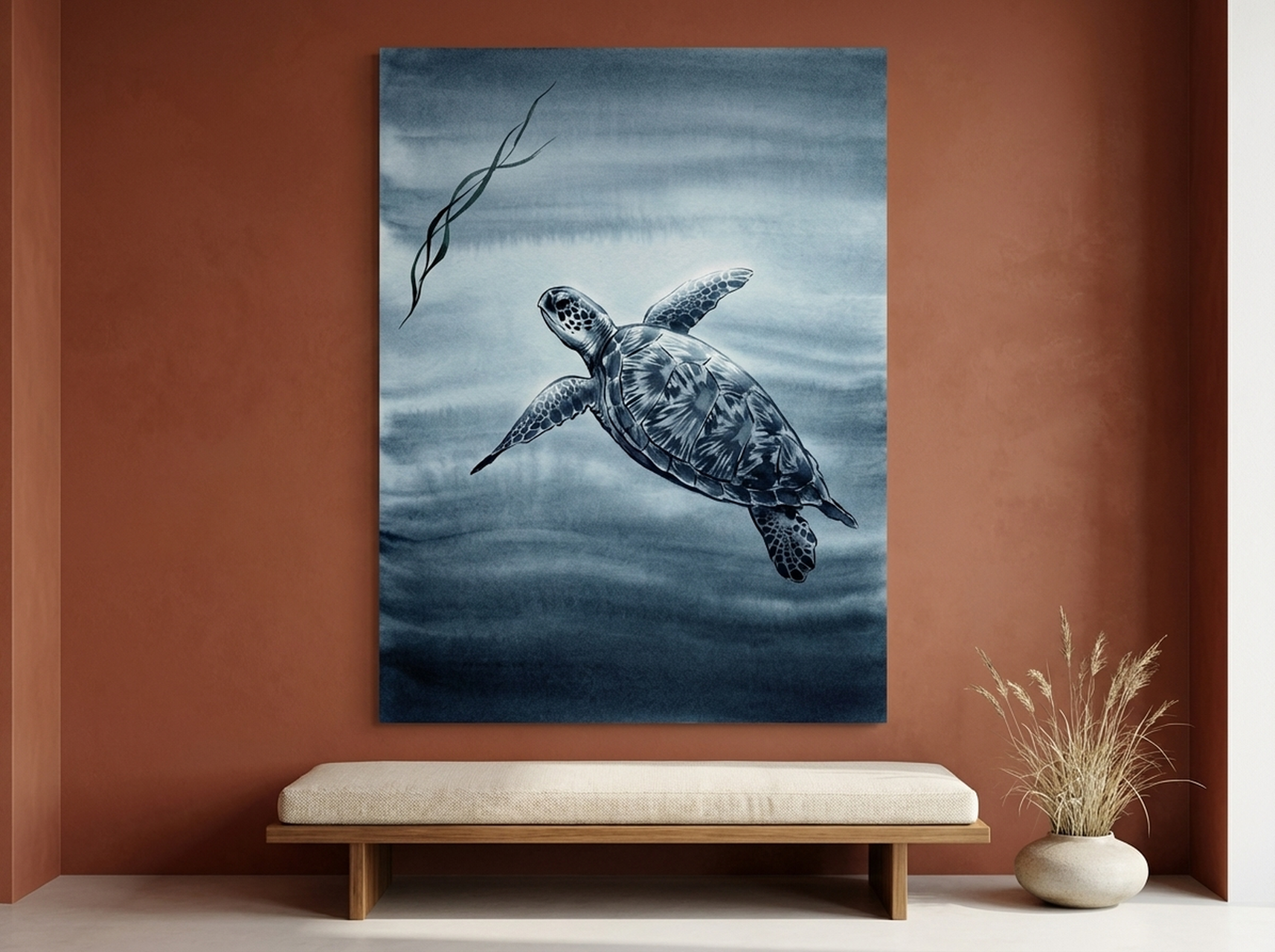
This sea turtle is painted with a loose, almost watercolour softness, using cool greys, muted blues, and a hint of green. The background fades to near-white, letting the turtle float in empty space: a perfect demonstration of negative space as a design element. The piece was designed with bathrooms and laundry rooms in mind, where its calming ocean palette ties into water-adjacent spaces. At 61 by 91 cm (24 by 36 inches), it fits comfortably above a toilet, beside a vanity, or on a narrow hallway wall without crowding the area.
5. Blue Jay Minimalist Canvas
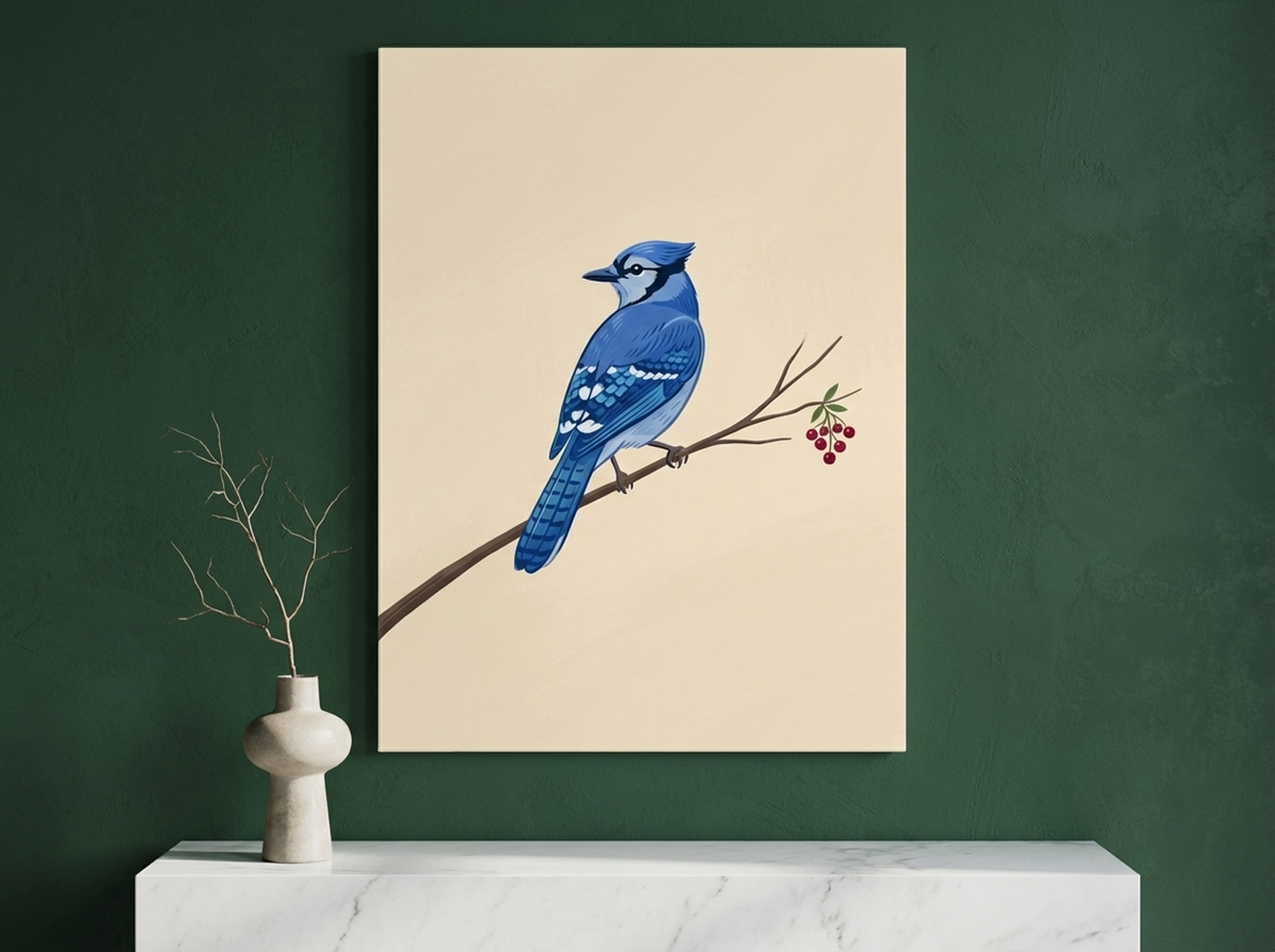
A single blue jay perched on a branch, painted with just enough detail to capture the bird's alertness while leaving the background spare and atmospheric. The vivid cobalt blue feathers provide the room's colour accent, while the warm sand and ivory tones of the background ensure the piece stays grounded in a neutral palette. Hang this in a living room above a console table, or in a reading nook where its pop of blue adds life without visual clutter. The vertical orientation suits narrow wall sections between windows or beside doorways, making it versatile for tricky spaces.
6. Fluid Abstract Landscape Canvas
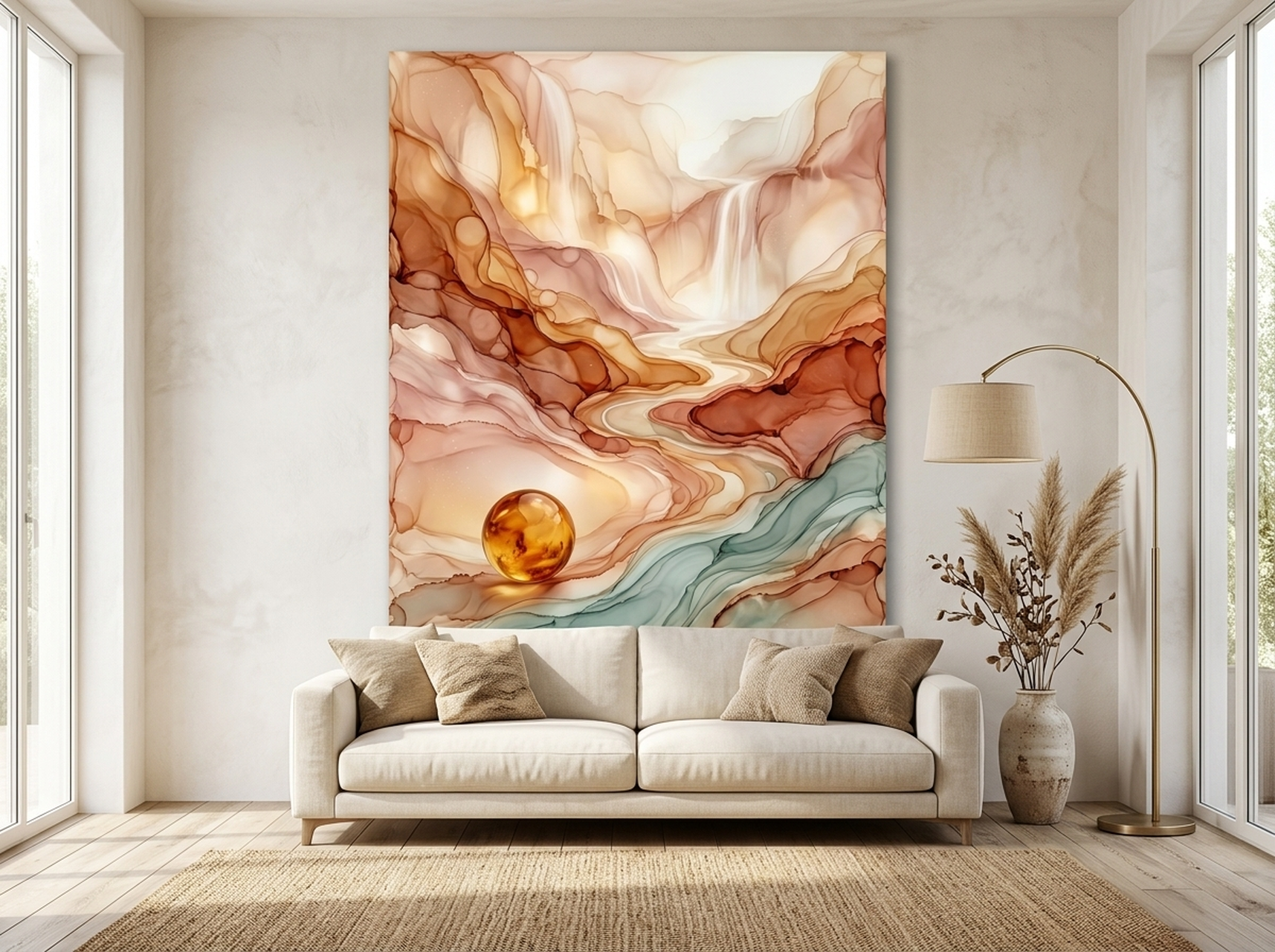
Sweeping bands of gold, amber, and cream flow horizontally across the canvas, evoking a misty sunrise over a distant horizon. There are no hard lines, no defined objects: just colour, light, and movement. This is minimalism at its most abstract, and it works in virtually any room because the warm neutral tones complement wood floors, leather upholstery, and both cool and warm wall colours. Position it as the centrepiece of a living room above the sofa, or use it in a dining room to add warmth without competing with table settings and floral arrangements.
View the Fluid Abstract Canvas
Styling Guide: Measurements and Placement
Minimalist art looks effortless when it is hung correctly and awkward when it is not. These measurements take the guesswork out of placement.
Centre height. The middle of the canvas should sit at 145 to 150 cm (57 to 60 inches) from the floor. This is the universal gallery standard and works in rooms with standard 2.4 m (8 ft) or tall 2.7 m (9 ft) ceilings alike.
Above a sofa. Leave 15 to 20 cm (6 to 8 inches) between the top of the sofa back and the bottom of the frame. The canvas width should be roughly two-thirds the width of the sofa. For a standard 200 cm (79 inch) sofa, aim for a canvas between 120 and 140 cm (47 to 55 inches) wide, or a single 61 by 91 cm (24 by 36 inch) piece centred if the sofa has side tables that visually extend its line.
Above a bed. Same 15 to 20 cm (6 to 8 inch) gap above the headboard. The canvas should span 50 to 75 percent of the headboard width. For a queen headboard at 152 cm (60 inches) wide, a 76 to 102 cm (30 to 40 inch) canvas is ideal.
In a hallway. Narrow halls benefit from vertical-orientation canvases. Keep the canvas width under 50 cm (20 inches) to avoid making the hallway feel tighter. Centre the art on the wall between doors, not centred on the hallway length.
Lighting. A single adjustable picture light mounted 15 to 20 cm (6 to 8 inches) above the frame adds gallery-level drama. LED strips with a colour temperature between 2700K and 3000K (warm white) bring out gold and amber tones without yellowing whites. Avoid overhead spotlights aimed directly downward, as they create harsh shadows that undercut the calm effect of minimalist art.
5 Common Mistakes to Avoid
1. Hanging the art too high. The most common error. If the centre of your canvas is above 155 cm (61 inches), it will feel disconnected from the furniture below. Measure from the floor, not from eye level while standing on a step stool.
2. Choosing art that is too small for the wall. A 20 by 25 cm (8 by 10 inch) print on a 3-metre (10-foot) wall looks like an afterthought, not a minimalist statement. Scale matters. If your wall is large, your art should be large enough to anchor it. Aim for the art to cover at least 25 to 33 percent of the wall's total area.
3. Mixing too many styles on one wall. A minimalist ink painting next to a busy floral print next to a retro poster defeats the purpose. Minimalism is about coherence. If you display multiple pieces, they should share at least two of these: colour palette, subject matter, frame style, and artistic technique.
4. Ignoring the frame and wall colour relationship. A black frame on a dark charcoal wall makes the art disappear. A white frame on white walls creates a ghostly floating effect that reads as accidental, not intentional. Choose a frame tone that creates gentle contrast with the wall: black or walnut frames on white or cream walls, natural wood or white frames on grey or sage walls.
5. Forgetting about sightlines. Walk through the room from every entry point: the doorway, the hallway, the spot where you sit most often. Your minimalist piece should be visible from the primary sightline without having to crane your neck or walk around furniture. If the art is hidden behind a door or blocked by a bookshelf when you first enter, move it.
Minimalist Wall Art FAQ
What makes wall art minimalist rather than just simple?
Minimalist art is defined by intentional reduction. Every element on the canvas, whether colour, line, shape, or texture, is there because the artist decided it was essential. A simple piece might be unfinished or lack detail by accident. A minimalist piece achieves its effect through deliberate restraint. Think of it as the difference between a room that is empty because nobody moved in yet and a room that is spare because a designer chose every item carefully.
Does minimalist art work in colourful rooms?
Yes. A minimalist canvas in neutral tones can serve as a visual rest point in a room with bold furniture or colourful textiles. The key is ensuring the art's palette includes at least one tone that echoes something else in the room. For example, a gold-and-cream abstract landscape pairs well with a mustard sofa or brass lamp because the gold creates a colour bridge between the art and the decor.
How many pieces of minimalist art should I hang in one room?
One statement piece per wall is the safest starting point. If you want to hang two or three related pieces, treat them as a set: same frame style, same colour family, and consistent spacing of 5 to 8 cm (2 to 3 inches) between frames. Avoid scattering unrelated minimalist pieces around the room, because even simple art creates visual clutter when it lacks a unifying thread.
Can minimalist wall art work above a fireplace?
Absolutely, and it is one of the best placements. The mantel provides a natural shelf that grounds the art, and the symmetry of most fireplaces creates a built-in frame. Hang the canvas 10 to 15 cm (4 to 6 inches) above the mantel. Keep mantel decor sparse: one or two objects at most, placed asymmetrically, so the art remains the focal point.
What is the best lighting for minimalist canvas art?
A single adjustable picture light mounted 15 to 20 cm (6 to 8 inches) above the frame is ideal. Choose LED bulbs with a colour temperature between 2700K and 3000K (warm white) to bring out gold and neutral tones without distorting colours. Avoid overhead spotlights aimed straight down, which create harsh shadows and undermine the calm feel of minimalist pieces.
Do your minimalist canvases come framed and ready to hang?
Yes. Every canvas print ships in a solid frame with pre-installed hanging hardware. You only need a nail or hook on the wall. Free US shipping is included on all orders, and each piece is packaged in a protective box designed to prevent damage during transit.
Quick Reference Table
| Product | Best For | Dominant Colours | Link |
|---|---|---|---|
| Lotus Flower Gold Leaf | Bedrooms, meditation spaces | Black, gold | View |
| Yin Yang Cranes | Living rooms, studies, entryways | Black, white, red | View |
| Egret in Flight | Coastal bedrooms, guest rooms | Teal green, white | View |
| Sea Turtle | Bathrooms, hallways, laundry rooms | Grey, blue, green | View |
| Blue Jay | Living rooms, reading nooks | Cobalt blue, sand, ivory | View |
| Fluid Abstract Landscape | Living rooms, dining rooms | Gold, amber, cream | View |
Find Your Minimalist Statement Piece
Every canvas in our collection ships framed, ready to hang, with free US shipping. One piece is all you need to transform a wall from empty to intentional.