Wildlife Wall Art: Bring Nature Into Your Living Room
The Heva Team
Art Curators & Interior Design Enthusiasts · March 21, 2026 · 15 min read
From majestic bears to soaring eagles, wildlife wall art brings the power of nature into your home.
Wildlife wall art does something that most living room decor cannot: it makes the room feel alive. The problem most buyers run into is choosing the wrong piece. A photorealistic wolf print that overwhelms a small sofa wall. A nursery-style animal illustration that looks out of place in an adult living room. A poorly sized canvas that disappears against a high-ceilinged feature wall. This guide cuts through all of that. You will find six gallery-quality wildlife canvas prints selected specifically for adult living rooms, plus placement advice rooted in biophilic design research, sizing guidelines measured in centimetres and inches, and colour psychology notes so your space feels considered rather than accidental.
Ready to browse? Shop the full Wild Canvas collection or keep reading for our top picks and expert placement tips.
Why Wildlife Art Works in a Living Room
The concept is called biophilic design, and it has been studied extensively since the 1980s when biologist E.O. Wilson first proposed that humans have an innate need to connect with other living systems. A 2019 systematic review published in Environmental Health and Preventive Medicine found that visual exposure to natural scenes, including representations of animals and landscapes, measurably reduced cortisol levels and self-reported stress in urban environments. Your living room, the room where you unwind after work, is precisely where that effect matters most.
Wildlife art carries a specific psychological weight that generic landscape prints do not. An animal subject introduces scale, character, and implied narrative. A grey wolf standing in moonlit forest is not just an image of nature, it is a story. That narrative quality keeps the piece engaging over months and years of daily viewing, which is why wildlife prints tend to outlast trend-driven decor choices.
The key is choosing work designed for adult spaces. Wildlife art spans an enormous stylistic range, from children's book illustrations to gallery-level oil paintings. The six picks in this guide all fall on the gallery end of that spectrum. They use considered colour palettes, painterly or photographic techniques with professional depth, and compositions that reward close looking. If you want to explore the broader category before committing to a single piece, the Wild Canvas collection is a good starting point.
Wildlife Art Styles Explained: Impressionist, Photorealistic, Atmospheric
Before you choose a wildlife print, it helps to understand the three dominant styles and how each reads in a living room context.
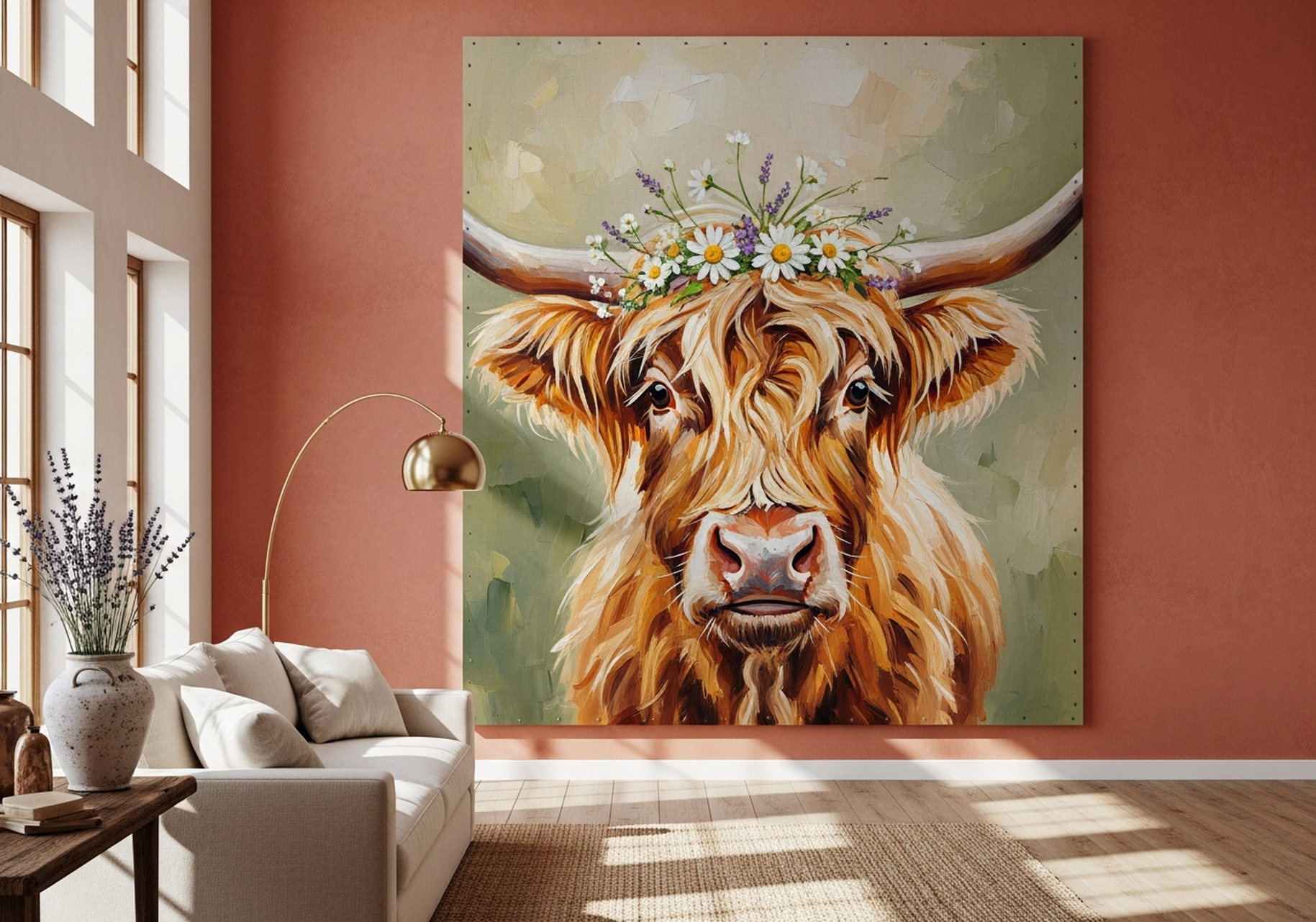
Impressionist wildlife art prioritises mood and texture over biological accuracy. Brushstrokes are visible. Colours are often heightened. The Highland Cow in impressionist style, for example, reads as warm and nostalgic rather than documentary. These pieces work exceptionally well in farmhouse, cottagecore, or transitional living rooms where the goal is character over precision. The textured quality of a framed canvas print amplifies the painted feel, giving impressionist work an almost sculptural presence on the wall.
Photorealistic wildlife art is the opposite approach. Precise rendering, lifelike proportions, and accurate natural colours dominate. A close-up hawk portrait in photorealistic style commands attention and reads as a statement piece. These prints work best in modern, contemporary, or minimalist rooms where clean lines and deliberate placements are the design language. One well-chosen photorealistic print above a sofa can do the work of an entire gallery wall.
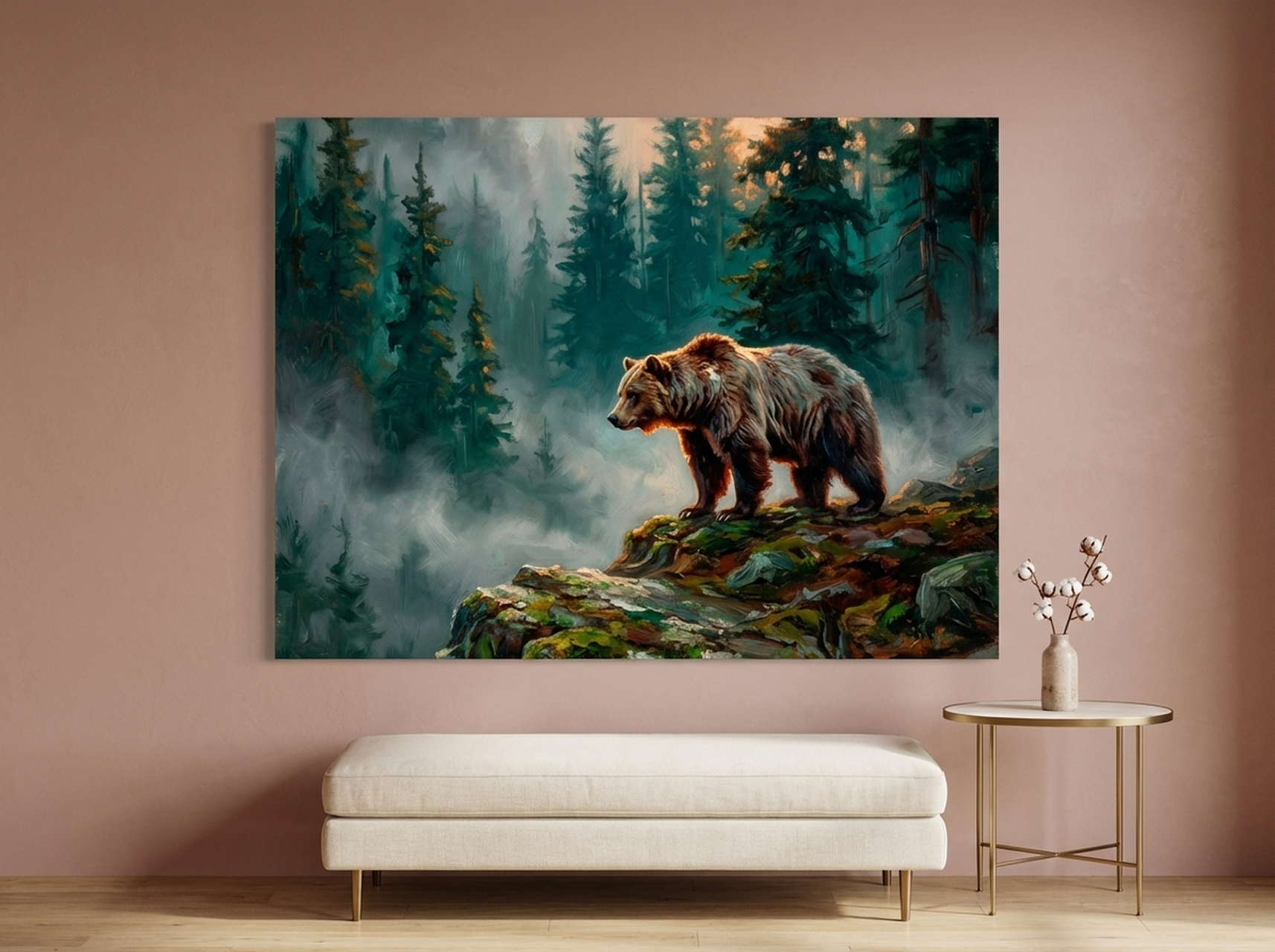
Atmospheric wildlife art sits between the two. Think of a wolf silhouetted against a moonlit sky, or a bison crossing foggy prairie grassland. The animal is present but partially dissolved into light, shadow, or weather. Atmospheric pieces create emotional depth without demanding visual complexity. They are the most versatile style for living rooms because they pair easily with both warm and cool colour schemes. For more on pairing art styles with interior palettes, the guide to colour psychology in wall art covers this in detail.
Wildlife Colour Palettes That Work in Living Rooms
Wildlife art naturally falls into one of three dominant palette families, and knowing which family suits your room will help you narrow your search quickly.
Earth tones (ochre, terracotta, burnt sienna, warm brown): The most universally liveable palette. Earth-toned wildlife prints, typically featuring deer, bison, horses, or big cats against golden autumn or prairie backdrops, work in rooms with white, cream, grey, or dark oak furniture. They warm up cool north-facing rooms and add depth to already warm south-facing ones. This palette accounts for the majority of best-selling wildlife prints because it does not fight with most existing furniture choices.
Cool neutrals (slate grey, glacier blue, silver, charcoal): Best for wolf, eagle, and arctic-subject prints. These palettes suit modern, Scandinavian, or industrial interior styles. In a grey or white-dominant living room, a grey wolf print on a pale canvas can feel almost like a tonal study, sophisticated without being loud. The risk is that cool wildlife art can feel cold in a room that already lacks warmth, so pair with warm textiles if you go this route.
Rich jewel tones (burgundy, emerald, gold): The baroque and maximalist wildlife palette. Lioness prints in deep burgundy and gold, or peacock-inspired pieces in teal and emerald, suit eclectic, luxury, or maximalist living rooms. These are statement pieces designed to anchor a room's colour story. If your living room is heavily decorated, one jewel-toned wildlife print will feel more intentional than a neutral one that risks getting lost.
For specific advice on matching art colours to your furniture, the post on choosing wall art that matches furniture has practical before-and-after examples. For sizing decisions, the living room wall art size guide is worth reading before you buy.
6 Wildlife Canvas Prints for Your Living Room
Highland Cow: Impressionist Oil Painting
The Highland Cow canvas is the most requested wildlife print for farmhouse and cottagecore living rooms, and it earns that reputation. The impressionist oil painting treatment gives the cow's characteristic shaggy coat genuine texture and warmth. Amber, ochre, and soft brown tones dominate, with a soft-focus botanical background that keeps the composition grounded without feeling cluttered. This is the piece for anyone who wants nature in the room but does not want the drama of a predator portrait. It hangs well in rooms with exposed brick, wooden beams, linen sofas, or any combination of natural materials. The horizontal format works especially well above a long sofa in a farmhouse-style living room.
Bison: Impasto Oil Painting (Western Rustic)
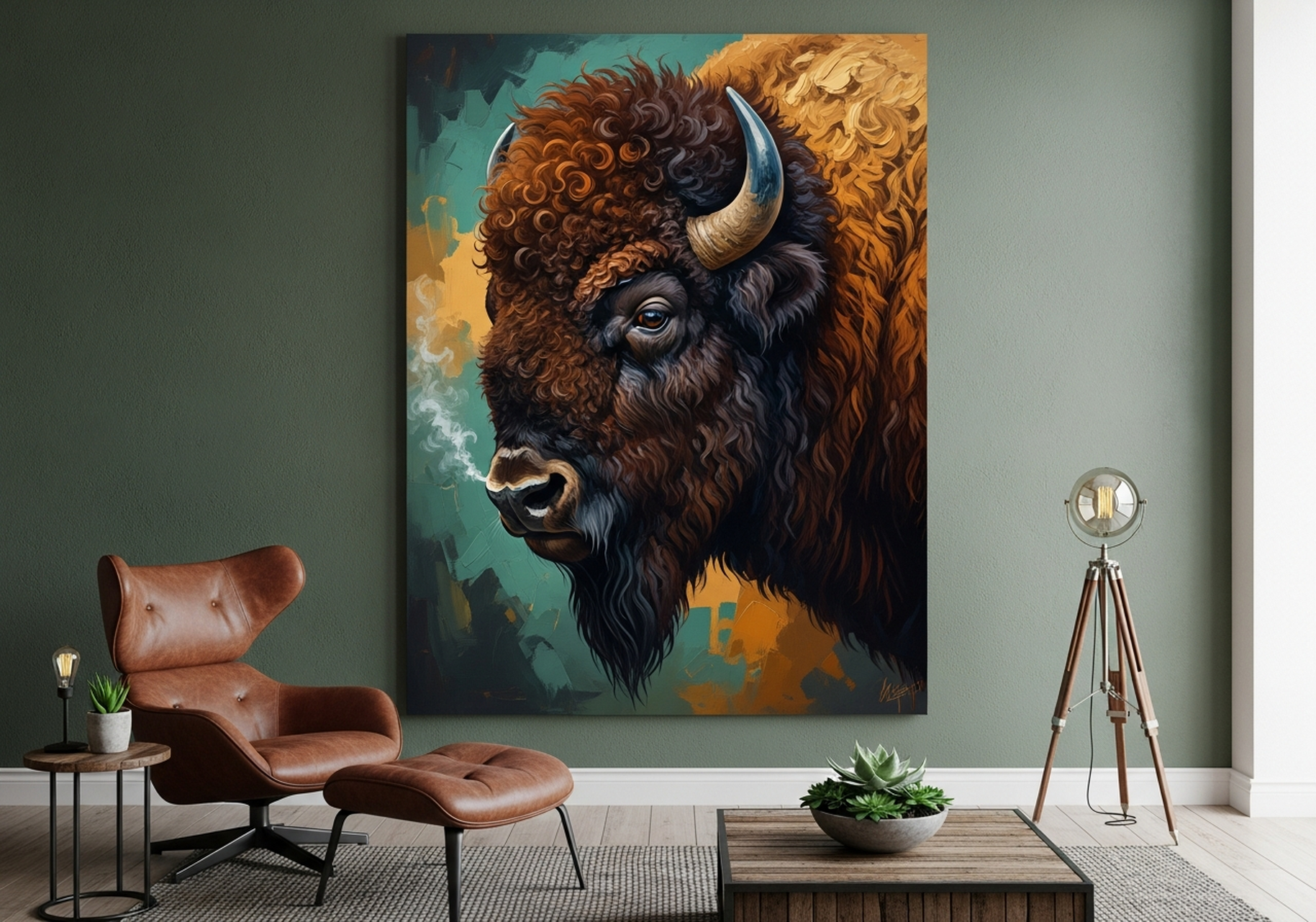
The American bison carries significant cultural and historical weight, and this impasto oil painting treatment honours that. Thick, visible brushstrokes build up the bison's massive shoulder and shaggy head in dark ochre and deep brown against a warm amber sky. The impasto technique, where paint is applied thickly enough to create physical texture on the canvas, means this piece reads differently at different distances. From across the room, it reads as a bold silhouette. Up close, the brushwork becomes the subject. This print suits Western, rustic, or lodge-style living rooms particularly well, and the vertical format makes it an excellent choice for narrow wall panels flanking a fireplace or either side of a doorway. The dark tones in the bison's coat pair naturally with leather furniture, dark wood floors, and deep-toned cushions.
Red-Tailed Hawk: Soaring Eagle Oil Painting
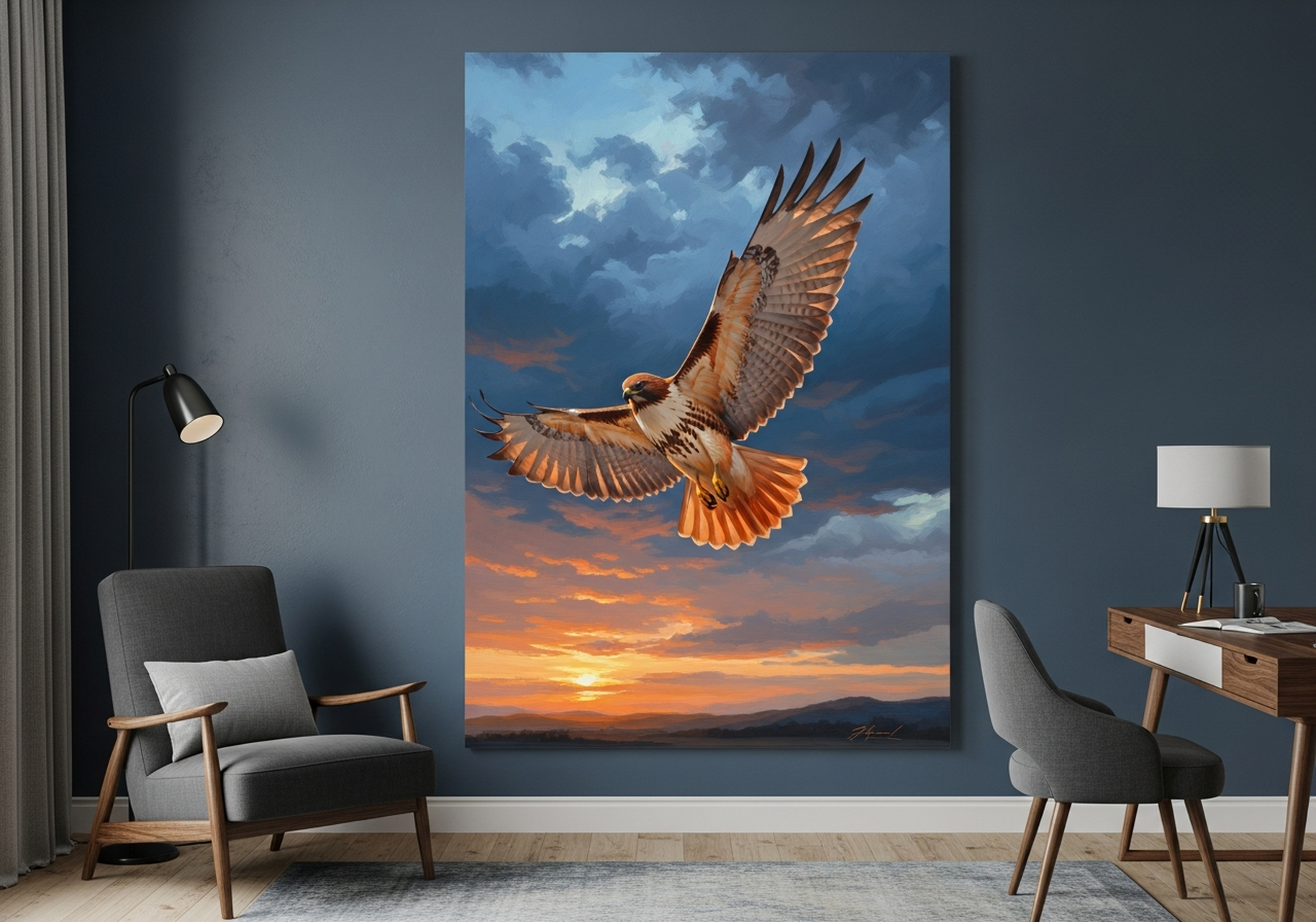
Raptors are underused in living room art, and that is a mistake. A soaring hawk captured in oil painting style brings controlled drama and a sense of freedom that no other wildlife subject replicates. This piece shows the Red-Tailed Hawk mid-flight against a pale sky, wings fully extended, detail visible in every primary feather. The palette is restrained, working in warm cream, rust, and soft blue tones that will not fight with most neutral room schemes. The strong vertical movement in the composition draws the eye upward, which is an effective trick in rooms with lower ceilings. It also makes a natural fit for home offices or studies attached to a living room, where the soaring bird carries implicit motivational weight without requiring text. The open sky background gives the piece a minimalist quality that suits contemporary living rooms.
View the Red-Tailed Hawk canvas
Deer Stag: Autumn Forest Wildlife Oil Painting
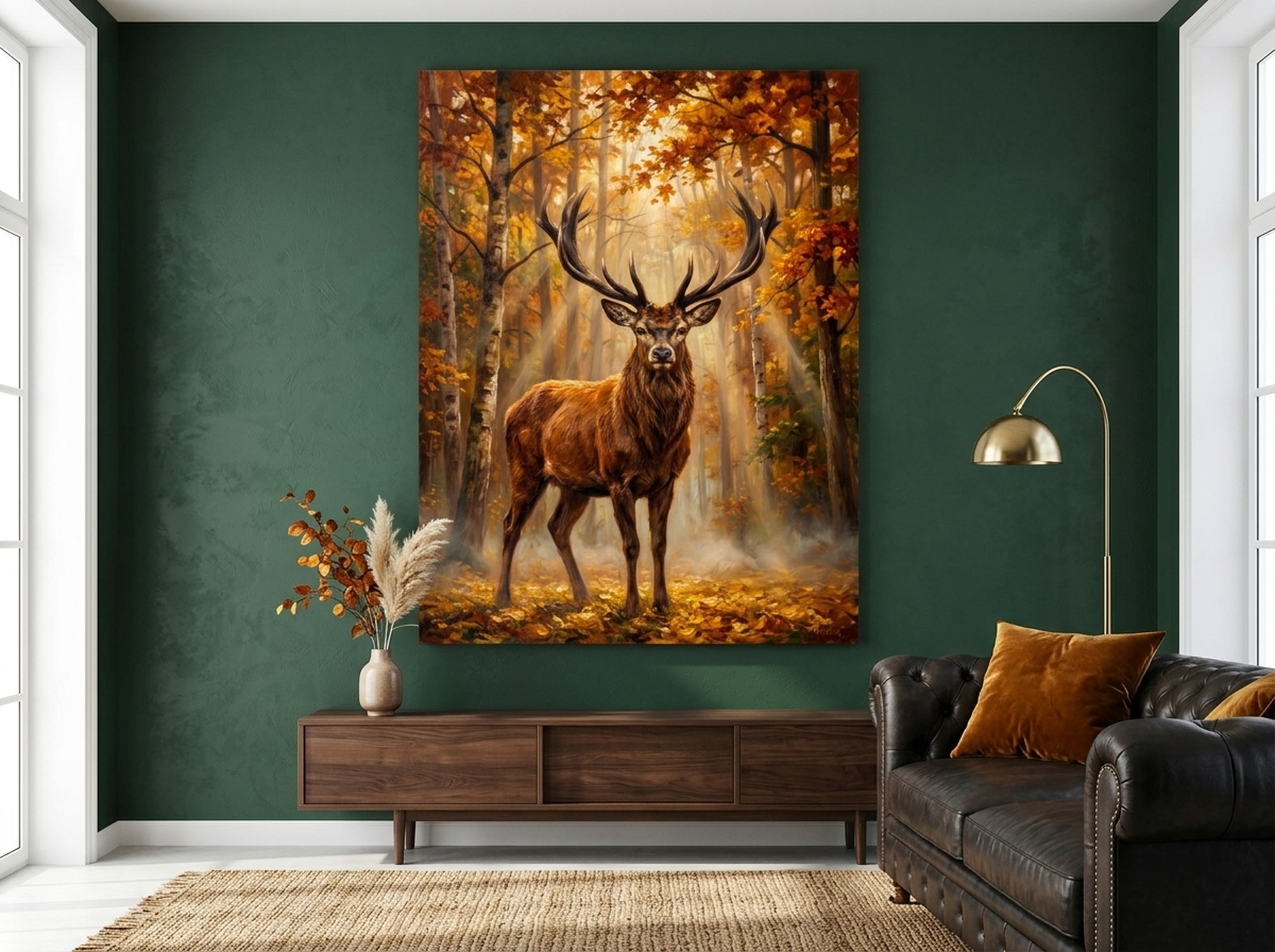
The stag in autumn forest is one of the most enduring wildlife subjects in Western interior design, and this oil painting version demonstrates why. Russet, amber, and deep forest green fill the composition. The stag stands alert in dappled light, antlers silhouetted against the warm canopy above. What makes this piece particularly successful in living rooms is its ability to anchor a seasonal colour story year-round. The autumn palette feels appropriate in every season, unlike florals that look out of place in winter, because it is rooted in permanence rather than bloom. It suits traditional, transitional, and country-style living rooms most naturally, but the painterly quality is refined enough to work in a contemporary space if the sofa and textiles skew towards warm neutrals. Hang it at eye level above a fireplace mantel for maximum effect.
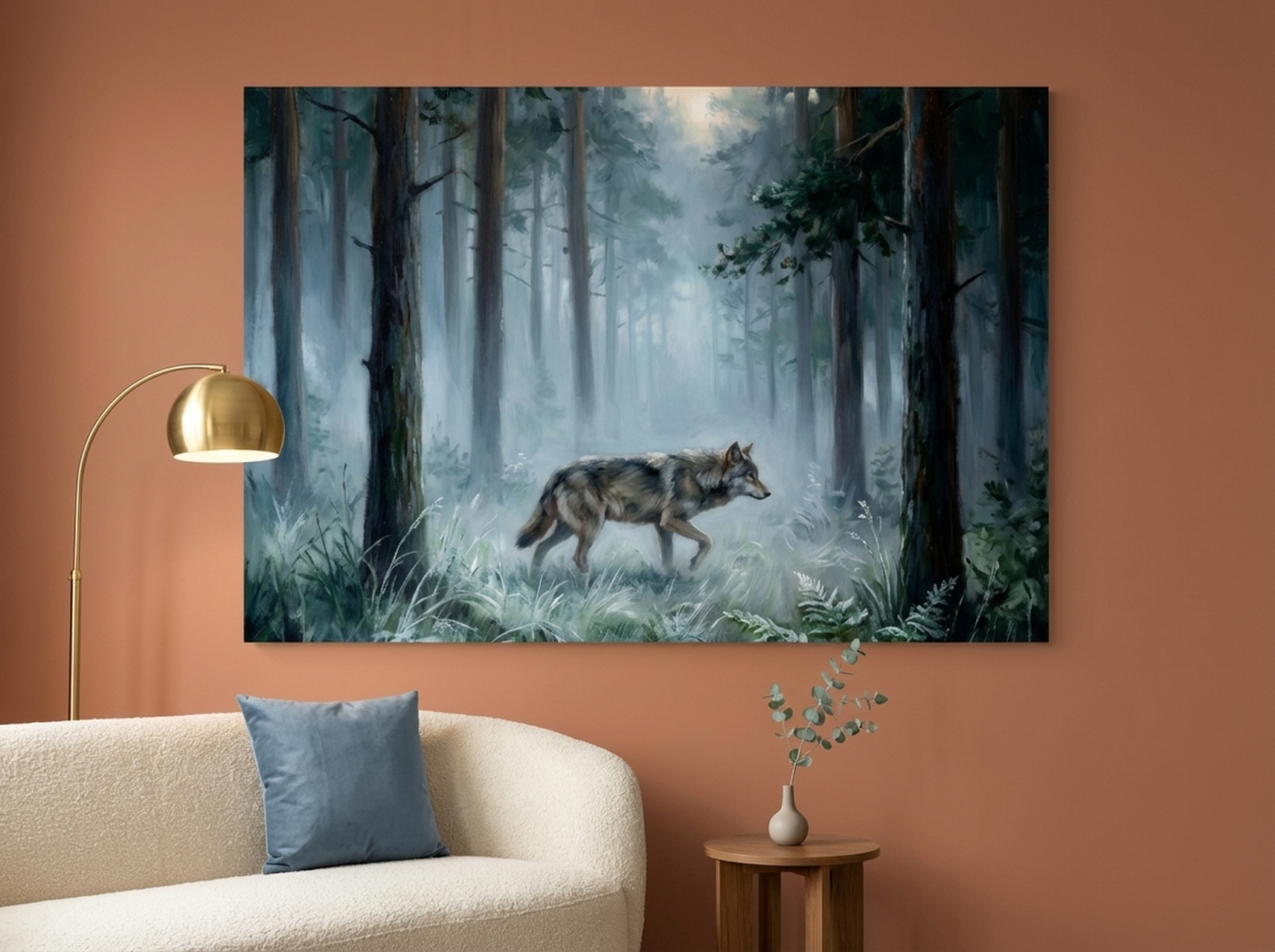
Wolf: Atmospheric Moonlit Forest Painting
Of all the wildlife prints in this guide, the Wolf in Atmospheric Moonlit Forest is the one that rewards living with the longest. The wolf stands partially obscured by mist and dark trees, its outline caught in cold moonlight. The palette is dark and moody, charcoal, midnight blue, and pale silver, but the composition is not oppressive. The negative space in the upper half of the canvas gives the piece room to breathe, and the misty treatment softens what could otherwise feel like a gothic statement. In practice, this piece works best in rooms that already have some drama: dark walls, deep-toned velvet sofas, industrial pendant lighting, or rooms with high contrast between light and dark surfaces. It is not the choice for a pale all-white living room. But in the right space, it creates an atmosphere that no other wildlife subject achieves. The wolf carries centuries of cultural narrative as a symbol of instinct, loyalty, and wild intelligence, and this painting lets that narrative do the decorating.
Lioness: Baroque Animal Painting in Burgundy and Gold
The Lioness Baroque canvas is the most maximalist pick in this guide, and intentionally so. The baroque painting tradition, rooted in European 17th-century art, uses deep jewel tones, dramatic lighting, and ornate floral backgrounds to create images of extraordinary richness. This lioness portrait takes that tradition and applies it to one of nature's most commanding subjects. Burgundy, deep gold, and dark emerald surround the lioness in a floral setting that reads simultaneously as feminine and fierce. It is a piece with strong decorating opinions. In the right room, specifically one with velvet furnishings, brass hardware, dark or richly coloured walls, or an eclectic maximalist aesthetic, this print will define the entire room's visual identity. It works as a standalone above a wide sofa or as the anchor piece in a gallery wall where other prints step back. This is not a print you buy to blend in.
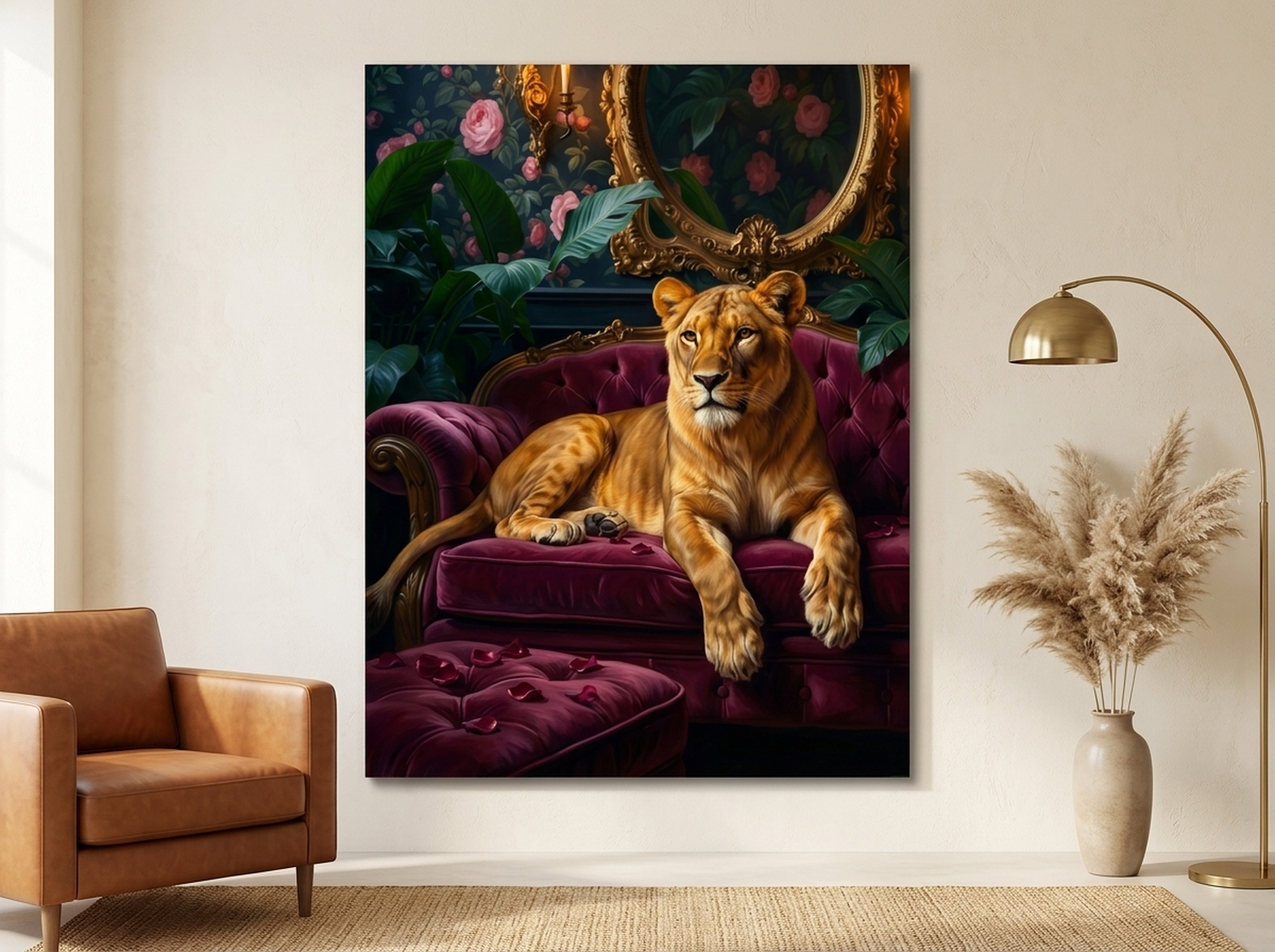
View the Lioness Baroque canvas
Sizing and Placement: Above-Sofa Rules That Work
The most common sizing mistake with wildlife art in a living room is going too small. A single 30 x 40 cm (12 x 16 inch) canvas above a 220 cm (87 inch) sofa will look lost. The standard interior design rule for above-sofa art is that the piece or grouping should cover between 55 and 75 percent of the sofa's width. For a typical three-seater sofa measuring around 200 to 220 cm (79 to 87 inches), that means your art should span between 110 and 165 cm (43 to 65 inches) wide.
For a single-canvas wildlife print, 60 x 90 cm (24 x 36 inches) is the minimum workable size above a full sofa, and 61 x 91 cm (24 x 36 inches) is the most popular format for this reason. Many of the prints in this guide are available at this size. The optimal centre height for above-sofa art is 15 to 20 cm (6 to 8 inches) above the sofa back, with the visual centre of the piece sitting at roughly 145 to 150 cm (57 to 59 inches) from the floor, which corresponds to standard eye level when standing.
For wildlife art specifically, there are a few additional considerations. Animal portraits with strong directional gaze should face into the room, not toward a wall or doorway. A wolf print whose gaze is directed toward the entrance of the room will feel subtly unsettling. Place the print so the animal faces the primary seating area. Atmospheric pieces with significant negative space in the upper portion of the composition benefit from hanging slightly higher than the standard formula to allow the sky or background to anchor the ceiling. For a comprehensive walkthrough of the hanging process including tool recommendations, the complete guide to hanging wall art covers every scenario.
If you are working with a very large wall, such as a double-height living room or an open-plan space, consider pairing two wildlife prints of the same style family. Two stag or wolf prints in the same palette but different compositions, hung as a diptych 5 to 8 cm (2 to 3 inches) apart, fill large walls without requiring oversized custom framing. For gallery wall arrangements that mix wildlife with other art types, the gallery wall layout guide has specific advice on mixing subject matter without creating visual chaos.
Common Mistakes to Avoid
Buying nursery-grade wildlife art for an adult space. Many wildlife prints on the market are designed for children's rooms: simplified outlines, flat colours, whimsical expressions. These prints read as childish in adult living rooms regardless of how good the surrounding furniture is. The tells are flat background fills, cartoon-style eyes, and saturated primary colours. Look for painterly technique, tonal depth, and natural colour palettes when shopping for adult living room wildlife art.
Choosing a size that cannot fill the wall. As covered in the sizing section above, this is the single most common mistake. It makes the room feel incomplete and makes the art itself look cheap regardless of the print quality. If in doubt, go one size larger than your instinct. You can always step back from a print that feels slightly large; you cannot mentally make a small print grow to fill the gap above it.
Picking a colour palette that fights the room instead of completing it. A warm amber bison print on a wall behind a cool grey sofa will create visual tension, not harmony. Before you buy, hold a colour swatch of your dominant sofa fabric next to the print on screen, or use the colour palette section of this guide to identify which palette family matches your existing room scheme.
Ignoring the animal's gaze direction. This is a subtle point but it makes a meaningful difference. Wildlife portraits with a strong directional gaze create an implied sightline in the room. That sightline should orient toward the seating area, toward natural light, or toward an open space. An animal looking toward a blank wall or out a window reads as restless. An animal looking toward the sofa reads as present and engaged.
Mixing wildlife art styles without a unifying element. Impressionist highland cow, photorealistic hawk, and cartoon fox in the same gallery wall arrangement will look accidental. If you want multiple wildlife prints in the same space, choose one style family, one dominant colour palette, or one frame colour to create visual coherence across the group.
Frequently Asked Questions
What wildlife art styles suit a modern living room?
Photorealistic and atmospheric styles suit modern living rooms best. Photorealistic wildlife prints, such as a close-up hawk portrait or a precisely rendered wolf face, pair well with clean-lined contemporary furniture and minimalist colour schemes. Atmospheric pieces, where the animal is partially dissolved into mist, moonlight, or weather, offer visual depth without competing with modern architecture. Avoid heavily decorative or baroque styles in minimalist modern rooms as the contrast between ornate subject and clean surroundings will feel unresolved.
What size canvas should I hang above a sofa for wildlife art?
For a standard three-seater sofa measuring around 200 to 220 cm (79 to 87 inches) wide, aim for a canvas that spans at least 55 percent of the sofa width. In practice this means a minimum canvas width of around 110 cm (43 inches) for a single piece. A 61 x 91 cm (24 x 36 inch) canvas is the most popular living room size and works well as a standalone piece above a medium sofa. Hang the centre of the canvas at around 145 to 150 cm (57 to 59 inches) from the floor, placing the bottom edge approximately 15 to 20 cm (6 to 8 inches) above the sofa back.
Which wildlife prints work best in a farmhouse living room?
Highland cow, deer stag, and bison prints in warm earth tone palettes are the best fit for farmhouse living rooms. The impressionist oil painting style works particularly well because the visible brushwork and textured quality mirrors the tactile, handcrafted aesthetic of farmhouse interiors. Warm ochre, amber, and brown tones complement the exposed wood, linen, and neutral textiles typical of the style. Avoid cool-toned or dark atmospheric wildlife prints in farmhouse rooms as they tend to feel tonally mismatched with the warm, layered palette that defines the style.
Do wildlife canvas prints come ready to hang?
Yes. Every canvas print in the Wild Canvas collection ships in a sturdy frame with pre-installed hanging hardware. You choose from four frame finishes: black, white, espresso, or natural wood. The canvas is printed on premium matte material and arrives ready to hang with no additional tools required beyond a hammer and a nail or a picture hook. Standard delivery is to the US with free shipping on all orders.
Can wildlife art work in a small living room?
Yes, and the secret is to go bolder rather than smaller. In a small living room, a single well-sized wildlife print, one that covers 55 to 60 percent of the sofa width or the main feature wall, creates a focal point that makes the room feel intentional. A collection of small prints in a small room tends to look cluttered and shrinks the perceived space further. Choose a wildlife subject with significant negative space in the composition, such as the atmospheric wolf or the soaring hawk, as the open areas in the composition will read as breathing room in a compact interior.
What colours in wildlife art work with grey sofas?
Grey sofas pair best with wildlife art in three palette families. Warm earth tones, particularly amber, ochre, and terracotta, add warmth to a grey room and create a classic contemporary contrast. Cool blue-grey and silver tones, such as in a wolf or Arctic subject print, create a tonal scheme that is sophisticated and monochromatic. Jewel tones, specifically deep burgundy and gold as in the Lioness Baroque canvas, create high contrast and work if you want the art to be the colour story in an otherwise neutral room.
Quick Reference: Which Wildlife Print Fits Your Room
| Product | Best For | Dominant Colours | Link |
|---|---|---|---|
| Highland Cow Impressionist | Farmhouse, cottagecore, transitional | Amber, ochre, warm brown | View |
| Bison Impasto Oil Painting | Western, rustic, lodge | Dark ochre, amber, deep brown | View |
| Red-Tailed Hawk Soaring | Contemporary, minimalist, home office | Cream, rust, soft blue | View |
| Deer Stag Autumn Forest | Traditional, country, transitional | Russet, amber, forest green | View |
| Wolf Atmospheric Moonlit | Moody, industrial, dark-palette rooms | Charcoal, midnight blue, silver | View |
| Lioness Baroque Burgundy Gold | Maximalist, eclectic, luxury | Burgundy, deep gold, dark emerald | View |
Wildlife wall art earns its place in a living room the way few other subjects can. It brings narrative, character, and a connection to the natural world into a space designed for comfort and conversation. The six prints in this guide represent the full range of styles, from the warm impressionism of the Highland Cow to the baroque drama of the Lioness, so there is a choice that fits almost every living room aesthetic. Start with your room's existing colour palette and interior style, use the quick reference table above to narrow your options, and then trust your instinct. The piece you keep returning to on the page is almost always the right one for your wall.
Browse the Wild Canvas Collection