Canvas Wall Art vs Framed Prints for Modern Rooms
The Heva Team
Art Curators & Interior Design Enthusiasts · January 31, 2026 · 14 min read
Canvas or framed? We break down the pros and cons to help you decide.
You have found the piece you love, but now comes the real decision: should you go with a stretched canvas print or a framed print behind glass? The difference is bigger than you might think. Each format changes the texture, weight, reflections, and overall mood of your art, and choosing the wrong one can make even the most beautiful image feel out of place. This guide walks you through every practical consideration, from hanging hardware to room humidity, so you can make a confident choice the first time.
Ready to browse? Explore the full collection, or keep reading for our top picks and expert tips.
Canvas Wall Art: Pros, Cons, and Best Uses
How Gallery-Wrapped Canvas Works
A gallery-wrapped canvas print stretches the printed image over thick wooden stretcher bars, typically 3.8 cm (1.5 inches) deep, then wraps the image around all four edges. There is no glass, no mat, and no separate frame required. The art itself becomes a self-contained, three-dimensional object that projects 3 to 5 cm (1.2 to 2 inches) from the wall surface, creating natural shadow lines that shift throughout the day as light moves across the room.
The Visual and Tactile Experience
Canvas prints have a distinctly tactile quality. The woven canvas texture, visible up close, adds warmth and physicality to the image. According to Shutterfly's comparison guide, canvas textures are particularly striking with painterly art styles like oil paintings, impressionist landscapes, and brushstroke-heavy abstracts. The matte surface eliminates glare entirely, so you see the same consistent colours from every viewing angle regardless of overhead lighting or nearby windows.
The wrapped edges give the piece a modern, floating appearance. Without a visible border or frame to contain the image, canvas prints feel less formal and more immersive. This edge-wrap effect works especially well on large statement pieces, where the art seems to extend beyond its boundaries into the room.
Advantages of Canvas
- Zero glare from any angle, which is ideal for rooms with large windows or overhead track lighting
- Lightweight: a 61 x 91 cm (24 x 36 inch) canvas weighs roughly 1.4 to 2.3 kg (3 to 5 pounds), making hanging straightforward with a single nail
- No glass breakage risk, which matters in hallways, kids' rooms, and earthquake-prone areas
- Dimensional presence: the depth of the stretcher bars creates natural shadow lines that add visual interest
- Easy to clean: a soft dry cloth is all you need every few weeks
Drawbacks of Canvas
- Susceptible to humidity: prolonged exposure above 60 percent relative humidity can cause the canvas to sag or warp over time
- No UV glass protection: direct sunlight will gradually fade the inks, typically noticeable after 3 to 5 years of constant exposure
- Surface vulnerability: a sharp bump or scrape can dent the canvas fabric, whereas glass would absorb the impact
Framed Prints: Pros, Cons, and Best Uses
Anatomy of a Framed Print
A framed print places the artwork behind a protective barrier, whether acrylic glazing, standard glass, or UV-resistant museum glass, and surrounds it with a solid frame in materials like wood, metal, or composite. Many framed prints also include a mat (mount board) that creates a visual border of 5 to 7.5 cm (2 to 3 inches) between the image and the frame, which helps the eye focus on the art. The frame itself adds structural rigidity and a finished, polished look that immediately signals considered design.
The Formal, Classic Aesthetic
Framing creates a clear boundary between the artwork and the wall. This containment gives framed prints a sense of completeness and intentionality that works especially well in formal spaces. A black or espresso frame on a white wall creates crisp, gallery-quality contrast. A natural wood frame warms up the piece for rustic or Scandinavian-inspired rooms. As Society6's art format guide notes, framed art brings a timeless elegance that canvas cannot always replicate in traditional settings.
Advantages of Framed Prints
- UV protection: museum-quality glass blocks up to 99 percent of UV rays, making framed prints ideal for sun-drenched rooms
- Humidity resistance: the sealed frame-and-glass assembly protects the print from moisture, safe for bathrooms and covered porches
- Physical protection: glass or acrylic shields the surface from fingerprints, dust, and accidental scratches
- Design versatility: swap the frame to completely change the mood without replacing the art
- Crisp detail rendering: the smooth surface behind glass preserves photographic sharpness and fine line work
Drawbacks of Framed Prints
- Glare: standard glass reflects overhead lights and windows, which can obscure the image from certain angles
- Heavier: glass adds significant weight. A 61 x 91 cm (24 x 36 inch) framed piece with glass can weigh 4.5 to 6.8 kg (10 to 15 pounds), requiring wall anchors or studs
- Breakable: standard glass shatters on impact, acrylic scratches more easily
- Higher cost: quality framing with UV glass can add 30 to 50 percent to the total price
Side-by-Side Comparison Table
| Feature | Canvas (Gallery-Wrapped) | Framed Print (Behind Glass) |
|---|---|---|
| Surface | Matte woven texture | Smooth behind glass or acrylic |
| Glare | None | Moderate (standard glass) to low (anti-reflective) |
| Weight (24 x 36 in) | 1.4 to 2.3 kg (3 to 5 lb) | 4.5 to 6.8 kg (10 to 15 lb) |
| UV Protection | None (archival inks resist fading) | High with museum glass |
| Humidity Tolerance | Keep below 60% RH | Sealed assembly resists moisture |
| Hanging Hardware | Single nail or sawtooth hanger | D-rings with wire, wall anchors recommended |
| Best Art Styles | Painterly, impressionist, abstract | Photography, fine line work, traditional |
| Feel | Casual, modern, gallery-like | Formal, polished, classic |
| Maintenance | Dry dusting | Glass cleaner (avoid ammonia) |
| Best Rooms | Living room, bedroom, office | Dining room, entryway, bathroom |
Which Format Works Best in Each Room
Living Room
The living room is where most art decisions happen, and both formats work here. For a large statement piece above the sofa, canvas is often the better choice. The lack of glare means your art looks consistent whether the overhead lights are on, the curtains are open, or you are watching it from the opposite corner. Aim for a piece that spans 60 to 75 percent of the sofa width, roughly 100 to 150 cm (40 to 60 inches) for a standard three-seater. If you prefer a gallery wall arrangement, framed prints create a more cohesive look when you mix different sizes, because the uniform frames tie the collection together visually. For more guidance on sizing, see our complete wall art sizing guide.
Bedroom
Above the bed, canvas wins for safety. No glass means no risk of breakage if the piece falls during the night, a real concern in areas prone to seismic activity or if you have an active sleeper. Position the bottom edge 15 to 25 cm (6 to 10 inches) above the headboard. The matte canvas surface also avoids the reflective flash that glass can produce when you turn on a bedside lamp in a dark room.
Dining Room and Entryway
Formal spaces like dining rooms and entryways benefit from the structured, finished look of framed prints. The frame creates an intentional boundary that complements crown moulding, wainscoting, and other architectural details. Choose a frame finish that echoes the hardware in the room: brass handles pair with warm gold or natural wood frames, while chrome fixtures match black or silver frames.
Kitchen and Bathroom
Humidity is the deciding factor. In a bathroom with a shower or a kitchen near the stove, framed prints behind sealed glass handle moisture better than exposed canvas. If you love the canvas look in these spaces, position the piece at least 90 cm (3 feet) from the shower or cooking surface and use a bathroom exhaust fan to keep humidity below 60 percent.
Home Office
In a home office, you often sit at a fixed angle to the wall. Canvas eliminates the glare that a glass-framed print can throw from your desk lamp or monitor. A single large canvas behind or beside your desk creates a calming visual anchor without competing with your screen. For more home office art ideas, read our guide to productive home office wall art.
Our 6 Favourite Pieces for Every Style
Each of these pieces is available as a framed matte canvas print in four frame colours (black, white, espresso, and natural wood) and multiple sizes. They ship ready to hang with pre-installed hardware.
1. Highland Cow Impressionist Oil Painting
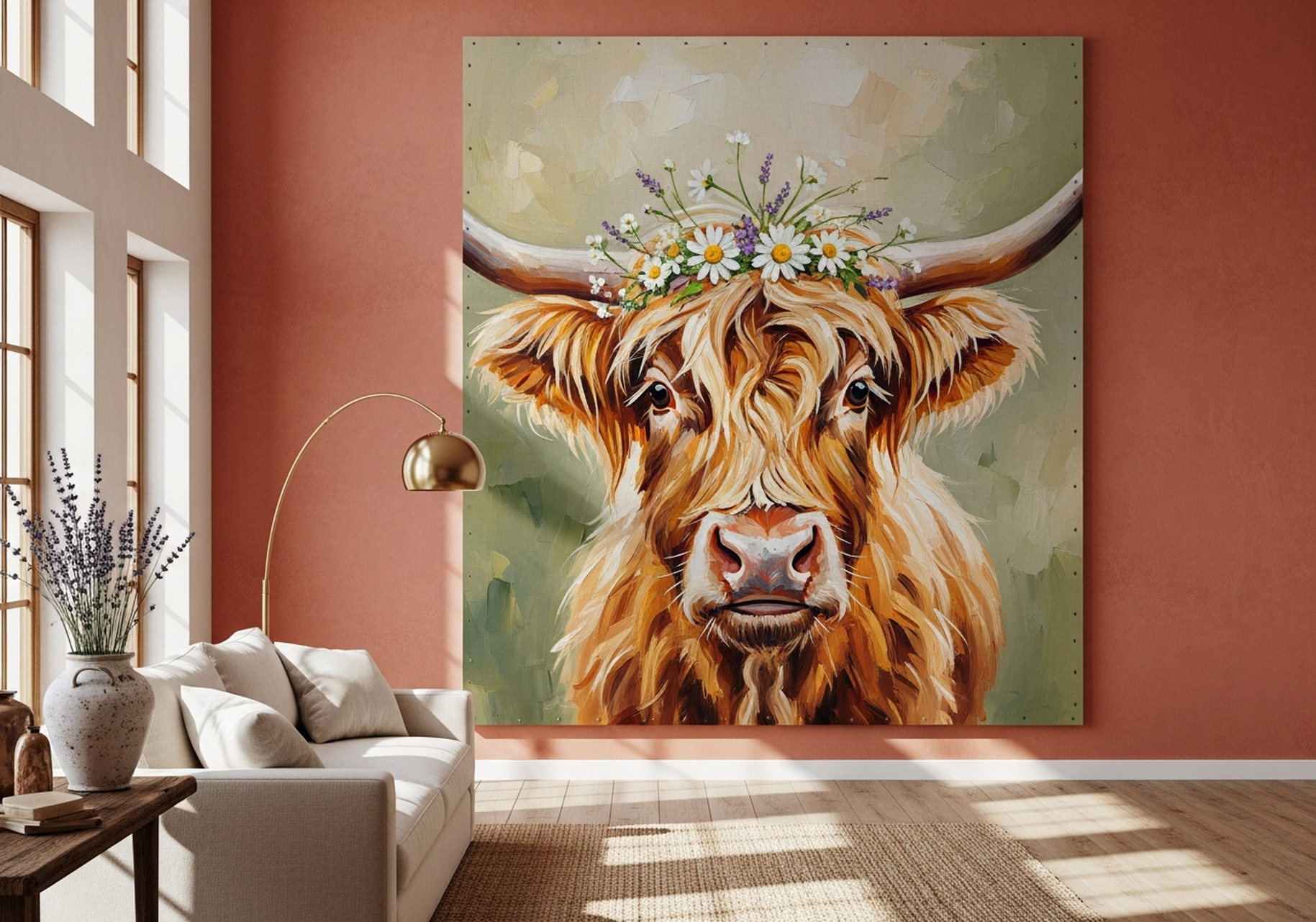
This Highland cow portrait is a textbook example of why painterly art styles shine on canvas. The visible brushstrokes, the warm palette of burnt orange, chocolate brown, and cream, and the soft impressionist background all gain depth from the woven canvas texture. Hang this in a farmhouse-style living room or a cosy reading nook where its earthy tones can echo natural wood furniture and linen textiles. At 61 x 91 cm (24 x 36 inches), it makes a strong statement above a console table or sideboard.
2. Birch Forest Autumn Trees Oil Painting
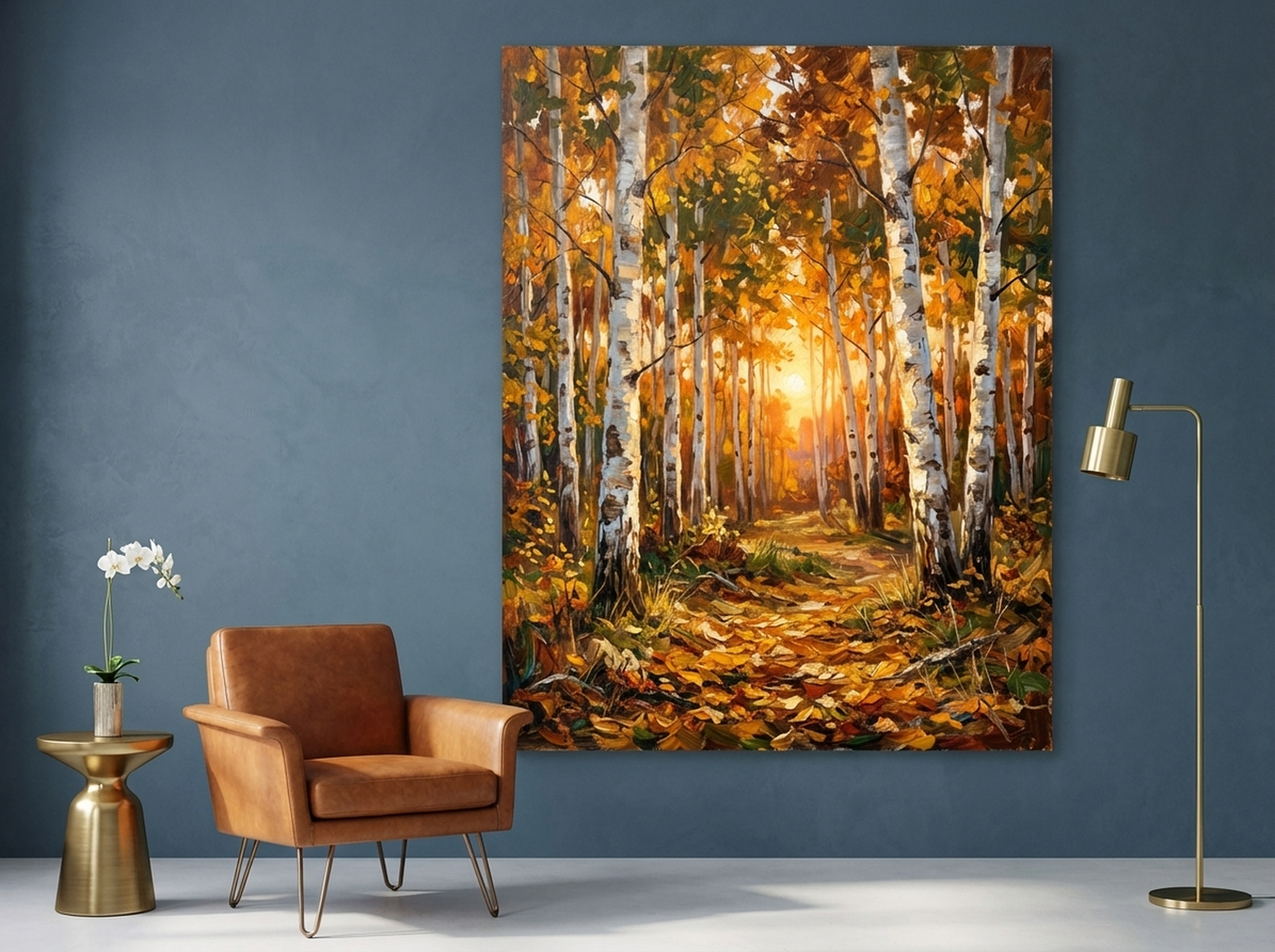
Golden birch trees in full autumn colour create a sense of warmth and movement that fills a room with seasonal energy year-round. The thick impasto-style brushwork translates beautifully to canvas, where you can almost feel the texture of the bark and the flutter of the leaves. This piece suits bedrooms and dining rooms equally well. Position it on the wall opposite a window so the natural light brings out the gold and amber tones without any glare, something glass would struggle with in that placement.
3. Athena Greek Goddess Renaissance Portrait
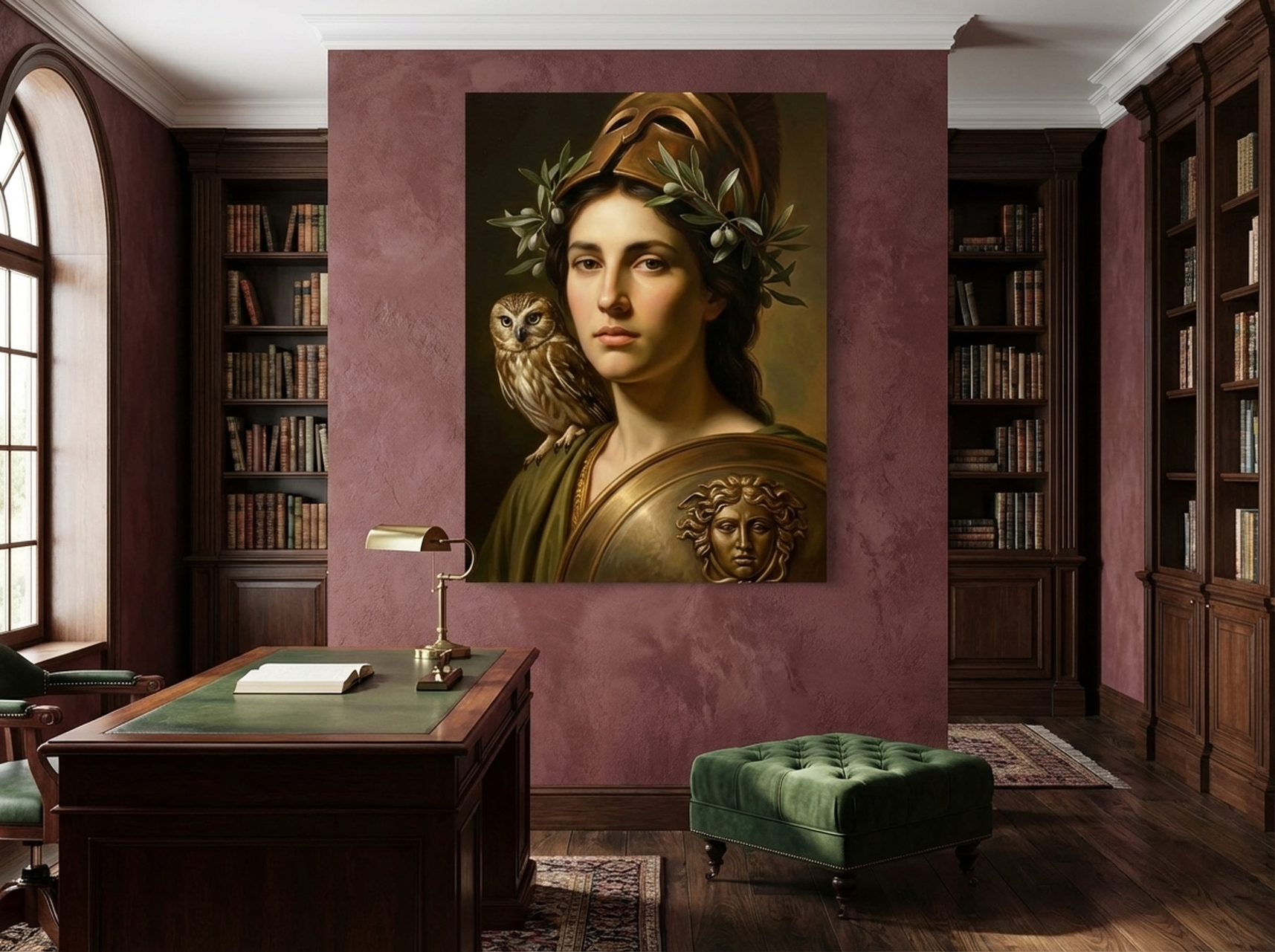
Classical portraits like this Athena piece work in both formats, but the canvas version adds a museum-like gravitas that a glass-framed version sometimes loses to reflections. The rich browns, olive greens, and gold highlights in this Renaissance-inspired painting have an old-master quality that the canvas texture enhances. This is a powerful choice for a library, formal office, or a dark accent wall where you want the art to command attention. Pair it with a deep espresso or black frame option for maximum dramatic impact.
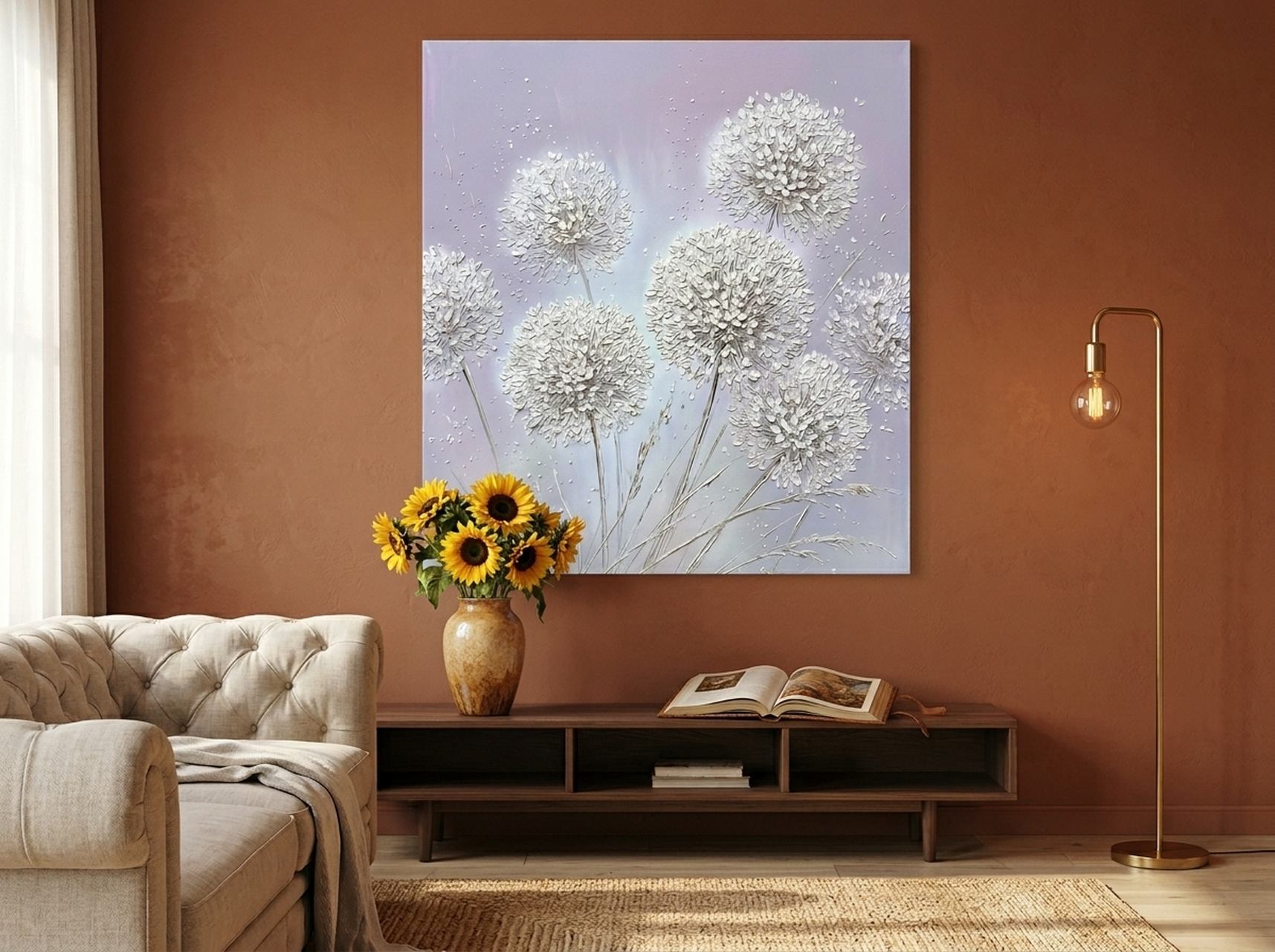
4. Allium Floral Impasto Painting
Thick, sculptural impasto brushstrokes define this allium floral piece, and those raised-texture effects look their absolute best on canvas. The lavender, white, and silver palette brings a calming, spa-like quality to bedrooms and bathrooms. If you want this in a bathroom, choose a wall away from the shower and keep the extractor fan running to manage humidity. In a bedroom, position it above the headboard or on the wall you see first thing in the morning for a gentle, uplifting start to the day.
5. Black Stallion Atmospheric Sepia Painting
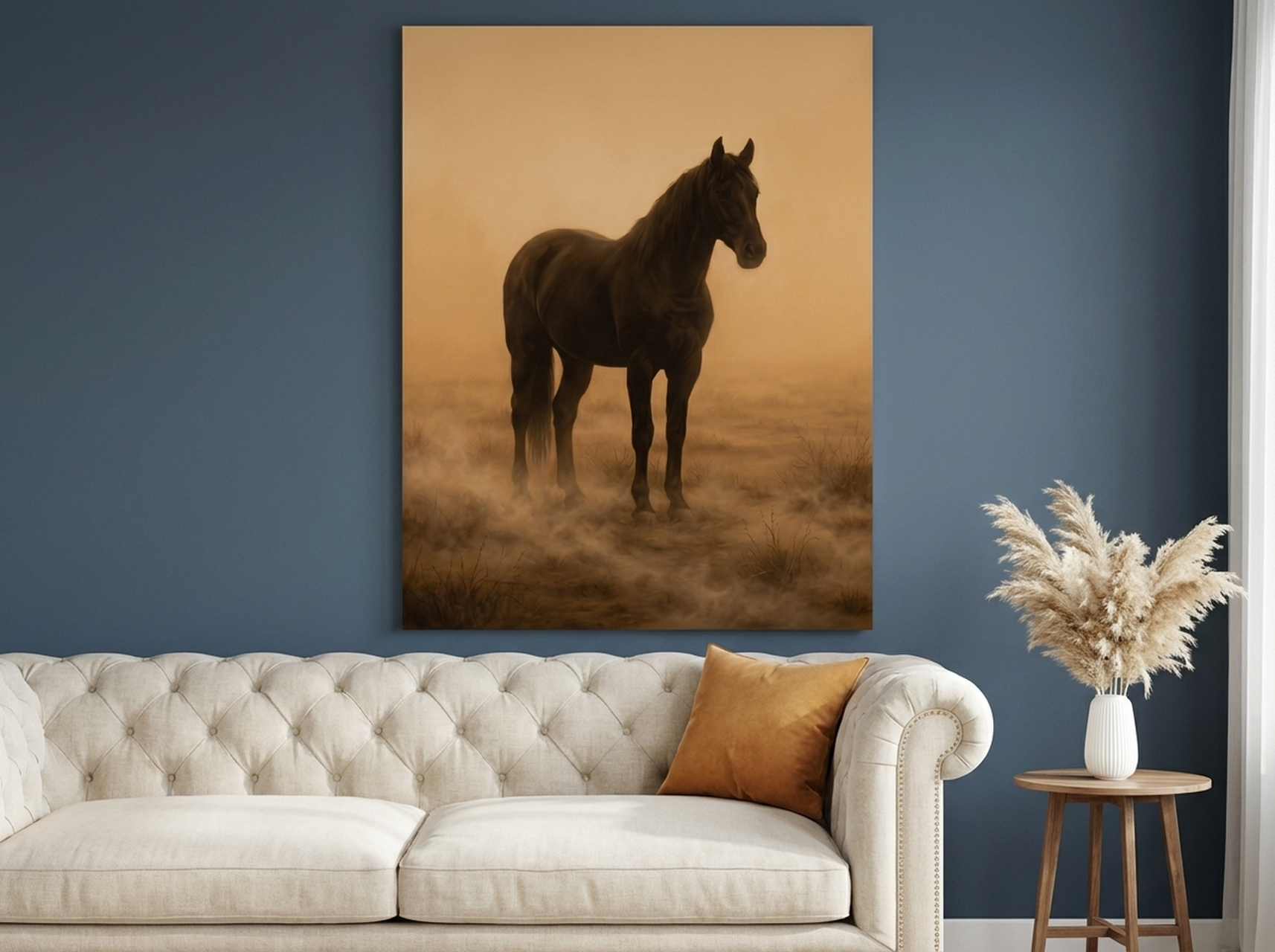
The moody, atmospheric quality of this black stallion painting demonstrates how tonal, sepia-range artwork gains emotional depth on canvas. The interplay of brown, tan, gold, and deep black tones creates a cinematic feel that would lose some of its intimacy behind glass. This piece is a natural fit for a masculine study, a Western-themed den, or a large entryway where you want to make a bold first impression. Hang it at eye level, roughly 145 cm (57 inches) from the floor to the centre of the piece, which is the standard gallery hanging height recommended by most museums.
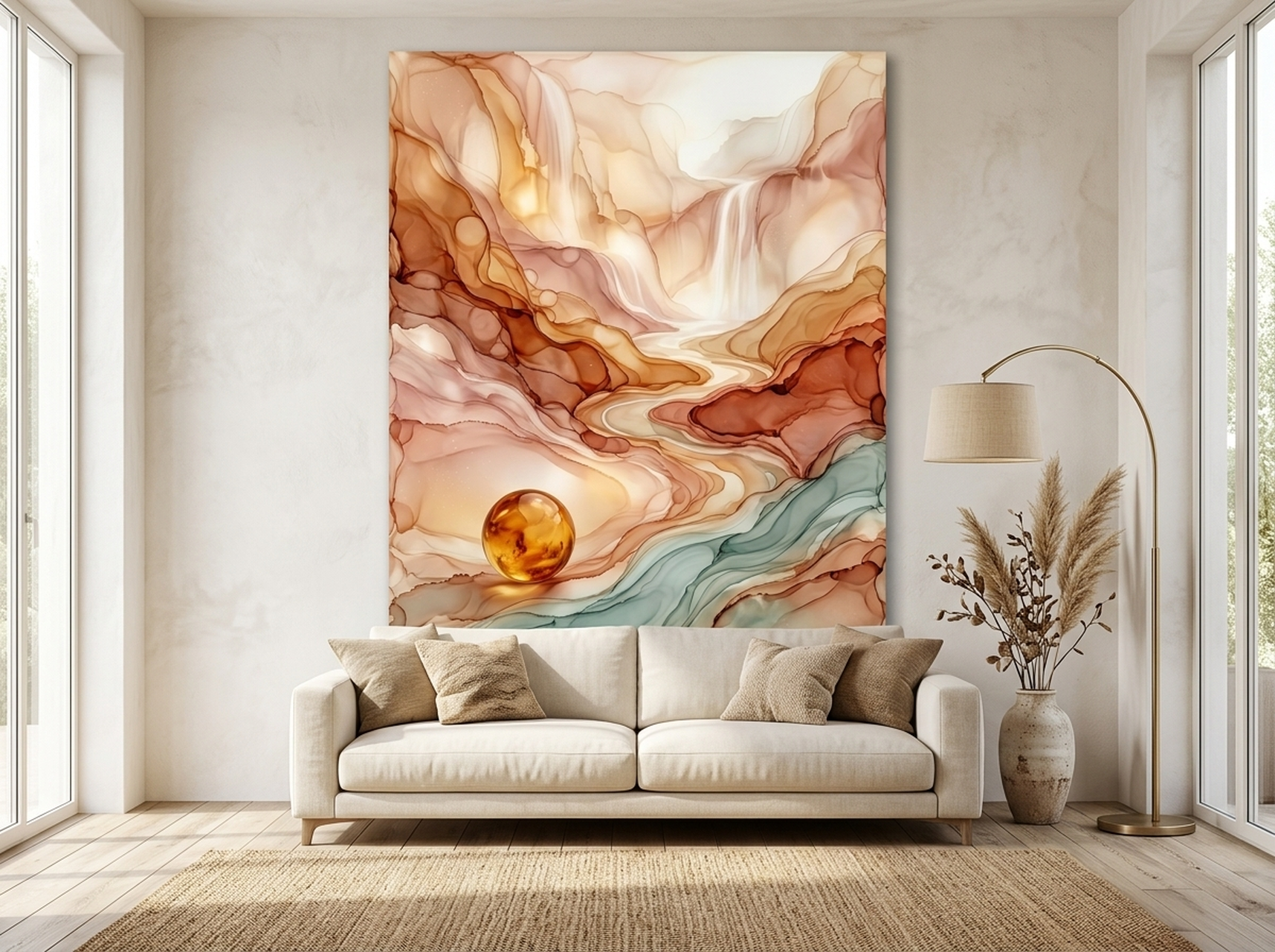
6. Fluid Abstract Landscape in Gold and Amber
Abstract art is where canvas truly excels. This fluid landscape blends gold, cream, terracotta, and tan into organic shapes that suggest rolling hills and warm skies without being literal. The canvas weave adds a subtle tactile dimension that makes the fluid paint effects feel genuinely hand-crafted. Place this in a modern living room above a low-profile media console, or in a minimalist dining room where the warm tones can anchor the space. The neutral palette means it pairs with almost any wall colour from soft white to charcoal.
View the Abstract Landscape Print
Your Buying Decision Checklist
Walk through these five questions before you add any art to your cart. They will point you toward the right format every time.
- Where will it hang? High-humidity rooms (bathrooms, kitchens near stoves) favour framed prints with sealed glass. Dry living spaces, bedrooms, and offices are ideal for canvas.
- How much natural light hits the wall? If direct sunlight lands on the art for more than 2 hours daily, framed prints with UV-resistant glass will protect the image for decades. Canvas in the same spot will show fading within 3 to 5 years.
- What is the art style? Painterly, impressionist, and abstract pieces gain texture and depth on canvas. Photographic prints, fine illustrations, and line-heavy designs look sharper behind glass.
- What is your wall construction? Plasterboard (drywall) with no stud behind it limits you to about 9 kg (20 pounds) with standard anchors. A large framed piece with glass may exceed that. Canvas stays well within the limit.
- What mood are you creating? Canvas feels relaxed, modern, and gallery-like. Framed prints feel polished, intentional, and traditional. Match the format to the room's personality.
Need help with the physical installation? Our complete hanging guide covers hardware, stud-finding, and precise measurement techniques.
5 Common Mistakes to Avoid
1. Ignoring Room Humidity
Hanging an unprotected canvas in a steamy bathroom is one of the fastest ways to ruin art. Canvas fabric absorbs ambient moisture, which can cause the material to sag, warp, or develop mould behind the stretcher bars within months. If you want art in a humid room, choose a framed print with sealed glazing, or position the canvas at least 90 cm (3 feet) from any water source and keep humidity below 60 percent with an extractor fan.
2. Choosing Based on Price Alone
Canvas prints are generally less expensive because they skip the glass and custom framing materials. But cheaper is not always better. If your art sits in direct sunlight for hours each day, the money you saved on canvas will cost you in faded colours within a few years. Factor in the specific conditions of your room, not just the price tag.
3. Hanging Too High
This applies to both formats, but is especially common with framed prints because people instinctively hang heavier pieces higher. The centre of the artwork should sit at 145 to 150 cm (57 to 59 inches) from the floor, which is standard gallery height. Above a sofa, leave 15 to 20 cm (6 to 8 inches) between the top of the furniture and the bottom edge of the art. Too much gap makes the piece feel disconnected from the room below it.
4. Mismatching Art Style and Format
A photorealistic wildlife photograph can lose its crispness on canvas because the woven texture softens fine details. Conversely, a heavily textured oil painting behind glass can look flat and lifeless because the smooth glazing flattens the brushstroke illusion. Match the art's visual language to the format that amplifies it: texture-heavy art on canvas, detail-heavy art behind glass.
5. Forgetting About Glare Before Hanging
Walk into the room at different times of day and note where light hits the walls. If a wall catches afternoon sun or reflects a lamp directly, a glass-framed print will throw glare that obscures the image for hours. Canvas solves this completely. If you must use glass in a bright spot, invest in anti-reflective or museum-grade glazing, which can cut reflections by over 90 percent.
Frequently Asked Questions
Is canvas wall art more modern than framed prints?
Canvas prints tend to look more contemporary because of their frameless, floating appearance and matte texture. However, the overall feel depends on the artwork itself and the frame you choose. A canvas print of a classical portrait can look traditional, while a framed print of geometric abstract art can look very modern. The format nudges the mood, but the artwork and frame selection determine the final aesthetic.
Can I hang canvas prints in a bathroom?
Yes, with precautions. Position the canvas at least 90 cm (3 feet) from the shower or bath, and always run the exhaust fan during and after showering to keep relative humidity below 60 percent. Avoid hanging canvas directly above a bathtub. For a bathroom with poor ventilation, a framed print behind sealed glass is the safer long-term choice.
Do your canvas prints come with frames?
Yes. Every canvas print ships in a sturdy frame with pre-installed hanging hardware. Choose from four frame colours: black, white, espresso, or natural wood. The canvas is printed on premium matte material and arrives ready to hang straight out of the box.
How do I clean canvas wall art without damaging it?
Use a soft, dry microfibre cloth and gently wipe in one direction across the surface every 2 to 4 weeks. Never use water, cleaning sprays, or damp cloths on canvas, as moisture can warp the fabric and damage the inks. For stubborn dust in textured areas, use a clean, dry soft-bristle brush. Keep canvas prints out of direct sunlight and away from heating vents to maximise their lifespan.
Which format is better for a gallery wall arrangement?
Framed prints generally create a more cohesive gallery wall because the uniform frame borders tie different-sized pieces together visually. If you prefer a more relaxed, eclectic look, mixing canvas pieces of varying sizes can work beautifully, especially if you keep the frame colour consistent. For a step-by-step gallery wall layout process, see our gallery wall guide.
How heavy is a framed canvas print compared to a glass-framed print?
A framed canvas print (without glass) is only marginally heavier than an unframed gallery-wrapped canvas, typically adding 0.2 to 0.5 kg (0.5 to 1 pound) for the frame material. The major weight difference comes from glass: adding glass to a 61 x 91 cm (24 x 36 inch) piece adds approximately 2.7 to 4.5 kg (6 to 10 pounds). Our framed canvas prints do not include glass, so they remain lightweight and easy to hang with basic hardware.
Quick Reference Table
| Product | Best For | Dominant Colours | Link |
|---|---|---|---|
| Highland Cow Impressionist | Farmhouse living room, reading nook | Orange, brown, cream | View |
| Birch Forest Autumn | Bedroom, dining room | Gold, orange, white | View |
| Athena Greek Goddess | Library, formal office, dark accent wall | Brown, gold, olive | View |
| Allium Floral Impasto | Bedroom, bathroom (with ventilation) | Lavender, white, silver | View |
| Black Stallion Sepia | Study, entryway, den | Brown, tan, gold, black | View |
| Fluid Abstract Landscape | Modern living room, minimalist dining room | Gold, cream, terracotta | View |
Final Thoughts
The canvas-versus-framed decision comes down to three things: your room's conditions, your art's visual style, and the mood you want to create. Canvas gives you a warm, textured, glare-free experience that feels modern and gallery-like. Framed prints give you protection, structure, and a classic polish that suits formal spaces and harsh lighting conditions. There is no wrong answer, only a better match for your specific wall.
Find the right piece for your walls. Browse the full canvas art collection and choose the format and frame that fits your room perfectly.