Easter Wall Art Decor Ideas for Living Room Spring
The Heva Team
Art Curators & Interior Design Enthusiasts · February 5, 2026 · 17 min read
Celebrate Easter with beautiful spring wall art that brings joy and renewal to every room.
Easter decor has never been limited to wicker baskets and foil-wrapped eggs. The most memorable seasonal interiors take cues from Easter's deeper themes: renewal, light returning after darkness, and the quiet beauty of early spring. The right wall art communicates all of that in a single glance, without a single plastic egg in sight. This guide is for anyone who wants their home to feel genuinely transformed for Easter, not just decorated. You will find six curated canvas prints with specific placement advice, a deep dive into the colour symbolism behind the season, and a practical guide to measurements so everything hangs perfectly the first time.
Ready to browse? Shop the full Sacred Spaces collection or keep reading for our top picks and expert tips.
Easter Decor Beyond the Basket
Most Easter styling advice stops at the dining table centrepiece. But the walls of your living room, hallway, and bedroom create the ambient backdrop for every Easter gathering and quiet Sunday morning alike. A single well-chosen canvas can shift the emotional register of a room from generic spring to genuinely sacred and celebratory. The difference is art that understands Easter's dual nature: the spiritual weight of the Christian narrative and the sensory joy of spring finally breaking through.
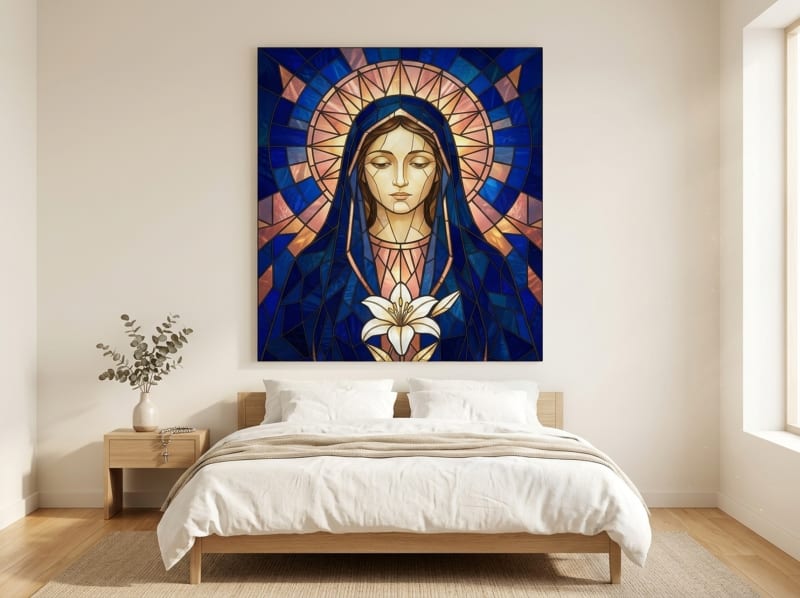
Stained glass imagery carries centuries of Easter association. The jewel-toned blues, purples, and golds of traditional church windows are immediately recognisable as sacred. The Virgin Mary Stained Glass canvas brings that visual language into a domestic setting without requiring any existing religious decor to make sense. It works as a seasonal focal point or as a year-round anchor in a faith-inspired room.
Spring florals speak to the secular tradition of Easter as a seasonal celebration. Cherry blossoms, wildflowers, and botanical prints connect the holiday to the natural world's actual renewal cycle. According to the Wikipedia, cherry blossom has been a symbol of renewal and the fleeting beauty of life for over a thousand years in East Asian cultures, a meaning that translates powerfully into Easter's themes of resurrection and rebirth.
You do not have to choose between the spiritual and the botanical. The most layered Easter interiors blend both, using faith-inspired art as a focal point and botanical or landscape pieces to soften the room and extend the seasonal feeling. If you are decorating a hallway or entryway, read our guide on hallway wall art ideas for scale and placement advice specific to entry spaces.
Easter Colour Symbolism: What Each Shade Means
Colour is not decoration for its own sake. In Easter's long liturgical and cultural history, specific colours carry specific meanings. Understanding them helps you build an interior that communicates on a deeper level than seasonal novelty.
Gold and White: Resurrection and Light
Gold and white are the liturgical colours of Easter Sunday in many Christian traditions, representing resurrection, purity, and divine light. In a home decor context, these tones add warmth and a sense of occasion without tipping into ostentation. An ivory or warm white wall works as the ideal backdrop for gold-toned art. Canvas prints with gold lettering, cream backgrounds, or sun-lit landscapes all draw on this symbolism, whether intentionally or not.
Purple: Sacrifice, Royalty, and Lent's Echo
Purple is the colour of Lent, the forty-day period of reflection that precedes Easter. Hanging deep violet or aubergine-toned art in the weeks before Easter, then transitioning to gold and white on Easter Sunday itself, creates a visual journey through the season. Purple is also associated with royalty, which connects to the Christian belief in Christ as King. A deep plum or indigo canvas in a living room reads as sophisticated rather than overtly religious, making it a versatile choice for any household.
Green: Renewal, Growth, and New Life
In both secular and liturgical traditions, green signals the return of life. After Lent's austerity, Ordinary Time in the Catholic church is marked by green vestments, symbolising growth and renewal. For Easter decor, greens appear in botanical prints, landscape canvases, and any art featuring foliage or meadows. According to a 2019 study published in the Journal of Environmental Psychology, exposure to green and natural imagery indoors measurably reduces stress and increases feelings of vitality, which makes botanical Easter art both symbolically and psychologically appropriate.
Soft Pink and Lavender: Spring Femininity and Hope
While not historically liturgical, soft pink and lavender have become central to the modern Easter palette. These tones evoke cherry blossoms, Easter lilies, and the gentle pastels of early spring. They work exceptionally well in bedrooms and dining rooms where you want Easter to feel celebratory without being heavy. Pair pale pink art with natural wood frames and white walls for a Scandinavian-influenced Easter aesthetic that feels current and considered.
For a deeper exploration of how colour affects mood in interior spaces, read our guide on the psychology of colours in wall art.
6 Canvas Prints for an Easter Home
1. Lion and Dove: Impressionist Christian Peace
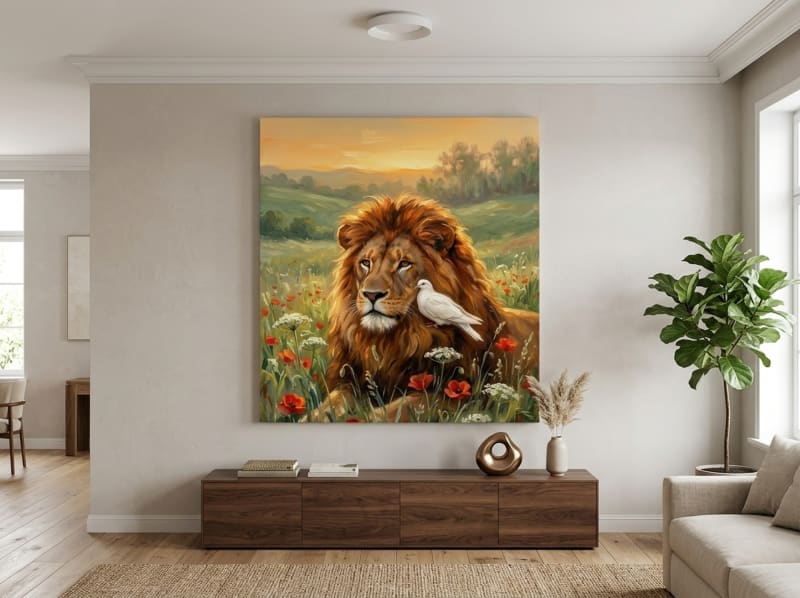
Few images in Christian iconography carry as much Easter resonance as the lion and the dove together. The lion represents Christ's kingship and the triumph of resurrection. The dove represents the Holy Spirit and the peace that Easter promises after the anguish of Good Friday. This impressionist interpretation renders both animals in soft, luminous tones, giving the piece warmth without sentimentality. It reads well from across a living room and holds its visual interest up close, where the painterly brushwork becomes visible.
Best placement: above a fireplace mantle or on the main accent wall of a living room. At 60 x 80 cm (24 x 32 inches), it needs at least 15 cm (6 inches) of clear wall space on each side to breathe. Pair it with ivory or warm white walls and natural wood or antique gold frames for a cohesive Easter display. View the Lion and Dove canvas.
2. Jesus Embracing Man: Painterly Christian Art
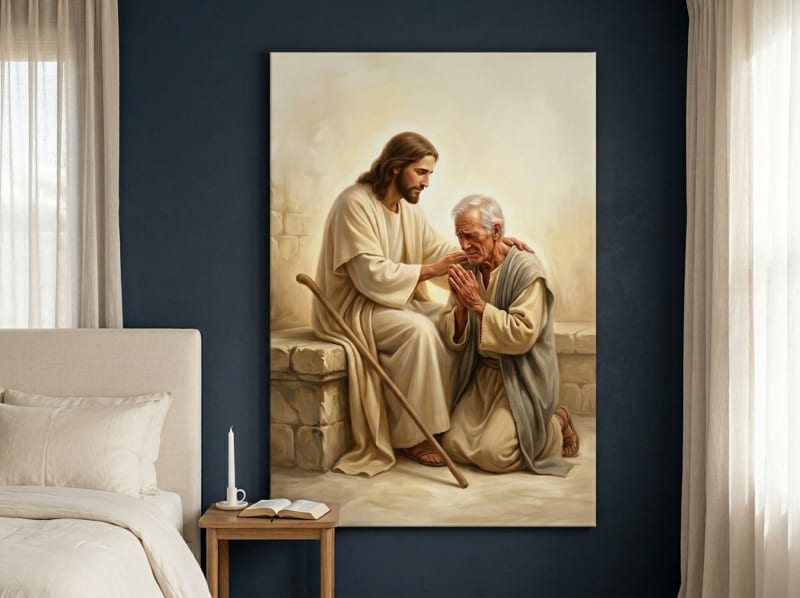
This piece depicts one of the most emotionally direct images in Christian art: the embrace of Christ. For Easter, it connects specifically to the themes of redemption and reconciliation that lie at the heart of the holiday. The painterly style, with loose brushstrokes and warm ochre and sienna tones, gives it the feeling of a well-loved old master print rather than a contemporary religious illustration. It avoids the saccharine quality that makes some Christian art difficult to hang in a living space.
It works particularly well in a prayer room, bedroom, or any space where quiet reflection happens. Pair it with a cream linen sofa and natural wood shelving for a warm, grounded Easter aesthetic. The rich earth tones hold up in both well-lit and more subdued rooms, making this one of the more versatile faith-inspired pieces in the collection. View the Jesus Embracing Man canvas.
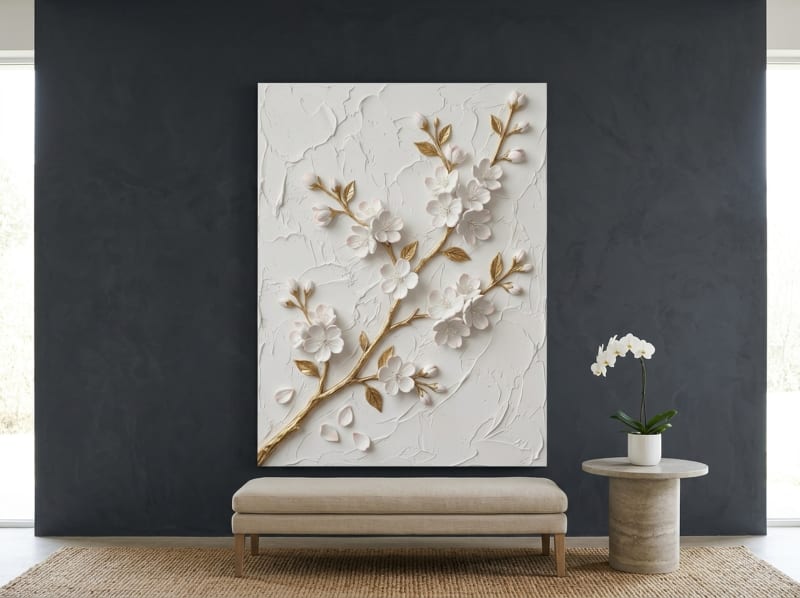
3. Cherry Blossom: Spring Renewal in Sculptural Relief
Cherry blossom is one of nature's most efficient symbols of seasonal renewal, which makes it a natural fit for Easter. This canvas interprets the classic floral motif through a sculptural relief style, with white and soft gold tones that elevate it well beyond a standard botanical print. The textured effect catches light differently throughout the day, making it a piece that rewards ongoing attention rather than fading into the wall after the first week.
It suits bedrooms, dining rooms, and living rooms equally well. The neutral white and gold palette means it pairs with almost any existing colour scheme, from a blush and cream bedroom to a sage green living room. At 60 x 80 cm (24 x 32 inches), it works as a standalone statement or as the centrepiece of a small gallery wall with two flanking prints, keeping gaps between frames to 5 to 8 cm (2 to 3 inches). View the Cherry Blossom canvas.
4. Botanical Scripture: Vintage Ecclesiastes Wildflower
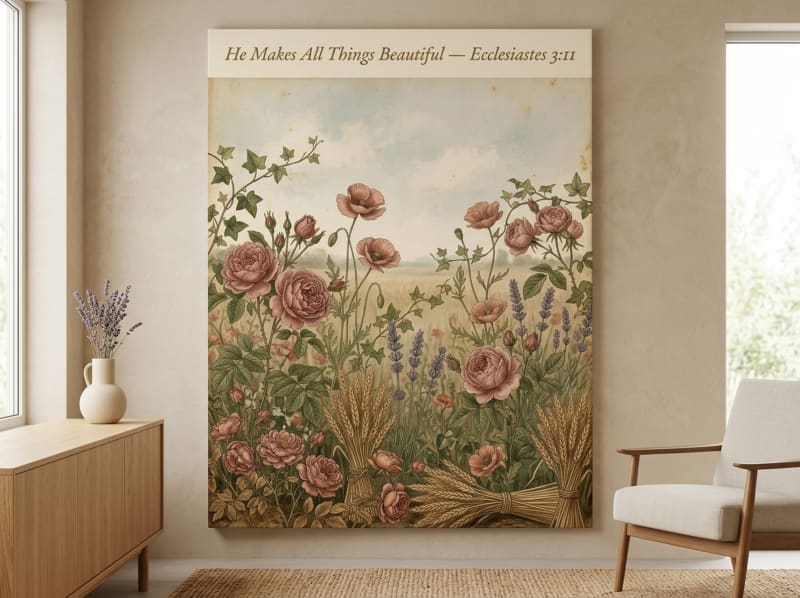
This piece combines two Easter traditions in a single image: the botanical, with delicate pressed-flower illustrations reminiscent of Victorian herbarium prints, and the scriptural, with text from Ecclesiastes woven through the design on an aged parchment background. The result is art that communicates seasonal renewal and faith simultaneously, without the visual tension that sometimes occurs when the two are blended clumsily.
The vintage aesthetic means it pairs well with antique mirrors, aged-wood frames, and any interior with a heritage or cottage-style sensibility. It also works in more contemporary spaces as an intentional contrast piece, where the warmth of the parchment tones offsets cooler greys or whites. Particularly strong in dining rooms, where guests will have time to read and appreciate the scriptural text during an Easter meal. View the Botanical Scripture canvas.
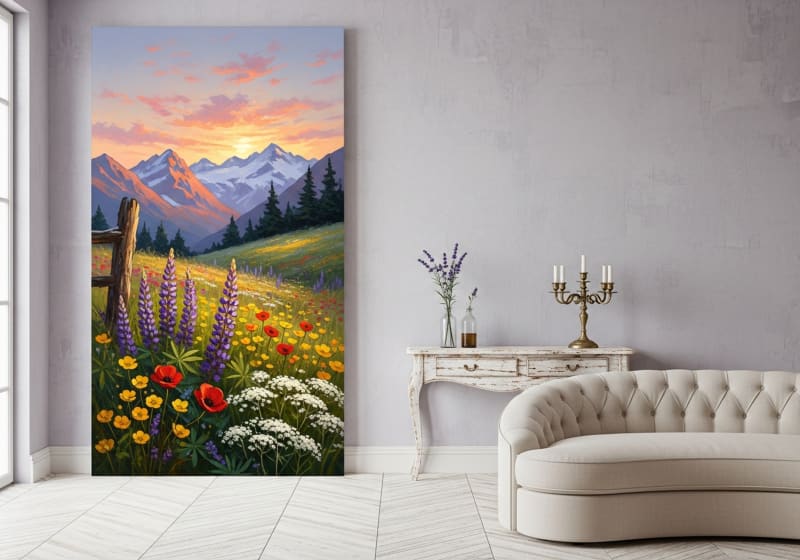
5. Wildflower Meadow: Mountain Landscape Spring
Not every Easter piece needs to carry explicit spiritual imagery. This mountain landscape captures the sensory experience of spring at its most expansive: a wildflower meadow stretching toward snow-capped peaks, with purples, golds, and greens that feel genuinely seasonal. It connects to Easter's celebration of renewal through the natural world rather than through iconography, which makes it a versatile choice for households where faith-specific imagery is not the primary focus.
The purple wildflowers are a particularly useful design detail for Easter: they echo the liturgical purple of Lent while reading entirely naturally in a landscape context. Hang this piece in a living room or bedroom where you want Easter to feel present but subtle. It reads well from 3 metres (10 feet) away, making it ideal for larger rooms where smaller canvases would be lost. View the Wildflower Meadow canvas.
6. Mountain Cross: Impressionist Christian Landscape
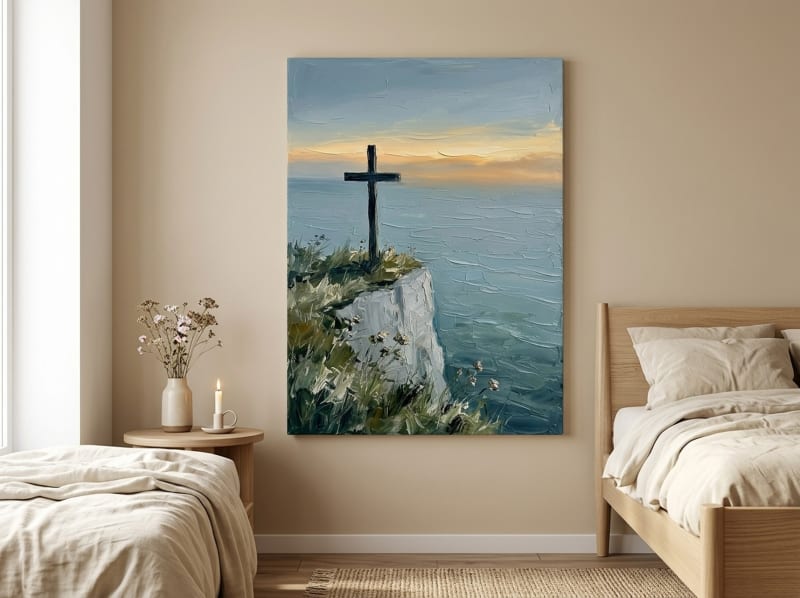
A cross on a mountain summit is one of the most direct possible Easter symbols, but this impressionist rendering softens what could be a confrontational image into something genuinely contemplative. The misty blues and greys of the mountain landscape give the piece emotional depth, and the loose, painterly treatment of the cross itself prevents it from feeling like signage. This is art for people who want Easter's central symbol present in their home without dominating every other decorative choice.
It works particularly well in hallways, where it greets visitors with a seasonal message, and in living rooms as part of a curated faith-inspired display. If you are building a gallery wall with an Easter or faith theme, this piece works as a natural anchor because its vertical composition and cooler palette create visual breathing room around warmer, more figurative pieces. View the Mountain Cross canvas.
Placement Guide: Where and How to Hang Easter Wall Art
The most common placement mistake is hanging art too high. The standard rule among interior designers is that the centre of the artwork should sit at eye level: approximately 145 to 152 cm (57 to 60 inches) from the floor. This applies whether the art is above a sofa, a bed, or standing alone on an accent wall.
When hanging art above furniture, leave a gap of 15 to 25 cm (6 to 10 inches) between the top of the furniture and the bottom of the frame. Any smaller and the art appears to be resting on the furniture. Any larger and the relationship between the two elements reads as disconnected. For a full breakdown of sizing rules, read our guide on how to choose the right wall art size.
Living room: The accent wall behind the sofa is the primary placement zone for a single large canvas. For Easter, a faith-inspired piece like the Lion and Dove or Mountain Cross works well here because it anchors the room's seasonal identity from the most-viewed wall. A 60 x 80 cm (24 x 32 inch) canvas on a standard sofa wall (typically 250 to 300 cm, or 98 to 118 inches wide) leaves room for flanking objects or smaller prints without crowding.
Dining room: The wall at the head of the table, or the wall most visible from seated positions, is the right location for Easter art in a dining room. This is where guests spend the most time looking. A botanical print like the Botanical Scripture works well here because its vintage paper tones complement table linen, candles, and natural Easter table decorations without competing for visual attention.
Bedroom: Easter art in a bedroom works best when it contributes to the room's existing calm. The Cherry Blossom relief print and the Wildflower Meadow both have palettes that integrate easily with bedroom colour schemes. Hang a bedroom piece 15 to 20 cm (6 to 8 inches) above the headboard for the most proportionate result. The centre of the canvas should not exceed 152 cm (60 inches) from the floor regardless of headboard height.
Hallway: A hallway Easter display creates an immediate seasonal impression as guests arrive. The Mountain Cross is a strong hallway choice because its vertical composition works in a narrow space. Ensure any hallway piece has at least 10 cm (4 inches) of clearance on each side and that the centre sits at the same 145 to 152 cm (57 to 60 inch) height standard. For more hallway-specific advice, see our full guide on entrance and hallway wall art ideas.
Lighting: Natural light enhances the impressionist canvases in this selection. If placing art opposite a window is not possible, a dedicated picture light (a small directional lamp mounted above the frame) adds the warm, gallery-quality illumination that makes painted canvases come alive in the evening. Aim for 2,700 to 3,000 Kelvin for warm light that flatters ochre, cream, and gold tones without washing out the cooler blues in the Mountain Cross and Virgin Mary pieces.
Common Mistakes to Avoid With Easter Wall Art
1. Treating Easter Art as Strictly Seasonal
If you choose art specifically for Easter and plan to take it down in late April, you will almost certainly choose something generic. The six pieces in this guide work year-round in faith-inspired or spring-themed rooms. Buy art you love, and the seasonal resonance becomes a natural bonus rather than the only justification for the purchase. A canvas that earns its wall space every month of the year is always a better investment than a piece that works for three weeks.
2. Matching Colours Too Closely to Easter Stereotypes
Pastel yellow, baby blue, and mint green feel dated in a contemporary interior. The most sophisticated Easter palettes use deeper, more grounded versions of seasonal colours: warm gold instead of lemon yellow, sage instead of mint, dusty mauve instead of baby lavender. Every canvas in this guide uses palette versions of Easter colours that read as intentional and current rather than as seasonal novelty from a gift shop window.
3. Hanging Art Too Small for the Wall
A 30 x 40 cm (12 x 16 inch) canvas on a 300 cm (118 inch) wall looks like a postage stamp. Easter accent walls need at least a 60 x 80 cm (24 x 32 inch) canvas to hold visual weight. If budget constraints mean a smaller piece is the only option, group it with two or three complementary prints in a tight gallery arrangement, keeping gaps between frames to no more than 5 to 8 cm (2 to 3 inches). The combined footprint of the group should cover 50 to 75 per cent of the available wall width.
4. Ignoring the Room's Existing Colour Temperature
Warm-toned art, with golds, ochres, and creams, clashes with cool grey or blue-toned walls. Before choosing your Easter canvas, identify whether your room runs warm (cream, beige, terracotta accents) or cool (grey, white, blue accents). The Lion and Dove, Jesus Embracing Man, and Botanical Scripture all run warm. The Mountain Cross runs cooler. The Cherry Blossom and Wildflower Meadow are neutrals that bridge both camps and work in almost any existing colour scheme.
5. Forgetting to Consider Lighting Conditions
Impressionist canvases with textured surfaces look dramatically different in a north-facing room (cool, flat light) versus a south-facing one (warm, directional light). Visit the space at different times of day before deciding on placement, and consider supplementing with directional picture lighting in any room that lacks good natural light. A canvas that looks flat in a dim corner can be transformed by a well-positioned 10-watt LED spot aimed at a 30-degree angle from above the frame.
Frequently Asked Questions About Easter Wall Art
What size canvas is best for an Easter focal point?
For a main living room or dining room focal point, a 60 x 80 cm (24 x 32 inch) or larger canvas works best. Smaller canvases suit hallways, bedrooms, or gallery arrangements. The standard rule is that the art should cover 50 to 75 per cent of the available wall width when displayed as a solo piece. For a typical living room accent wall of 250 cm (98 inches) wide, that means a canvas or arrangement spanning at least 125 cm (49 inches).
Can I mix Christian and botanical Easter art in the same room?
Yes, and it often works better than keeping them separate. Faith-inspired pieces tend to be warm-toned and figurative, while botanical prints are lighter and more graphic. The contrast creates visual interest without visual chaos. Use a consistent frame style, such as all black frames or all natural wood, to tie mixed pieces together into a deliberate Easter display rather than a random collection.
Do I need to change my wall art every Easter?
No, if you buy well the first time. Art with genuine quality and themes that extend beyond seasonal novelty, such as the six pieces in this guide, works year-round. You can refresh the surrounding decor seasonally, with cushions, candles, and table styling, while the canvas stays put and provides year-round value. The cost per day of a quality canvas that earns its wall space for twelve months is far lower than a seasonal print that comes down in May.
What wall colours work best with Easter-themed art?
Warm whites and off-whites work with nearly every canvas in this guide. Deep navy or charcoal walls create a dramatic backdrop for gold-toned pieces like the Lion and Dove or Jesus Embracing Man. Sage green walls pair exceptionally well with botanical and landscape canvases and reinforce the spring colour narrative. Avoid cool greys with warm-toned pieces, as the temperature clash tends to make both the wall and the art look muddy.
How do I style an Easter gallery wall without it looking cluttered?
Keep the theme tight: faith and spring, rather than a general mix of art styles. Choose a dominant piece (60 x 80 cm or larger) and flank it with two or three smaller prints, keeping all gaps to 5 to 8 cm (2 to 3 inches). Use one consistent frame style across the group. Lay the full arrangement out on the floor before marking the wall, so you can see the composition without committing to nail holes. Read our full gallery wall step-by-step guide for detailed instructions.
Quick Reference: Easter Wall Art at a Glance
| Product | Best For | Dominant Colours | Link |
|---|---|---|---|
| Lion and Dove | Living room focal point | Gold, cream, soft brown | View |
| Jesus Embracing Man | Prayer room, bedroom | Ochre, sienna, warm white | View |
| Cherry Blossom | Bedroom, dining room | White, soft gold, ivory | View |
| Botanical Scripture | Dining room, cottage style | Parchment, sage green, muted pink | View |
| Wildflower Meadow | Living room, bedroom | Purple, gold, mountain blue | View |
| Mountain Cross | Hallway, living room accent | Misty blue, grey, white | View |
Easter is one of the few occasions in the year where interior decor, spiritual meaning, and seasonal beauty genuinely intersect. The six pieces above each speak to a different aspect of that intersection: some through explicit Christian imagery, others through the botanical and landscape language of spring itself. Whether you are dressing a living room for an Easter Sunday gathering or refreshing a bedroom for the season, the right canvas shifts the room from decorated to genuinely transformed. Browse the full Sacred Spaces collection to find the piece that fits your home.