Hallway Wall Art Ideas: Make Your Entrance Unforgettable
The Heva Team
Art Curators & Interior Design Enthusiasts · February 13, 2026 · 13 min read
Turn your hallway from a blank tunnel into a design statement. Sizing advice for narrow walls, lighting tips for windowless corridors, and six canvas prints that shine in entryways.
Your hallway is the first thing guests see when they step inside. It sets the mood for every room that follows, yet most homeowners treat it as a blank tunnel between the front door and the living area. A single well-chosen piece of wall art can turn that overlooked corridor into a genuine design moment, one that makes people pause, look up, and feel welcomed before they even take off their coat.
In this guide, you will find practical sizing advice for narrow walls, lighting strategies for windowless corridors, and six handpicked canvas prints that work beautifully in hallways and entryways of every size. Whether your entrance is a grand foyer or a slim apartment passage, you will leave with a clear plan.
Ready to Browse?
Every piece in our collection is a gallery-quality framed canvas print that arrives ready to hang. Free US shipping on all orders.
or keep reading for our top picks and expert tips
What You Will Find in This Guide
- Sizing Art for Narrow Hallway Walls
- Lighting Strategies for Windowless Hallways
- Vertical vs Horizontal: How Orientation Affects Ceiling Height
- 6 Canvas Prints That Shine in Hallways
- Arrangement Guide: Single Statement vs Gallery Row
- 5 Common Hallway Art Mistakes
- Hallway Art FAQ
- Quick Reference Table
Sizing Art for Narrow Hallway Walls
Hallways present a unique challenge because the walls are typically 90 to 120 cm (36 to 48 inches) wide and the viewing distance is short, often less than 120 cm (4 feet). That combination means oversized art can overwhelm the space, while undersized pieces vanish against the wall.
The sweet spot for a single piece in a standard hallway is 40 to 60 cm (16 to 24 inches) wide. This covers roughly 50 to 60 percent of the wall width without crowding the corridor. For longer hallways with a feature wall at the end, you can go larger, up to 75 cm (30 inches) wide, because the viewer approaches head-on and the extra distance gives the art room to breathe.
Height matters just as much. The museum standard, known as the 57-inch rule, places the centre of the artwork at 145 cm (57 inches) from the floor. This aligns with average eye level and ensures comfortable viewing whether you are standing still or walking past. Artfully Walls recommends this 57-inch centre line as the universal starting point for every room, including hallways. For a deeper look at sizing principles, see our guide on how to choose the perfect wall art size.
If your hallway has a console table or bench beneath the art, leave 15 to 20 cm (6 to 8 inches) of breathing room between the top of the furniture and the bottom edge of the frame. This gap prevents the composition from feeling cramped and gives the eye a natural resting point.
Lighting Strategies for Windowless Hallways
Most hallways lack natural light, which makes artificial lighting essential for showcasing wall art. Without proper illumination, even a stunning canvas can look flat and dull.
Picture lights are the simplest upgrade. A battery-operated brass or matte black picture light mounted 8 to 10 cm (3 to 4 inches) above the frame casts a focused wash of warm light directly onto the canvas. Look for LED bulbs rated at 2700K to 3000K for a warm, gallery-like glow that flatters both cool and warm colour palettes.
Recessed ceiling spots work well in hallways with standard 240 cm (8 foot) ceilings. Angle each spotlight at about 30 degrees from vertical to reduce glare on the canvas surface. Space them 60 to 90 cm (24 to 36 inches) apart if you are lighting a gallery row of multiple pieces.
Wall sconces flanking a single artwork add drama and symmetry. Place them at the same height as the artwork centre line and 20 to 25 cm (8 to 10 inches) out from each side of the frame. This creates a pool of ambient light that makes the hallway feel wider and more inviting, exactly the effect Homes and Gardens highlights in their entryway decor guide.
For a walkthrough on mounting hardware and hanging techniques, our complete guide to hanging wall art covers every step from stud-finding to final levelling.
Vertical vs Horizontal: How Orientation Affects Ceiling Height
The orientation of your artwork has a measurable impact on how tall or wide your hallway feels. This is not just opinion; it is basic visual perception at work.
A vertically oriented canvas draws the eye upward, making low ceilings feel taller. If your hallway has standard 240 cm (8 foot) ceilings, a tall portrait-format piece, say 60 cm wide by 90 cm tall (24 by 36 inches), will visually stretch the space. This is especially effective at the end of a corridor, where the artwork acts as a focal point that pulls guests forward.
Horizontal or landscape-format art has the opposite effect. It emphasises width, which helps a very narrow hallway feel less like a tunnel. A piece measuring 75 cm wide by 50 cm tall (30 by 20 inches) mounted along the longest wall creates a sense of lateral expansion. Pair it with a low-profile console table and you have a vignette that feels deliberately styled rather than an afterthought.
Square canvases are the neutral option. They neither stretch nor widen the perceived proportions, making them safe for hallways where you want the art to be the story without altering the architectural feel.
6 Canvas Prints That Shine in Hallways
Each of these picks has been chosen for its colour palette, scale, and ability to make a strong first impression in a hallway or entryway. Every canvas ships framed and ready to hang, with free US delivery.
1. Lotus Flower Gold Leaf Canvas
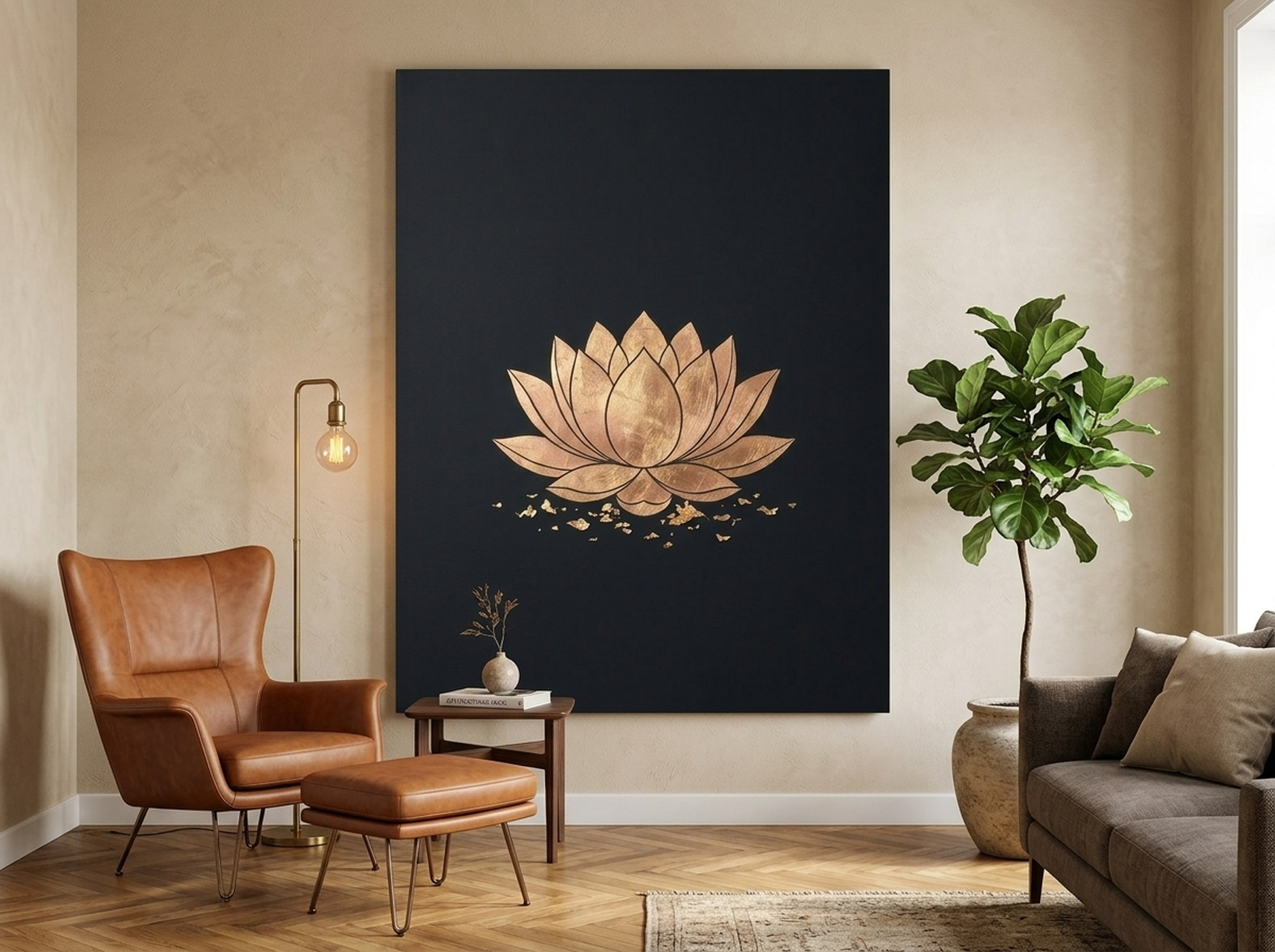
Sometimes a hallway needs restraint rather than spectacle, and this Lotus Flower canvas delivers exactly that. The black background recedes into a dark corridor while the gold leaf petals catch even the faintest light from a picture lamp or wall sconce. At just two dominant tones, black and gold, it pairs with virtually any wall colour from charcoal to warm white.
The minimalist composition works especially well in narrow passages under 100 cm (40 inches) wide because there is no visual clutter competing with the architecture. Hang it at the end of a long hallway to create a meditative focal point, or place it beside a console table with a small vase and a candle for a curated entryway vignette. The zen, spiritual quality of the lotus motif makes it a fitting welcome piece: calm, elegant, and instantly recognisable.
2. Fluid Abstract Landscape in Gold and Amber
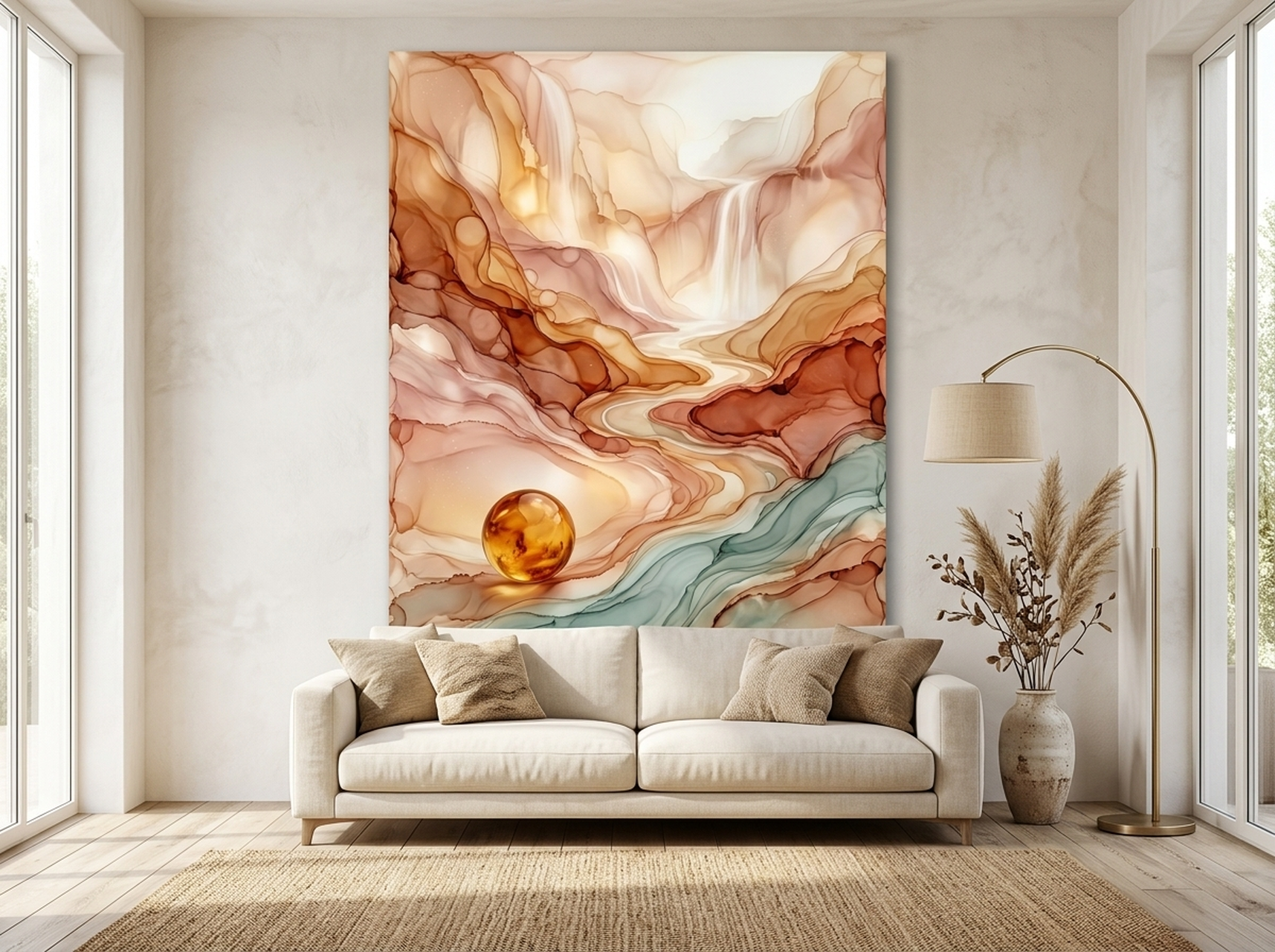
Abstract art removes the guesswork of matching themes to rooms. This Fluid Abstract Landscape uses layered washes of gold, amber, cream, and teal that blend into one another like a desert horizon at dusk. The warm palette adds depth to hallways painted in neutral tones such as greige, ivory, or soft taupe.
Because the composition has no strict top or bottom, you can orient it horizontally to widen a narrow corridor or vertically to add height in a low-ceilinged entry. The impasto-style texture catches side light beautifully, so even a single wall sconce will bring out the ridges and valleys of the brushwork. For more ideas on choosing abstract pieces, browse our ultimate guide to abstract wall art.
View the Fluid Abstract Landscape
3. Ronin Samurai Cherry Blossom Ukiyo-e Print
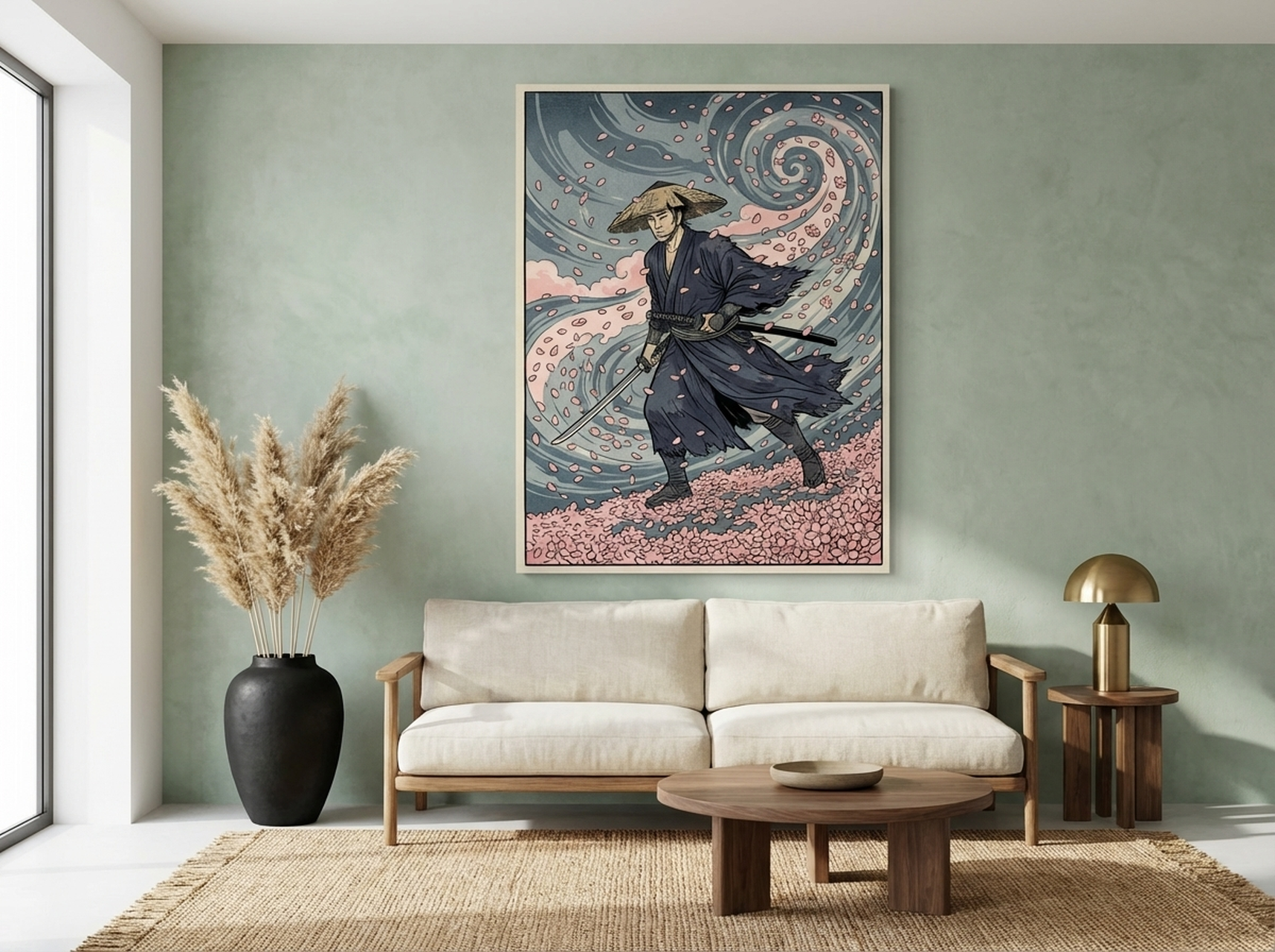
For hallways that double as a gallery of personal taste, a cultural piece makes a bold statement. This Ronin Samurai Cherry Blossom canvas channels the restrained elegance of traditional Japanese woodblock prints. The muted grays and charcoals of the armour contrast with delicate pink and rose cherry blossoms, creating a tension between strength and softness that catches the eye from several metres away.
The vertical portrait format is tailor-made for hallways. It draws the gaze upward and works as a standalone centrepiece on a feature wall or as the anchor in a three-piece gallery row. The subdued colour palette means it will not clash with bold runner rugs or patterned wallpaper. Pair it with a simple black frame and let the artwork speak for itself.
View the Ronin Samurai Cherry Blossom
4. Tropical Waterfall Forest Painting
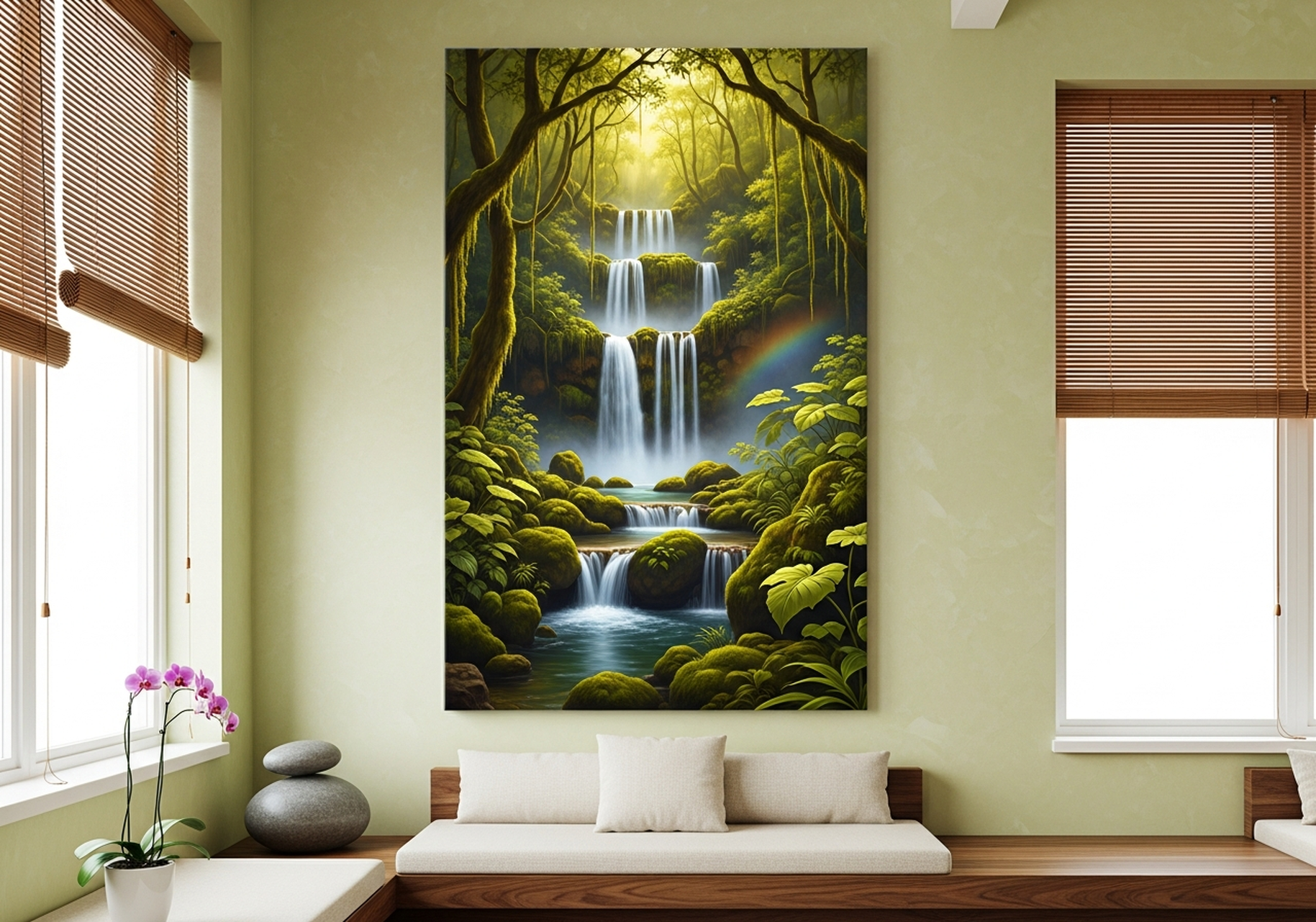
Nature scenes have a documented ability to reduce stress, making a lush green landscape in your entryway a visual reset the moment you walk through the door. This Waterfall canvas captures a cascading torrent surrounded by dense tropical foliage, the kind of scene that makes you breathe deeper just by looking at it.
The dominant greens and whites keep the palette fresh and bright, which is ideal for hallways that lack natural light. A warm-toned picture light at 3000K will bring out the golden highlights in the foliage without washing out the cooler blue-green tones. At a standard 60 by 90 cm (24 by 36 inch) size, it fills an end-of-corridor feature wall without overwhelming the passage.
5. Islamic Geometric Star Arabesque Canvas
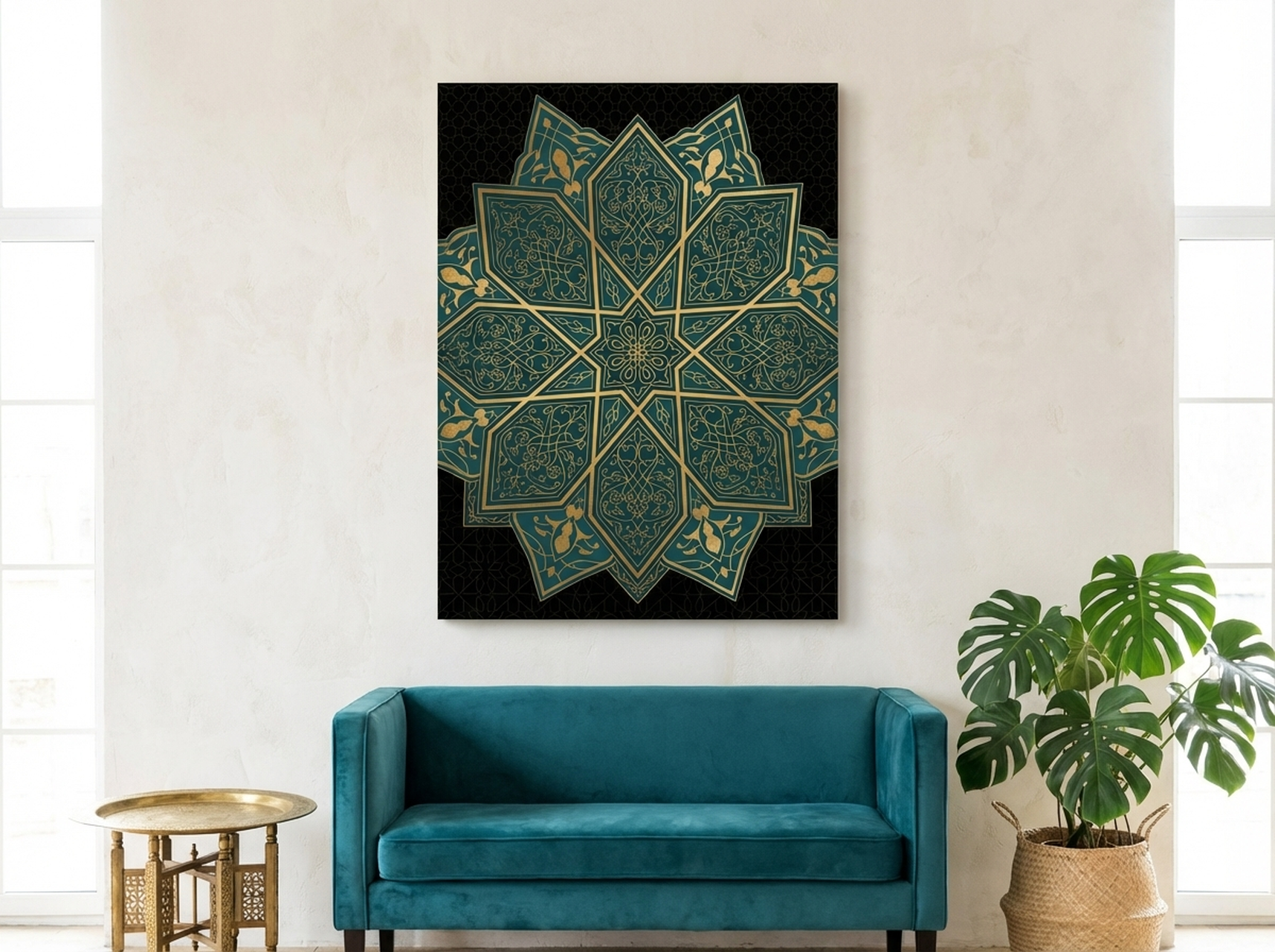
Geometric patterns are a designer favourite for hallways because they offer visual complexity without figurative subject matter. This Islamic Geometric Star canvas takes its cues from traditional zellige tilework, translating centuries-old Moroccan craftsmanship into a contemporary wall art format. The interlocking star pattern in teal and gold on a black ground feels both ancient and modern at once.
The symmetrical design naturally centres itself on a wall, making placement straightforward. It pairs beautifully with warm metallic hardware like brass doorknobs, coat hooks, and light fixtures. In a long hallway, two matching geometric canvases spaced 90 to 120 cm (36 to 48 inches) apart create a rhythmic visual beat that guides the eye along the corridor.
View the Islamic Geometric Star
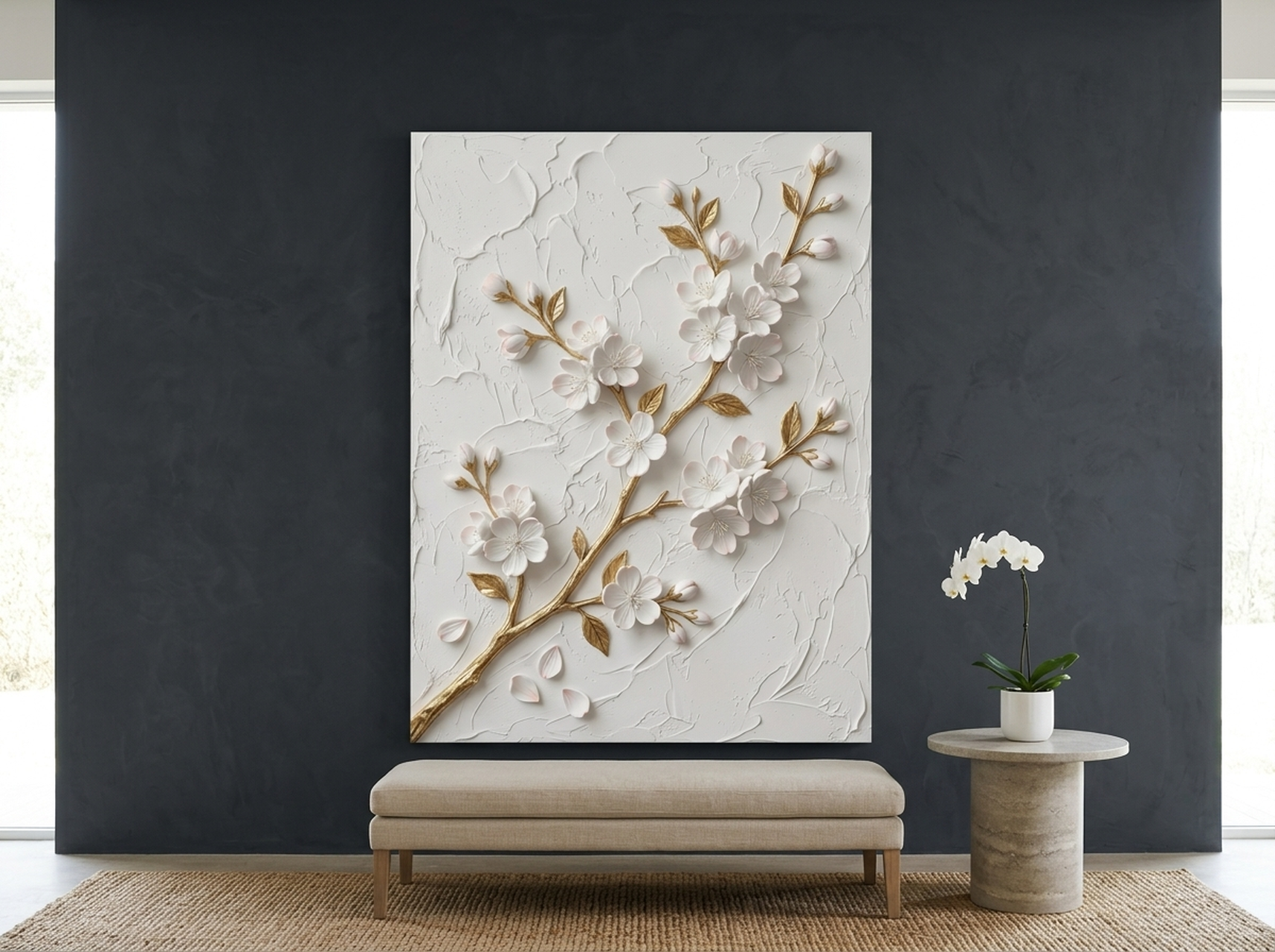
6. Cherry Blossom Sculptural Relief Canvas
When you want your hallway to feel bright and welcoming from the first step through the door, this Cherry Blossom canvas is the piece to choose. The sculptural relief technique gives the petals a three-dimensional quality that catches light from every angle, turning a flat canvas into something that feels almost carved. The white and gold palette keeps the mood light and airy, exactly what a windowless entry needs.
This canvas is particularly effective opposite a mirror. The reflection doubles the sense of depth and amplifies whatever light enters from adjacent rooms. Hang it 145 cm (57 inches) to centre on a wall painted in soft blush, warm gray, or classic white for maximum impact. It is a piece that says welcome without a single word.
Arrangement Guide: Single Statement vs Gallery Row
Hallways generally support two arrangement strategies, and choosing the right one depends on the length of your corridor and the number of walls available.
Single Statement Piece
Best for hallways under 3 metres (10 feet) long or corridors with a prominent end wall. Choose one canvas that is 50 to 70 percent of the wall width. Centre it at 145 cm (57 inches) from the floor. This approach is clean, impactful, and requires minimal hardware. It also avoids the risk of a cluttered look in tight spaces.
Gallery Row
Best for hallways over 3 metres (10 feet) long with a continuous side wall. Select three to five pieces of similar size and hang them in a horizontal line with 5 to 8 cm (2 to 3 inches) between each frame. Keep all centre points at the same height, 145 cm (57 inches), for a museum-quality alignment. Use a laser level or painter tape to mark the line before drilling.
Staircase Ascent
If your hallway includes a staircase, hang pieces ascending with the stair line. Maintain the same 5 to 8 cm (2 to 3 inch) gap between frames. The bottom edge of each piece should stay roughly 20 cm (8 inches) above the stair rail for safety and visual balance. This technique turns a forgotten vertical surface into a storytelling wall that reveals new art with every step.
5 Common Hallway Art Mistakes
1. Hanging Too High
This is the single most common mistake in hallway decor. When art is mounted above eye level, it disconnects from the viewer and makes the corridor feel clinical. Stick to the 145 cm (57 inch) centre rule, even if it feels low at first. You view hallway art while standing and walking, not sitting, so eye level is your guide.
2. Choosing Art That Is Too Small
A tiny 20 by 25 cm (8 by 10 inch) frame on a 120 cm (48 inch) wide wall looks like an afterthought. Aim for 50 to 60 percent wall coverage. If budget is a concern, one well-scaled piece always beats three undersized ones.
3. Ignoring the Colour of the Wall
A dark painting on a dark wall disappears. A pale watercolour on bright white lacks contrast. Match your art dominant tone to the opposite end of the lightness scale from your wall colour. Dark walls call for art with light or metallic highlights. Light walls benefit from art with deep, saturated colours.
4. Forgetting Lighting Entirely
Hallways are often the darkest spaces in a home. Without at least one dedicated light source, such as a picture light, recessed spot, or wall sconce, your art will look dull no matter how beautiful it is in daylight. Budget 10 to 15 percent of your art spend on proper lighting.
5. Overcrowding the Walls
A hallway is a passage, not a gallery storeroom. Leave at least 30 percent of your wall space empty so the art has room to breathe. Negative space is what makes each piece feel intentional rather than cluttered.
Hallway Wall Art FAQ
What size art is best for a narrow hallway?
For a hallway 90 to 120 cm (36 to 48 inches) wide, choose art that is 40 to 60 cm (16 to 24 inches) wide. This covers 50 to 60 percent of the wall without making the corridor feel cramped. If you have a feature wall at the end of the hallway, you can go up to 75 cm (30 inches) wide because the longer viewing distance accommodates a larger piece.
How do I light wall art in a hallway with no windows?
Use a battery-operated picture light rated at 2700K to 3000K mounted 8 to 10 cm (3 to 4 inches) above the frame. For recessed ceiling spots, angle them at 30 degrees from vertical and space them 60 to 90 cm (24 to 36 inches) apart. Wall sconces placed at the artwork centre line and 20 to 25 cm (8 to 10 inches) from each side of the frame create balanced ambient light that also makes the hallway feel wider.
Should hallway art be vertical or horizontal?
Vertical art draws the eye upward and makes low ceilings feel taller. It is the best choice for end-of-hallway feature walls. Horizontal art emphasises width and helps very narrow corridors feel less tunnel-like. Square pieces are a neutral option that does not alter the perceived proportions of the space.
What art style makes a hallway feel welcoming?
Nature scenes, floral art, and warm abstract pieces are the most welcoming choices for a hallway. Landscapes with soft greens, golds, and creams create a calming first impression. Avoid overly dark or aggressive imagery near the front door. A single piece that reflects your personality, whether it is a botanical, a cultural motif, or a textured abstract, immediately tells guests something about who you are.
How high should I hang art in a hallway?
Centre the artwork at 145 cm (57 inches) from the floor. This is the museum and gallery standard based on average eye level. If there is a console table or bench below the art, leave 15 to 20 cm (6 to 8 inches) of space between the top of the furniture and the bottom of the frame.
Can I hang canvas art in a humid entryway near the front door?
Yes. Framed canvas prints handle normal household humidity well. Avoid placing them directly above a radiator or in a spot where rain blows in through an open door. Our canvas prints use archival-quality inks that resist fading for years, and the sturdy frame protects the canvas from warping. If your entryway is particularly damp, a dehumidifier or proper ventilation will protect both the art and the walls.
Quick Reference Table
| Product | Best For | Dominant Colours | Link |
|---|---|---|---|
| Lotus Flower | Narrow hallways, minimalist entryways | Black, Gold, Tan, Cream | View |
| Fluid Abstract Landscape | Modern hallways, warm-toned interiors | Gold, Cream, Terracotta, Teal | View |
| Ronin Samurai Cherry Blossom | Cultural accent walls, statement hallways | Gray, Charcoal, Navy, Pink, Rose, Cream | View |
| Waterfall | Zen entryways, nature-inspired homes | Green, White, Yellow, Blue, Brown | View |
| Islamic Geometric Star | Geometric accent walls, sophisticated entries | Black, Teal, Gold, Navy | View |
| Cherry Blossom | Bright hallways, welcoming entryways | White, Cream, Gold, Beige | View |
Find Your Perfect Hallway Canvas
Every print in our collection ships framed and ready to hang, with free US delivery. Start with a single statement piece and let your entrance do the talking.