Home Office Wall Art: Boost Productivity and Style
The Heva Team
Art Curators & Interior Design Enthusiasts · February 14, 2026 · 12 min read
The right wall art in your home office can boost focus, creativity, and professional presence.
If you work from home, you already know the struggle: the line between living and working blurs fast. Your desk doubles as a dining table, the spare bedroom becomes a conference room, and the walls stare back at you for eight or more hours a day. The right wall art does not just decorate your home office. It reshapes how you focus, how you feel on video calls, and whether that room actually looks like a professional workspace. This guide covers every practical detail, from the exact measurements for hanging art behind your monitor to choosing calming palettes that sharpen concentration.
Ready to browse? Explore our full collection of framed canvas prints, or keep reading for our top picks and expert tips on building a home office that works as hard as you do.
Art Placement Behind Your Desk for Video Calls
Your webcam captures roughly 120 cm (47 inches) of wall width behind your head and about 90 cm (35 inches) of height above your shoulders. That rectangular zone is your video call backdrop, and it is the first thing colleagues and clients notice. A study from Great Place to Work found that remote workers who invest in their workspace report higher engagement and performance, and a professional backdrop is part of that equation.
Hang a single large canvas 15 to 20 cm (6 to 8 inches) above the top of your monitor, centred with the screen. For a standard 60 cm (24-inch) monitor, a 76 by 51 cm (30 by 20 inch) canvas fills the frame without overwhelming it. Avoid hanging art directly behind your head; shift it 10 to 15 cm (4 to 6 inches) to one side so it appears over your shoulder instead. This asymmetric placement follows the photographic rule of thirds and keeps the eye moving naturally.
Stick to matte or satin-finish canvases rather than glossy prints. Glossy surfaces catch ring-light glare, creating distracting white spots on camera. All of our framed canvas prints ship with a matte finish specifically to avoid that problem.
6 Canvas Prints Perfect for Home Offices
1. Northern Lights Canvas Wall Art
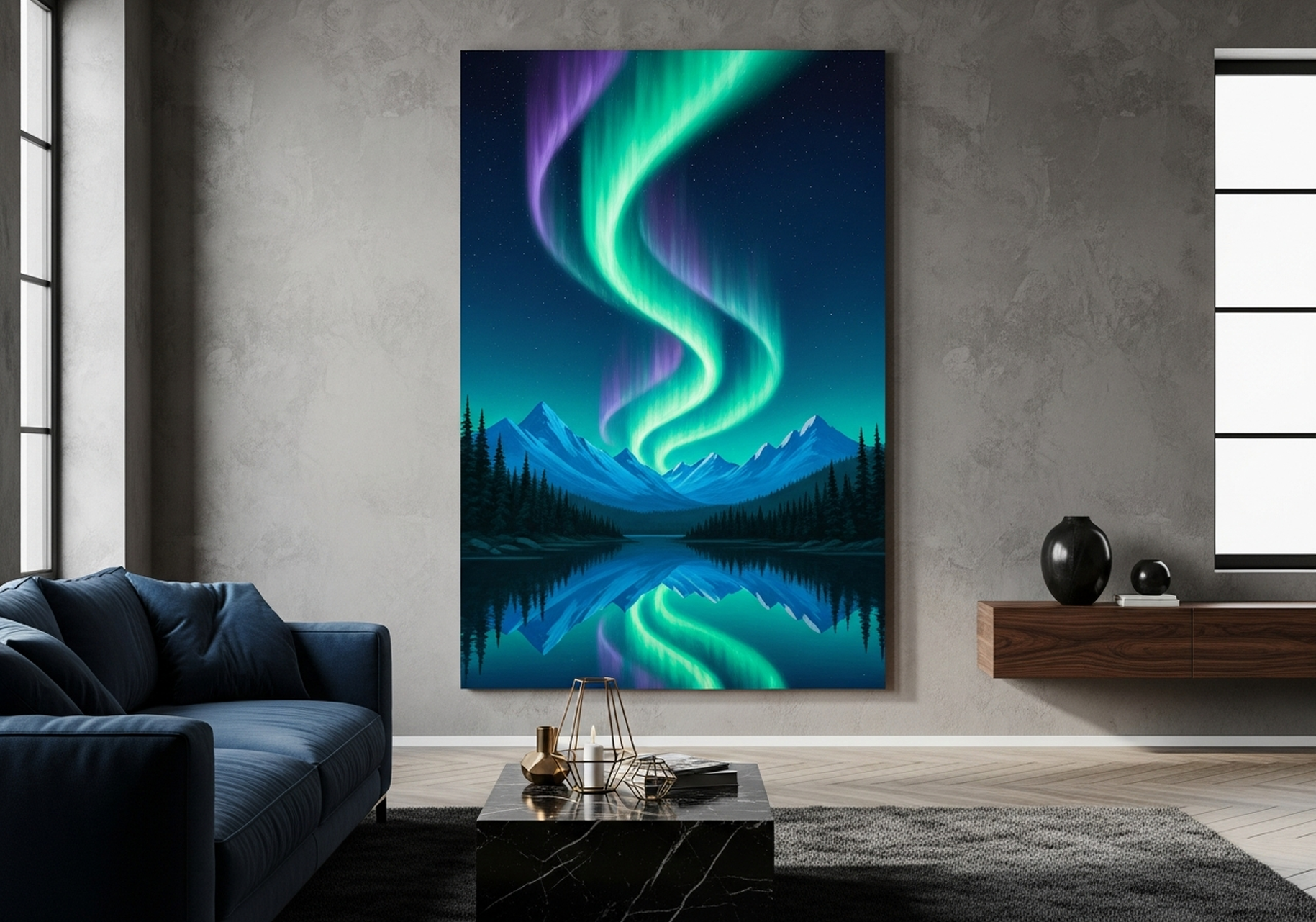
This aurora borealis landscape brings deep navy, turquoise, and purple together in a way that reads as both dramatic and calming. Behind a desk, it gives your video call backdrop a sense of depth and natural grandeur without competing with your face on screen. The dark base tones absorb ambient light rather than bouncing it, which keeps your webcam exposure balanced. Pair it with a warm-toned desk lamp to bring out the subtle green highlights in the aurora.
View the Northern Lights Canvas
Sizing Art for Small Home Offices
Most spare bedrooms converted into offices measure between 2.5 and 3 metres (8 to 10 feet) on each side. In a room that size, a single oversized canvas can make the space feel smaller, while a too-small print looks lost. The rule of thumb is to fill 60 to 75 percent of the available wall width above your desk. If your desk is 120 cm (48 inches) wide, your art should span 72 to 90 cm (28 to 36 inches).
For more help picking the right dimensions, see our guide on how to choose the perfect wall art size, which includes a printable sizing chart that works for any room.
Vertical (portrait) canvases work well beside a window or on a narrow wall between two doors. Horizontal (landscape) canvases are the natural choice above a desk or a bookshelf. If your office has an L-shaped desk tucked into a corner, consider two complementary pieces on the adjoining walls rather than one large canvas in the centre of the corner.
2. Geometric Texture Panels Canvas Wall Art
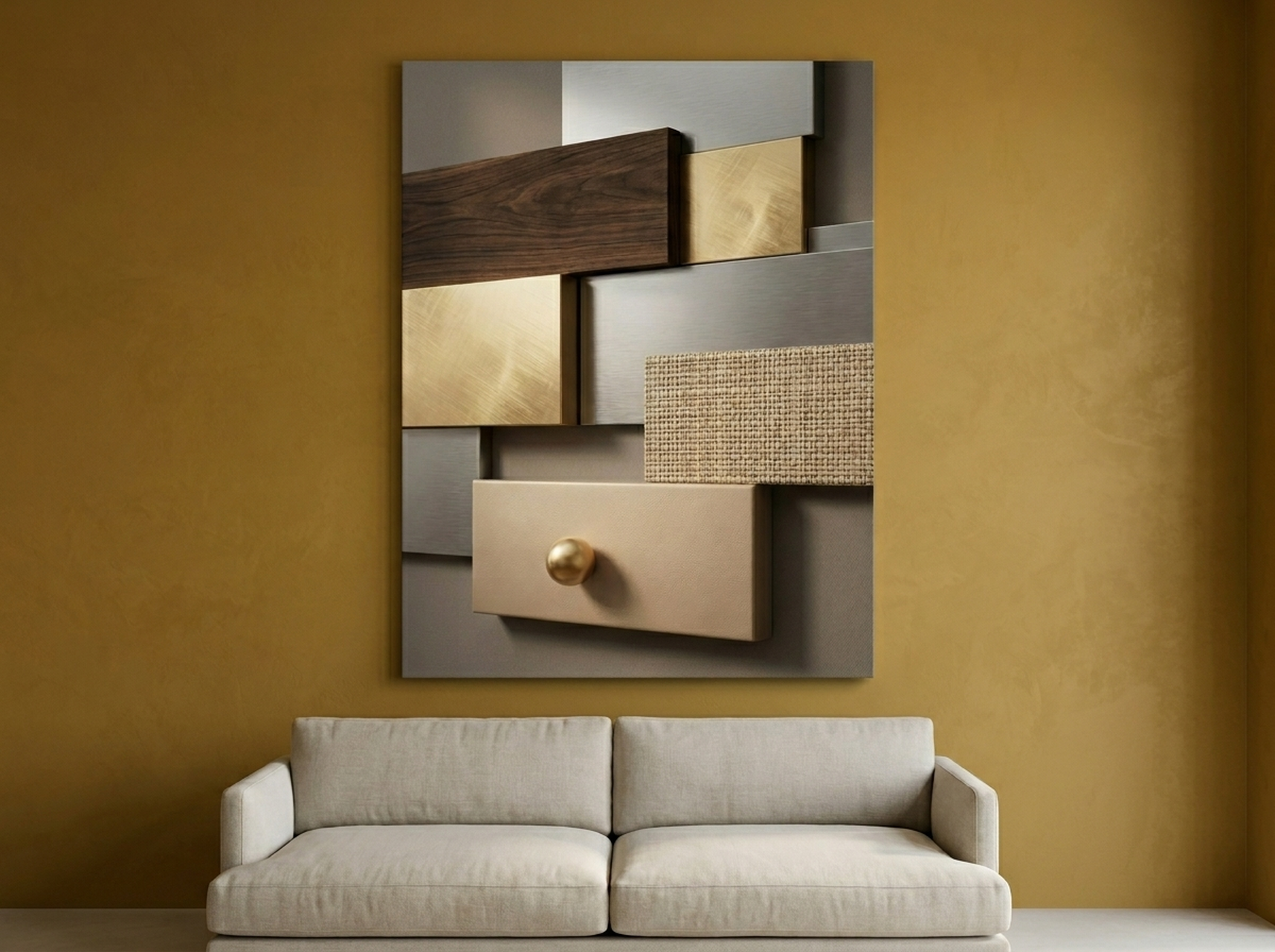
This geometric abstract piece uses earthy walnut, warm gold, and cool silver in a structured grid layout that echoes the precision of a well-organised workspace. It bridges the gap between art and architecture, making a narrow office wall feel intentional rather than cramped. The muted neutral palette coordinates with oak, walnut, or white laminate desks without clashing. In a small office of 7 square metres (75 square feet) or less, this single canvas is all you need above the desk.
View the Geometric Texture Panels Canvas
Color Psychology: Choosing Palettes That Sharpen Focus
Color is not just a style choice in a workspace. It is a productivity tool. Research compiled by Apollo Technical shows that remote workers who optimise their home workspace, including wall colour and decor, report up to 13 percent higher output. For a deeper dive into how colour influences mood, our psychology of colours in wall art guide breaks down each hue and its effect.
Blue and teal reduce heart rate and encourage sustained attention. They are ideal for roles that require long stretches of analytical work: coding, writing, financial analysis. Green and sage ease eye strain and bring a sense of balance, making them the go-to palette for anyone who stares at a screen for more than four hours a day. Warm neutrals like cream, tan, and gold create a welcoming atmosphere for video calls without distracting the eye. Avoid saturated reds or bright oranges on large canvases in your direct sightline; they raise alertness short-term but contribute to fatigue over a full workday.
3. Sunbeam Forest Canvas Wall Art
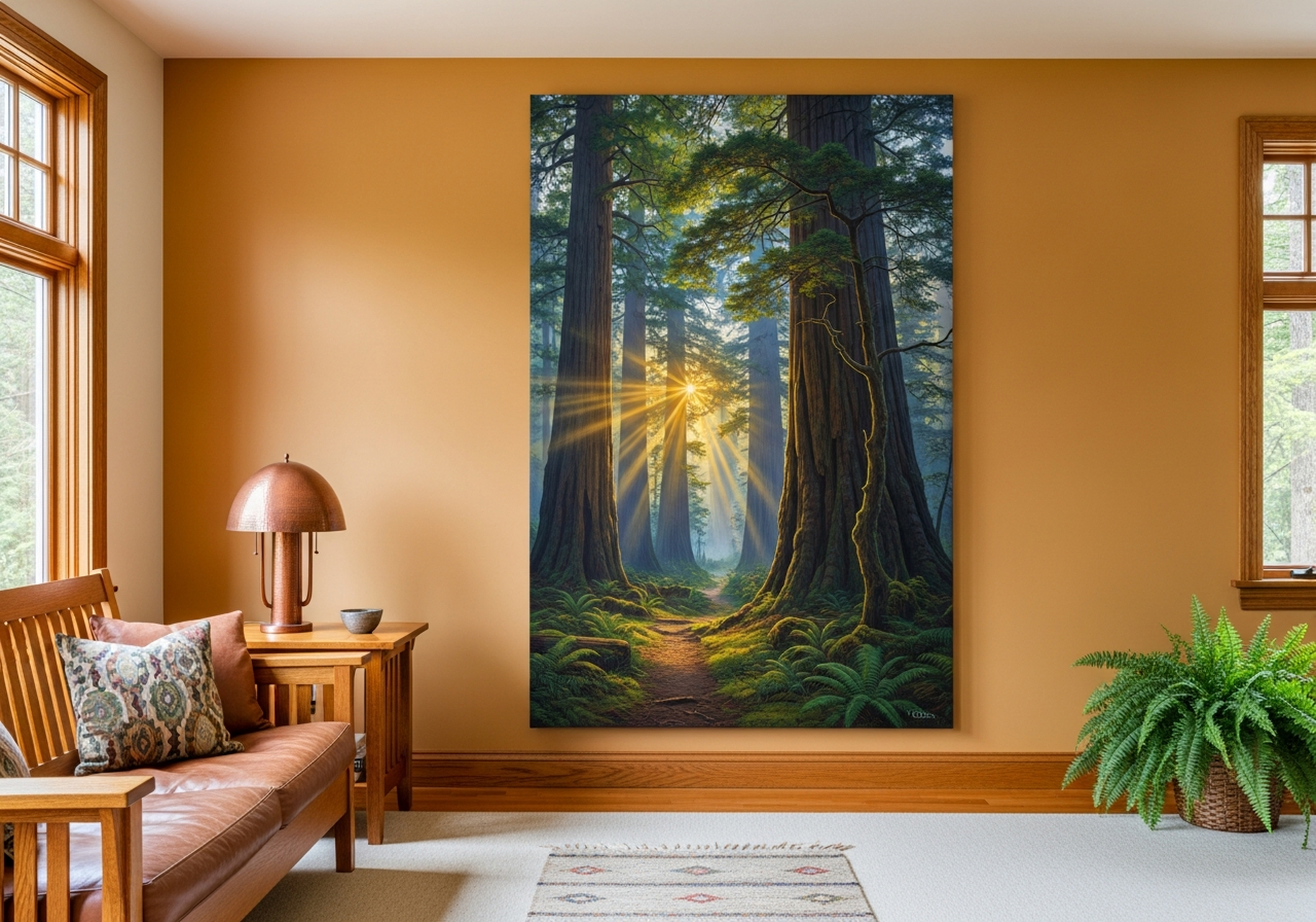
Golden light filtering through ancient redwoods brings warmth and calm in equal measure. The dominant greens and golds in this oil painting-style canvas reduce visual fatigue during long screen sessions. Hang it on the wall you face while working so the depth of the forest draws your eyes into the distance, giving your focus muscles a brief, restorative break every time you glance up. The vertical tree lines also create an illusion of higher ceilings in rooms with standard 2.4 metre (8 foot) clearance.
View the Sunbeam Forest Canvas
4. Lotus Flower Canvas Wall Art
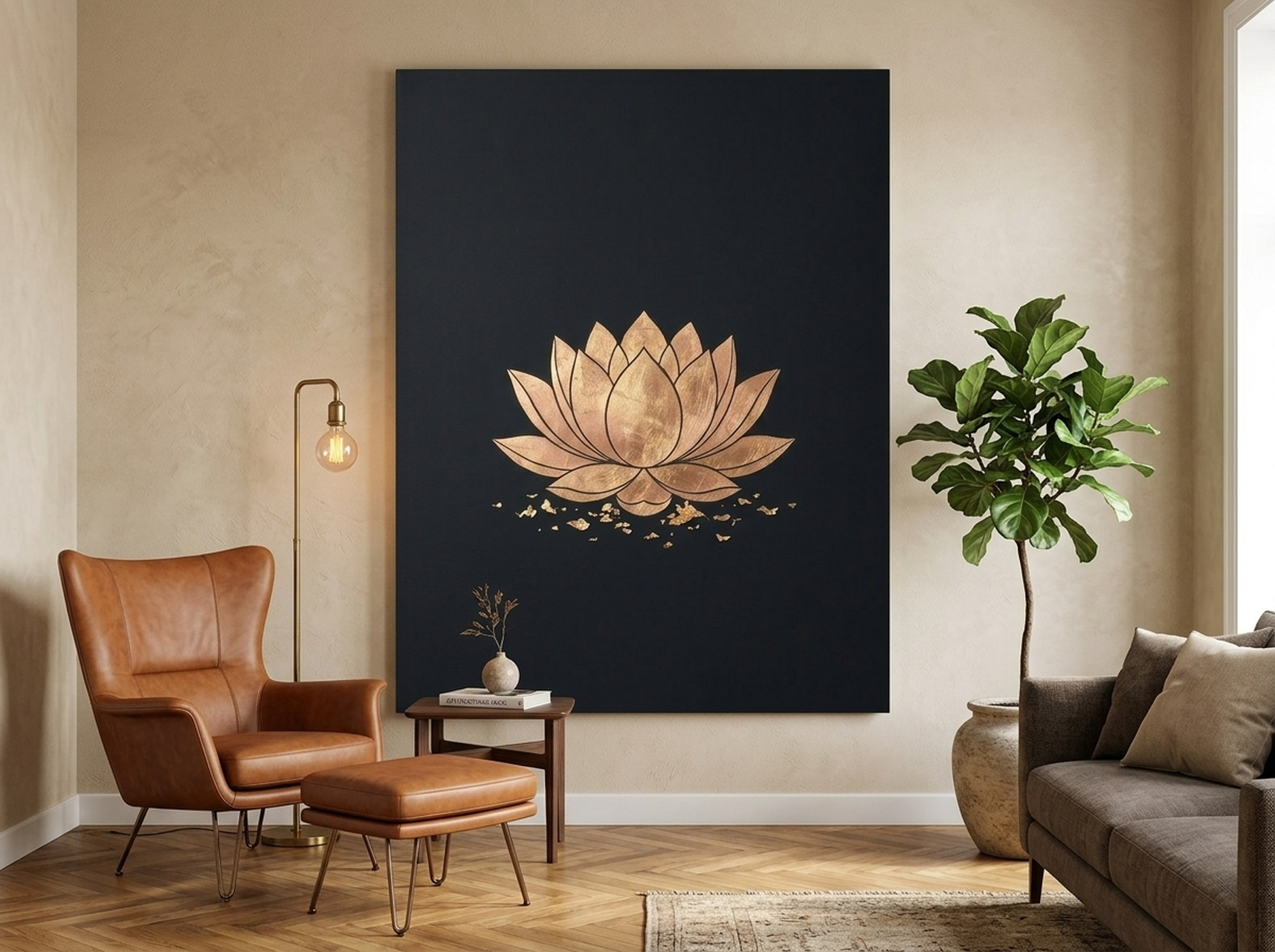
Black, gold, and cream form a palette that looks polished on any video call, and this lotus design adds an organic curve to an otherwise straight-edged workspace. The gold leaf detailing catches sidelight beautifully, so position a desk lamp 45 degrees to one side for a subtle glow effect that reads well on camera. At just two dominant colours, it is minimalist enough for a small office wall without feeling bare. This piece pairs especially well with matte black desk accessories and a white or oak desktop.
Dual-Purpose Office and Guest Room: Making Art Work Both Ways
Roughly 40 percent of remote workers share their office space with a guest bed, a reading nook, or a play area. The challenge is choosing art that says professional workspace from 9 to 5 and relaxing retreat after hours. The solution sits at the intersection of calming subject matter and neutral colour palettes.
Nature scenes, abstract compositions, and minimalist botanicals all cross the divide. Avoid art with text or motivational quotes in a shared room because it locks the room into one identity. Instead, choose pieces with layered depth, such as a landscape that invites you to look deeper each time, or an abstract with colour shifts that change mood depending on lighting. For more ideas on decorating challenging spaces, check out our post on wall art for small spaces.
If the room has a sofa bed, hang art at seated eye level, around 140 cm (55 inches) from the floor to the centre of the canvas, rather than the standard 150 cm (60 inches). This split-the-difference height works whether someone is sitting at the desk or lying on the sofa.
5. Sea Turtle Canvas Wall Art
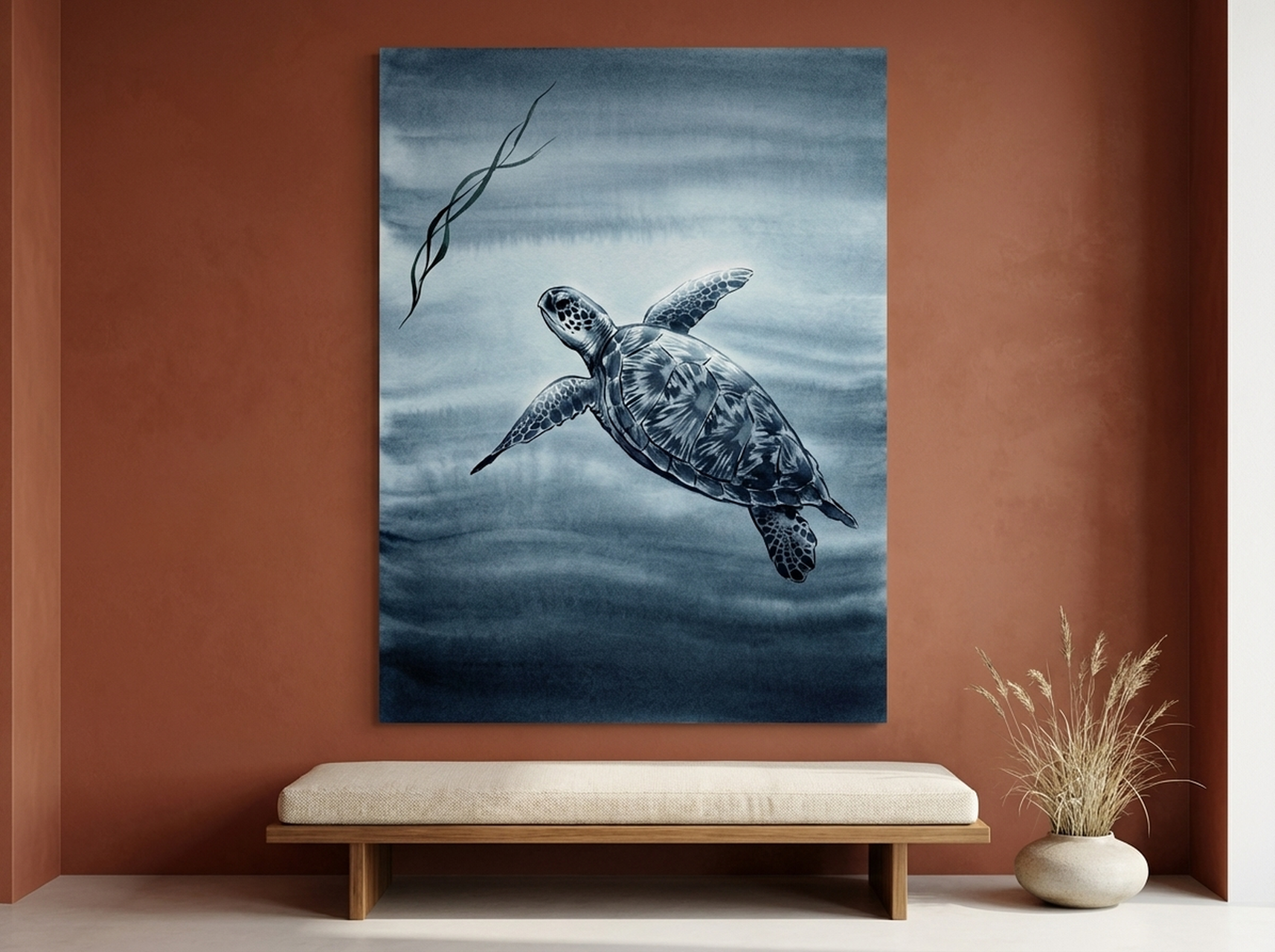
Navy, teal, and cool grey make this minimalist turtle painting a natural fit for a dual-purpose room. It reads as sophisticated during a client call and relaxing for a weekend guest. The clean composition, free of busy detail, keeps the wall feeling open rather than cluttered. The oceanic palette lowers perceived room temperature, which is a practical bonus in south-facing rooms that trap afternoon heat. Hang it opposite a window so natural light brings out the teal undertones.
6. Fluid Abstract Landscape Canvas Wall Art
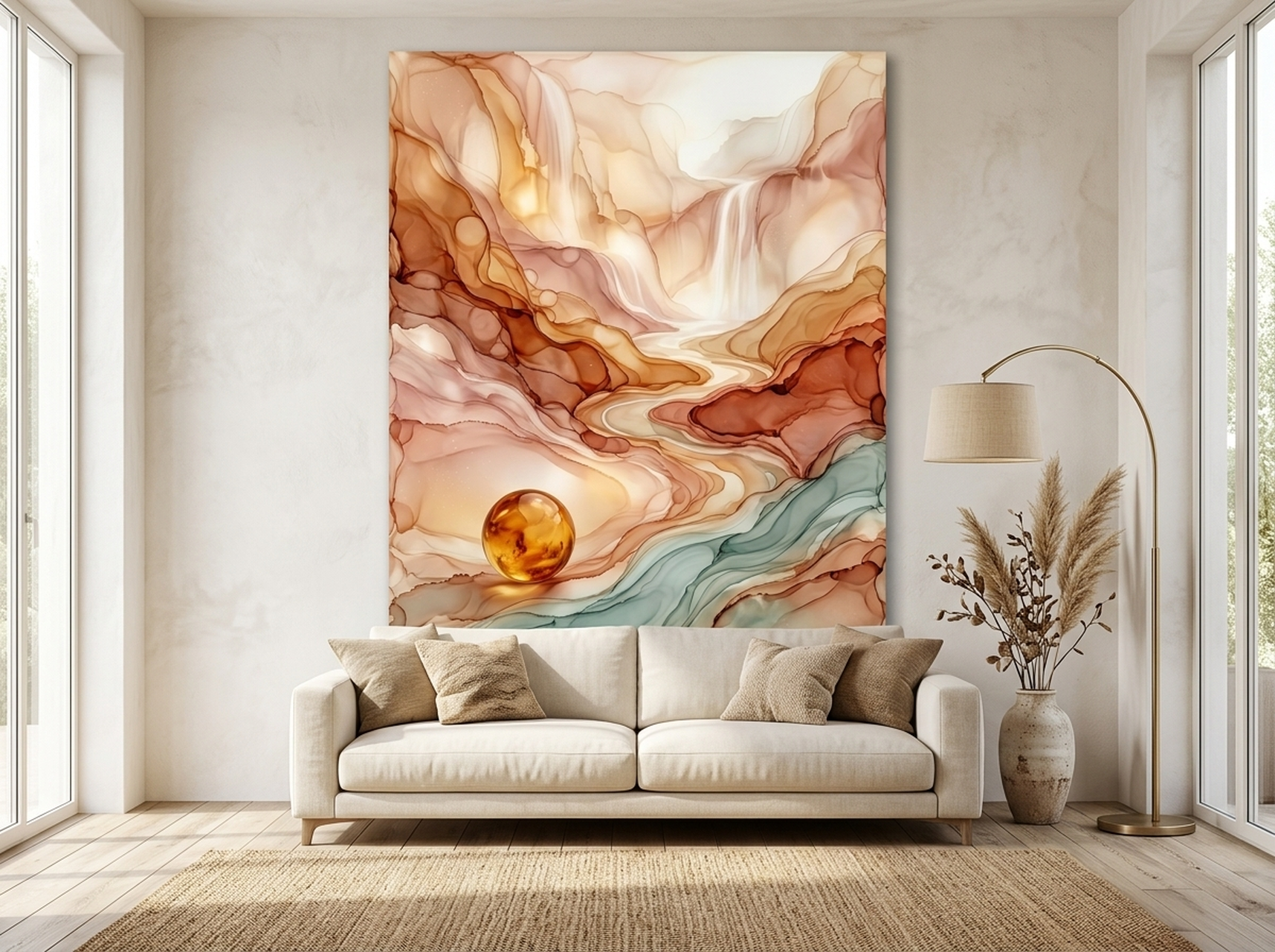
Amber, gold, and teal swirl together in this fluid abstract piece that evokes a desert horizon at dawn. The warm tones add energy without aggression, making it ideal for creative professionals who need stimulation without distraction. It pairs with mid-century modern desks, leather chairs, and brass desk accessories. Because the composition is non-representational, it works equally well behind a desk, above a daybed, or on the wall facing your monitor for periodic visual micro-breaks throughout the day.
View the Fluid Abstract Landscape Canvas
Home Office Art Layout Guide With Measurements
Getting art placement right is less about taste and more about geometry. Here are the numbers that work in every home office layout:
- Behind desk (video call wall): Centre the canvas 15 to 20 cm (6 to 8 inches) above your monitor. Shift it 10 to 15 cm (4 to 6 inches) to one side if it would appear directly behind your head on camera.
- Facing desk (focus wall): Hang at seated eye level, roughly 110 to 120 cm (43 to 47 inches) from the floor to the centre of the canvas. This is lower than the standard 150 cm standing eye height because you view it from your chair.
- Side wall (peripheral vision): Keep it simple. One vertical canvas or two small pieces stacked vertically. Your peripheral vision picks up movement and colour, so choose static subjects with soft tones.
- Above a bookshelf: Leave 10 to 15 cm (4 to 6 inches) between the top of the shelf and the bottom edge of the frame. Canvas width should not exceed the bookshelf width.
- Corner desk nook: Use two complementary pieces on the adjoining walls, each sized at 50 to 60 percent of the wall segment width. Angle a desk lamp toward the corner to unify them visually.
If you are hanging multiple pieces, maintain consistent spacing of 5 to 8 cm (2 to 3 inches) between frames. Inconsistent gaps make a wall look haphazard regardless of how good the art is.
Lighting Your Home Office Art
Natural light is your best ally, but it changes throughout the day. North-facing offices get consistent, cool light that flatters blue and green palettes. South-facing rooms flood with warm light that makes golds and ambers glow but can wash out cool tones by midday. A simple fix: add an adjustable LED picture light above your canvas, set to 3000K (warm white) for evening work or 4000K (neutral white) for daytime calls.
Position your desk lamp so it illuminates your face for video calls without casting a glare on the canvas behind you. The ideal angle is 45 degrees from the wall, pointing toward your canvas at roughly 30 degrees from horizontal. This creates a soft wash of light across the surface without hotspots.
5 Common Mistakes When Choosing Home Office Wall Art
- Hanging art too high. The most common error. In a seated workspace, your centre of vision is 110 to 120 cm (43 to 47 inches) from the floor, not the 150 cm (60 inches) standard for living rooms. Adjust accordingly for any wall you view while sitting.
- Choosing art that is too small for the wall. A 30 by 20 cm (12 by 8 inch) print on a 180 cm (6 foot) wall looks like an afterthought. Aim for 60 to 75 percent of the available wall width above your desk furniture.
- Ignoring the webcam frame. Test your backdrop before you commit. Open your webcam app, sit in your normal position, and check what appears over each shoulder. Many people hang art that gets cropped out entirely or sits right behind their head like a picture hat.
- Matching art to paint colour exactly. When art and wall colour are the same shade, the piece disappears. Contrast is what makes art read as intentional. A cream canvas needs a grey, navy, or sage wall behind it, not a matching cream wall.
- Overcrowding a small office. One well-chosen canvas has more impact than four mismatched prints crammed onto a wall. In rooms under 9 square metres (100 square feet), limit yourself to one or two pieces maximum.
Frequently Asked Questions
What is the best size wall art for a small home office?
For a typical spare-bedroom office with a 120 cm (48 inch) desk, a single canvas between 76 and 90 cm (30 to 36 inches) wide hits the sweet spot. It fills 60 to 75 percent of the desk width, which creates visual balance without overwhelming a compact room. If your desk is against a narrow wall, go vertical with a 50 by 76 cm (20 by 30 inch) portrait-orientation piece instead.
How high should I hang wall art behind my desk for video calls?
Position the bottom edge of the canvas 15 to 20 cm (6 to 8 inches) above the top of your monitor. For most setups, this places the centre of the art at roughly 150 to 160 cm (59 to 63 inches) from the floor. Shift the canvas 10 to 15 cm (4 to 6 inches) to one side so it appears over your shoulder on camera rather than directly behind your head.
Does wall art actually improve productivity when working from home?
Yes. Research on workspace aesthetics shows that employees who personalise their environment report higher engagement, lower stress, and increased output. Nature imagery in particular has been linked to faster recovery from mental fatigue. Even brief glances at a landscape or botanical print can reset your attention span between tasks.
What colours should I avoid in home office wall art?
Avoid saturated red and bright orange on large canvases in your direct sightline. These colours raise alertness short-term but cause visual fatigue over a full workday. Neon or fluorescent hues also create issues on video calls because webcam auto-exposure adjusts to the bright colour, which can make your face appear darker or washed out.
Can I use the same wall art for an office that doubles as a guest room?
Absolutely. The key is choosing art with a neutral palette and a subject that works in both contexts. Nature landscapes, abstract compositions, and minimalist botanicals all read as professional during work hours and relaxing at night. Avoid text-based or motivational prints because they lock the room into a single purpose. Hang the art at 140 cm (55 inches) from the floor to the centre, which splits the difference between seated desk height and reclining sofa height.
Should I match my wall art to my desk colour?
Complement, do not match. If your desk is warm-toned oak or walnut, choose art with cool accents like teal, sage, or navy to create contrast. If your desk is white or grey, warm-toned art in golds, ambers, or terracotta adds life to the space. Exact colour matching between desk and art makes the room feel flat and one-dimensional.
Quick Reference Table
| Product | Best For | Dominant Colours | Link |
|---|---|---|---|
| Northern Lights Canvas | Video call backdrop, analytical work | Navy, turquoise, purple | View |
| Geometric Texture Panels | Small offices, neutral desks | Walnut, gold, silver | View |
| Sunbeam Forest Canvas | Focus wall, eye-strain relief | Gold, green, brown | View |
| Lotus Flower Canvas | Minimalist offices, video calls | Black, gold, cream | View |
| Sea Turtle Canvas | Dual-purpose rooms, south-facing offices | Navy, teal, grey | View |
| Fluid Abstract Landscape | Creative professionals, mid-century decor | Gold, amber, teal | View |
Ready to Build Your Perfect Home Office?
Every piece in our collection is a gallery-quality framed canvas print that arrives ready to hang. Free US shipping on all orders.
Your home office is the one room where you spend more waking hours than any other, yet it is often the last room to get thoughtful decor. A single well-chosen canvas print behind your desk or across from your chair can sharpen your focus, polish your video call presence, and make those eight-hour days feel a little less like sitting in a box. Start with one piece that fits the measurements in this guide, and build from there.