Modern Wall Art for Small Spaces: Big Impact Ideas
The Heva Team
Art Curators & Interior Design Enthusiasts · March 18, 2026 · 14 min read
Small room? Big impact. Learn how to use wall art to make compact spaces feel larger and more stylish.
Every small room has a secret weapon hiding in plain sight: its walls. When floor space is measured in footsteps rather than metres, the right piece of wall art can push the boundaries outward, pull the ceiling upward, and flood a cramped corner with light and personality. The wrong piece does the opposite, making a studio flat or compact bedroom feel like a storage cupboard with a window.
This guide shows you exactly how to choose, size, and hang wall art that makes small spaces feel generous. You will learn which colours trick the eye into seeing more room, why vertical orientation matters for ceiling height, and which common decorating mistakes steal visual square footage. Along the way, we spotlight six canvas prints from our collection that were practically designed for tight quarters.
Ready to browse? Shop our wall art collection or keep reading for our top picks and expert tips.
What You Will Find in This Guide
- How Wall Art Creates the Illusion of Depth
- Why Light Colours Make a Room Feel Larger
- Vertical vs Horizontal Orientation and Ceiling Height
- Mirror and Art Combos That Double Your Space
- Our 6 Top Picks for Small Spaces
- Small-Space Sizing Guide
- 5 Common Mistakes to Avoid
- Frequently Asked Questions
- Quick Reference Table
How Wall Art Creates the Illusion of Depth
Interior designers have long used wall art as a visual trick to add depth to small rooms. A canvas with a receding landscape, an open sky, or a soft vanishing point draws the viewer's eye beyond the physical wall, tricking the brain into perceiving extra distance. According to Artfully Walls, choosing art with perspective and depth cues is one of the most effective ways to make a room feel larger without moving a single piece of furniture.
The technique works because our visual system interprets overlapping shapes and converging lines as physical distance. A painting of a forest path, an ocean horizon, or even an abstract gradient from dark at the base to light at the top all create that sensation. Hang the piece on the wall you see first when entering the room and it becomes a visual window, expanding the perceived footprint of the space.
Subjects with open, airy compositions work best. Avoid cluttered scenes with heavy detail packed edge to edge. Instead, look for art that breathes, with generous areas of blank or light-toned space surrounding the focal subject. A single bird against an open background or a lone flower with a soft gradient creates far more visual breathing room than a dense jungle scene. If you are drawn to minimalist wall art, you are already on the right track for small-space decorating.
Why Light Colours Make a Room Feel Larger
Colour is the single most powerful space-expanding tool on a wall. Light tones reflect more ambient light back into the room, making surfaces appear to recede. White, cream, pale blue, soft gold, blush pink, and sage green all push the wall backward visually. Dark colours do the opposite: they absorb light and pull the surface toward you, shrinking the perceived dimensions of the space.
This principle applies directly to the art you hang. A canvas dominated by white, cream, and gentle pastels will maintain the open feel of a light-painted wall, while a large piece of dark, heavily saturated art can make the room feel noticeably tighter. That does not mean you have to avoid colour entirely. A soft watercolour with delicate pinks and greens, or a gold-and-white textured piece, keeps the palette light while still delivering visual interest.
The Aspect Wall Art design guide confirms that lighter wall treatments, including the art hung on them, consistently help rooms feel more spacious to occupants. The takeaway is simple: when in doubt, go lighter. You can always add a single bold accent, but the dominant tone of the art should harmonise with the room's lighter palette.
Frames matter here too. A thin, light-coloured frame (white, natural wood, or a slim gold edge) disappears into the wall. A heavy, dark, ornate frame adds visual weight and makes the art feel larger and heavier than it is, which is exactly the wrong effect in a small room. Keep frames slim and neutral.
Vertical vs Horizontal Orientation and Ceiling Height
The orientation of your art directly affects how tall your room feels. A portrait-orientation (vertical) canvas draws the eye up and down, emphasising ceiling height and making a low room feel taller. A landscape-orientation (horizontal) canvas draws the eye side to side, widening a narrow room visually but doing nothing for height.
In a small room with standard 240 cm (8 foot) ceilings, a vertical piece measuring 60 by 90 cm (24 by 36 inches) hung with its centre at eye level, roughly 145 cm (57 inches) from the floor, creates the strongest height illusion. The vertical lines in the composition guide the eye from the base of the canvas upward and, by extension, up to the ceiling beyond.
If your room is narrow rather than low, a horizontal canvas does the opposite trick. A 90 by 60 cm (36 by 24 inch) landscape piece above a compact sofa or bed makes the wall feel wider. The key is to diagnose which dimension your room is short on, height or width, and choose the orientation that stretches that axis. For a detailed walkthrough on choosing the right size, see our guide to choosing the perfect wall art size.
One more tip: vertical gallery arrangements of two or three small pieces stacked above one another create even stronger upward pull than a single vertical canvas. Space them 5 to 8 cm (2 to 3 inches) apart so they read as a single visual column rather than scattered items.
Mirror and Art Combos That Double Your Space
Hanging a mirror opposite or adjacent to a piece of art is one of the oldest decorator tricks for small rooms, and it still works beautifully. The mirror reflects both the art and the natural light entering through windows, effectively doubling the visual content of the wall without adding a single extra piece. The reflection creates the illusion of a second room beyond the glass, adding perceived depth that no amount of light paint can match on its own.
The ideal layout places a round or rectangular mirror on the wall opposite the largest window, and a single canvas print on the adjacent wall that the mirror can partially reflect. The mirror captures the art, the light, and the window view all at once, creating a layered sense of space. Keep the mirror frame simple, a thin gold or natural edge works best, so it does not compete with the art for attention.
For very small rooms where you can only hang one thing per wall, consider placing the art on the wall you face when entering and the mirror on the wall to its left or right. This creates a visual triangle between the door, the art, and the mirror that pulls the eye around the room, making the space feel dynamic and larger than its measurements. Our complete guide to hanging wall art covers exact spacing and placement techniques for every room shape.
Our 6 Top Picks for Small Spaces
Each of these canvas prints earns its place on a small-room wall because it combines a light, open composition with a subject that draws the eye inward and beyond, the exact qualities that make a tight space feel generous.
1. Lotus Flower Gold Leaf Canvas
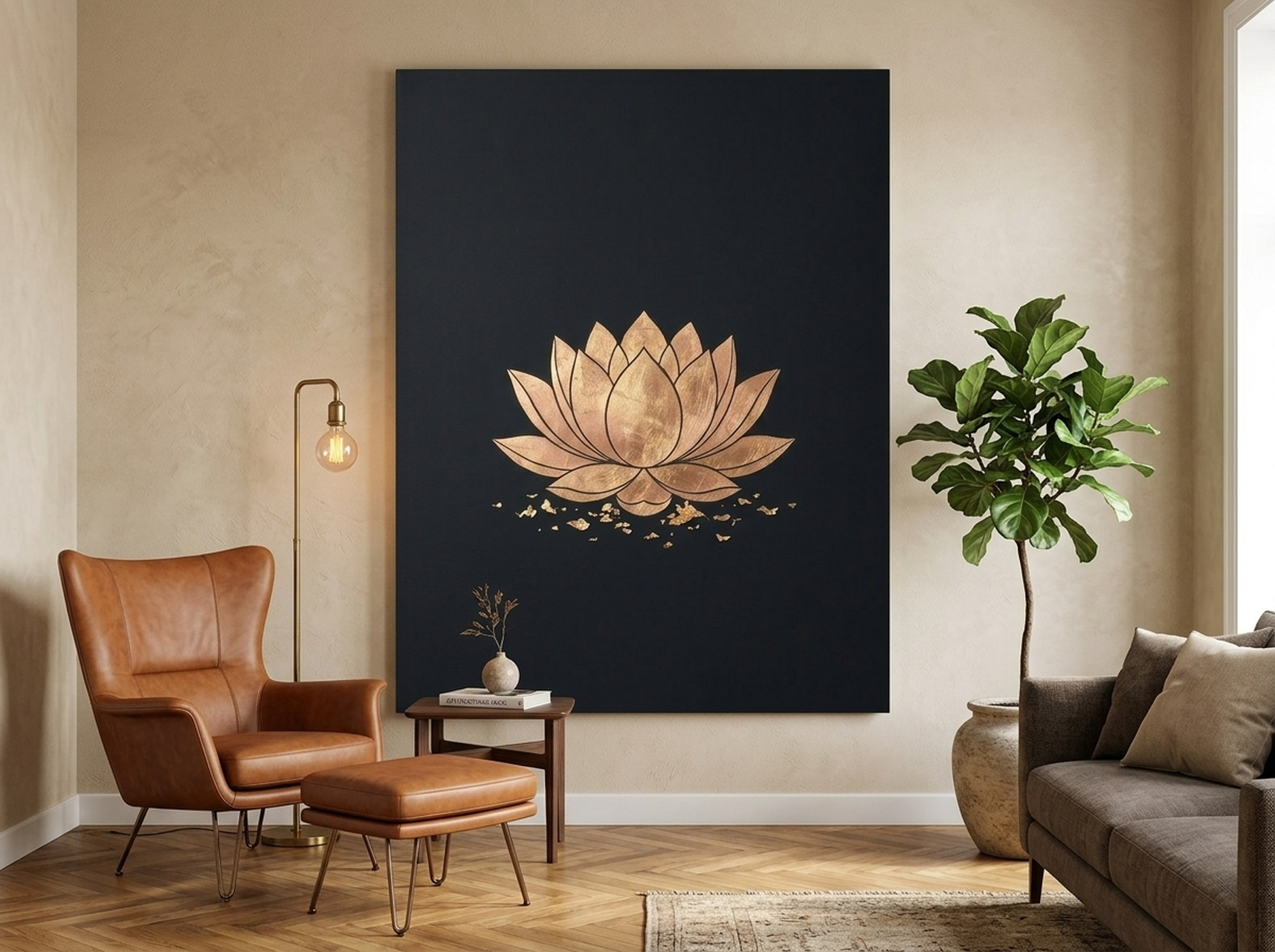
This lotus flower canvas uses a single bloom against a dark background with gold leaf detailing that catches ambient light. The minimalist composition keeps the wall feeling open while the gold tones add warmth without heaviness. It works perfectly in a small bedroom or meditation nook where you want calm energy without visual clutter. The dark background might seem counterintuitive for a small space, but because the composition is so clean and centred, it actually creates a focal point that draws the eye inward rather than pressing outward. Hang it in a white or natural wood frame to keep the overall wall feeling light.
View the Lotus Flower Gold Leaf Canvas
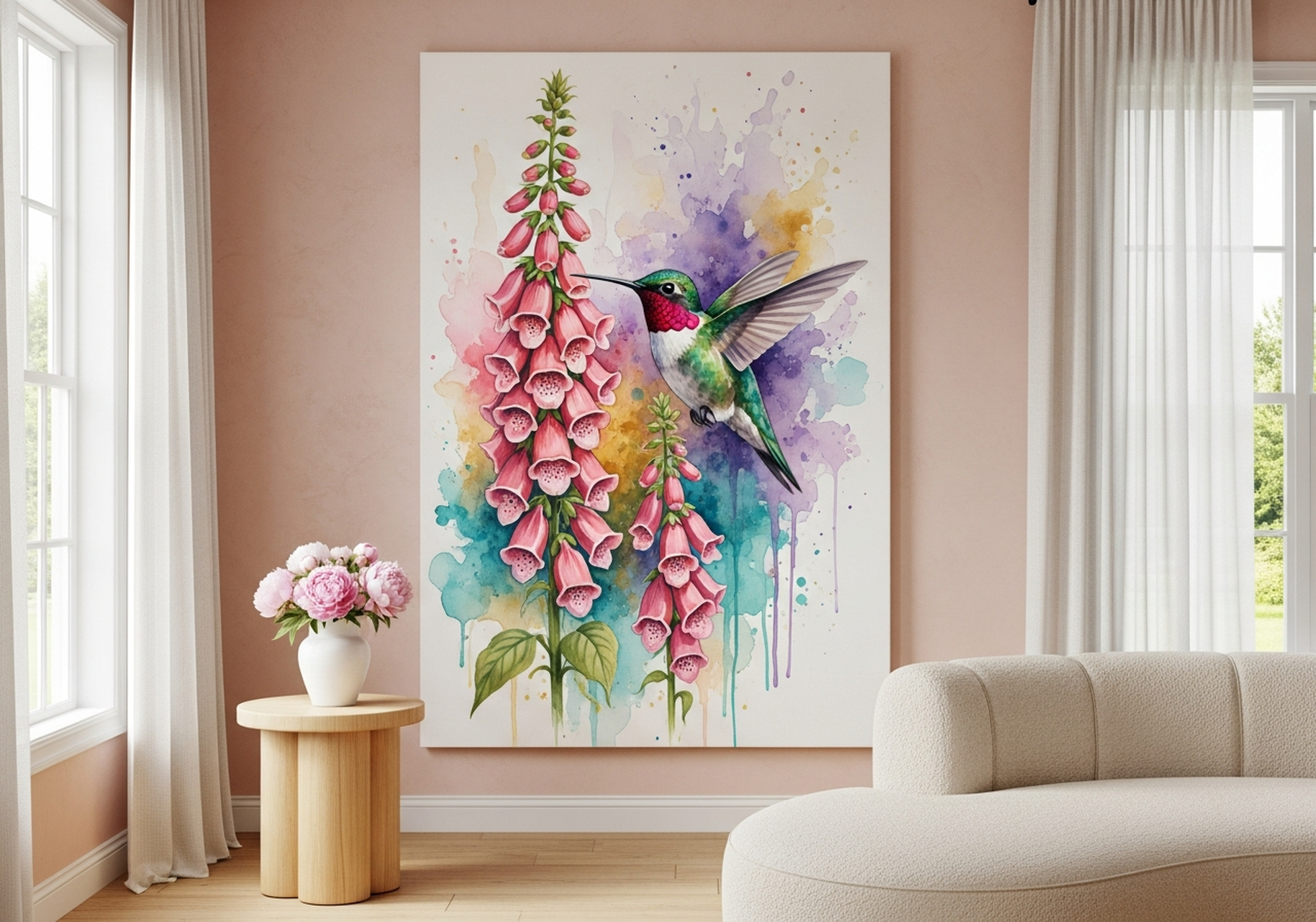
2. Hummingbird Watercolor Canvas
Watercolour paintings are naturally ideal for small spaces because the medium is light, airy, and translucent. This ruby-throated hummingbird print captures the bird mid-flight with soft washes of green, red, and white that fade into open background space. The generous white areas around the subject let the wall colour show through visually, maintaining the sense of openness. Hang it in a small sunroom, breakfast nook, or above a narrow hallway console to add life without weight. At 60 by 45 cm (24 by 18 inches), it fills a small wall perfectly without overwhelming it.
View the Hummingbird Watercolor Canvas
3. Allium Floral Impasto Canvas
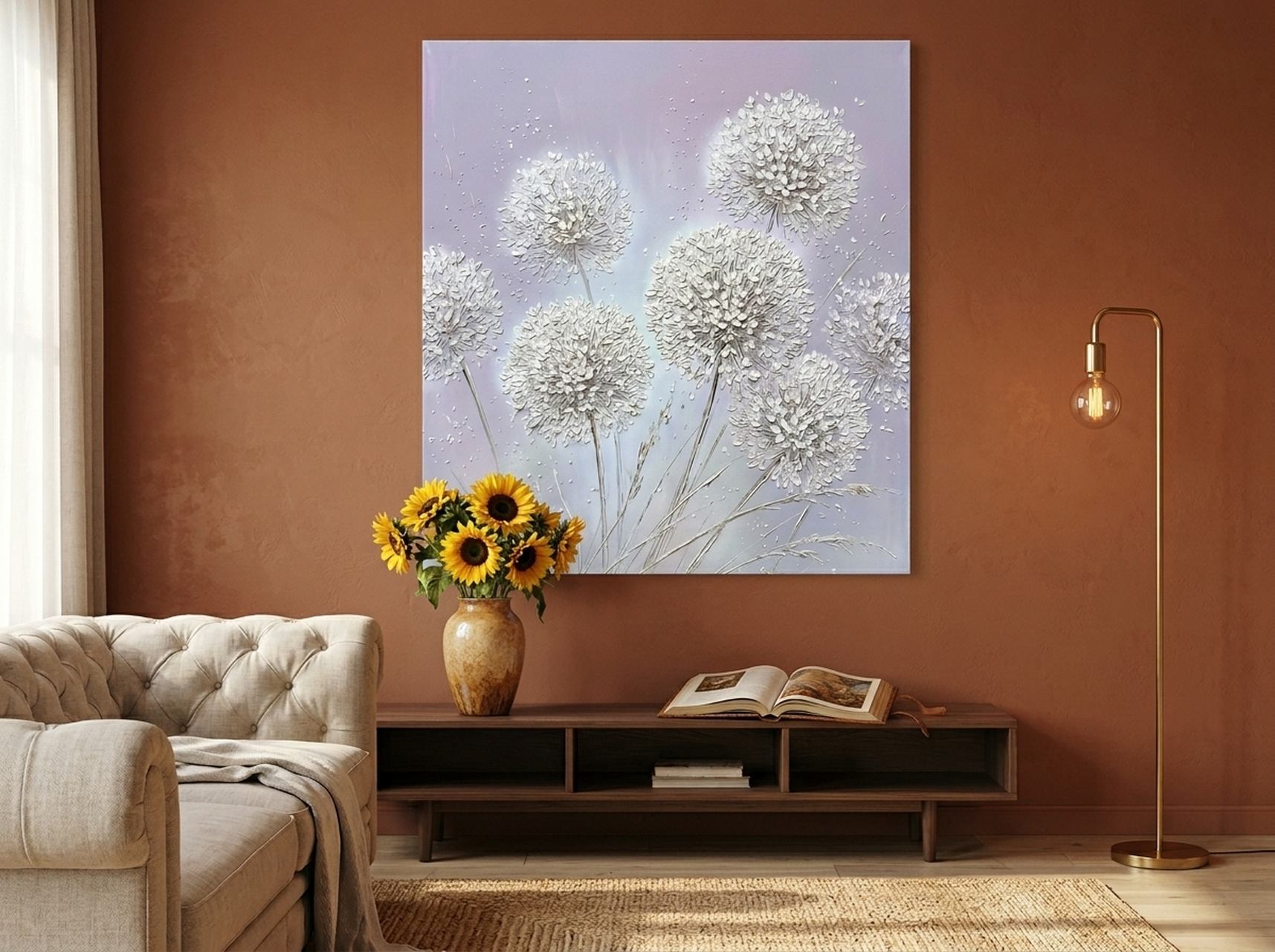
Lavender and soft purple tones sit in the cool colour family, which naturally recedes and makes walls appear further away. This allium flower canvas uses thick impasto-style brushwork to create tactile texture while keeping the palette restrained to lavender, green, and cream. The vertical stems of the allium flowers draw the eye upward, adding perceived ceiling height to a compact bedroom or reading corner. Because the colour temperature is cool, it pairs naturally with grey, white, or pale blue walls, all popular choices in small apartments.
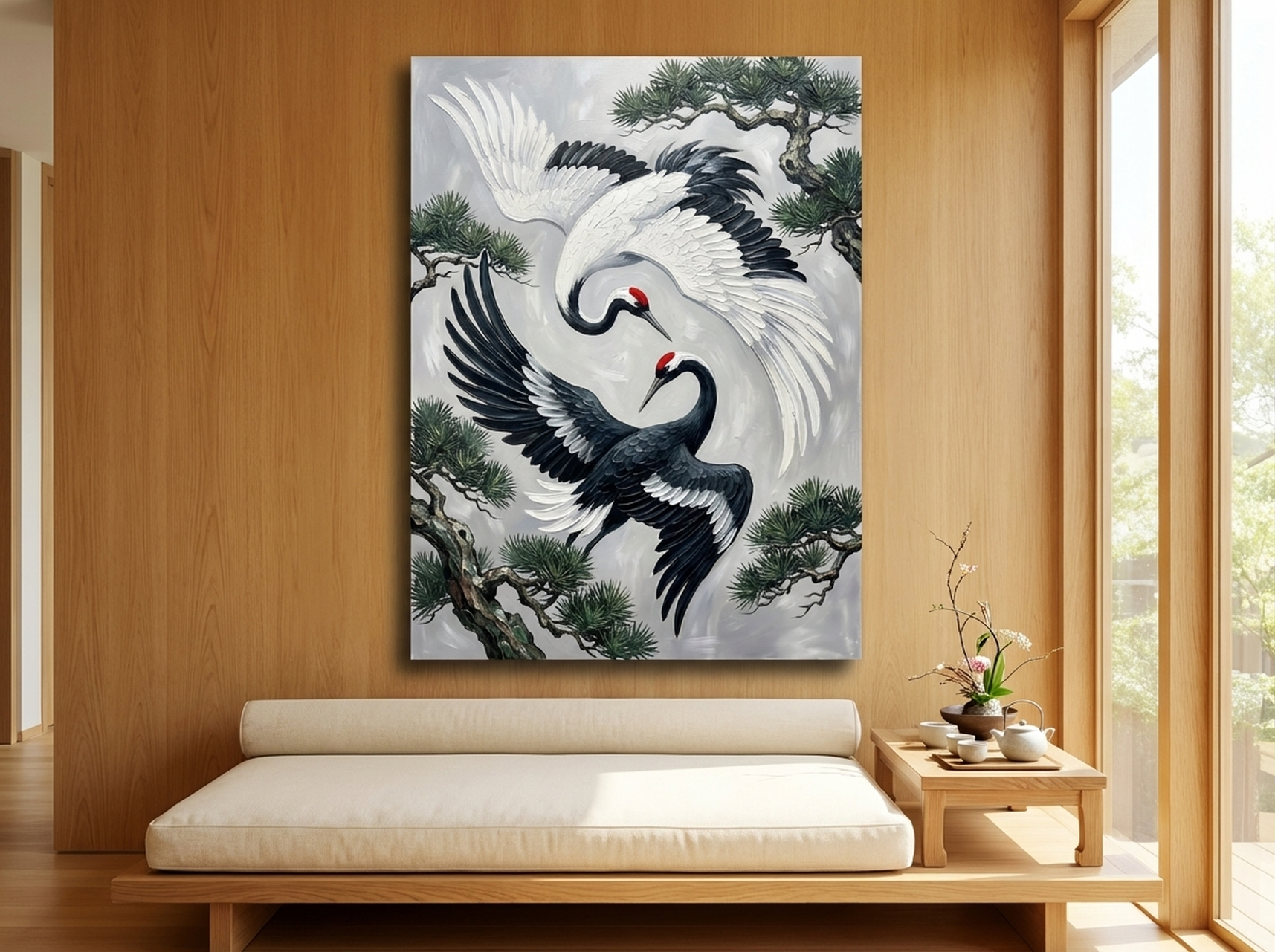
4. Yin Yang Cranes Japanese Ink Canvas
Japanese ink painting, or sumi-e, is the original minimalist art form. This canvas features two cranes arranged in a yin-yang composition using predominantly black, white, and a single accent of red. The restrained palette leaves large areas of open white space that read as visual air on the wall. In a small home office, entryway, or guest room, this piece delivers sophistication and cultural depth without any visual heaviness. The circular composition naturally draws the eye inward to the centre, creating a meditation point that makes the surrounding space feel calmer and more intentional.
View the Yin Yang Cranes Canvas
5. Kingfisher River Bird Canvas
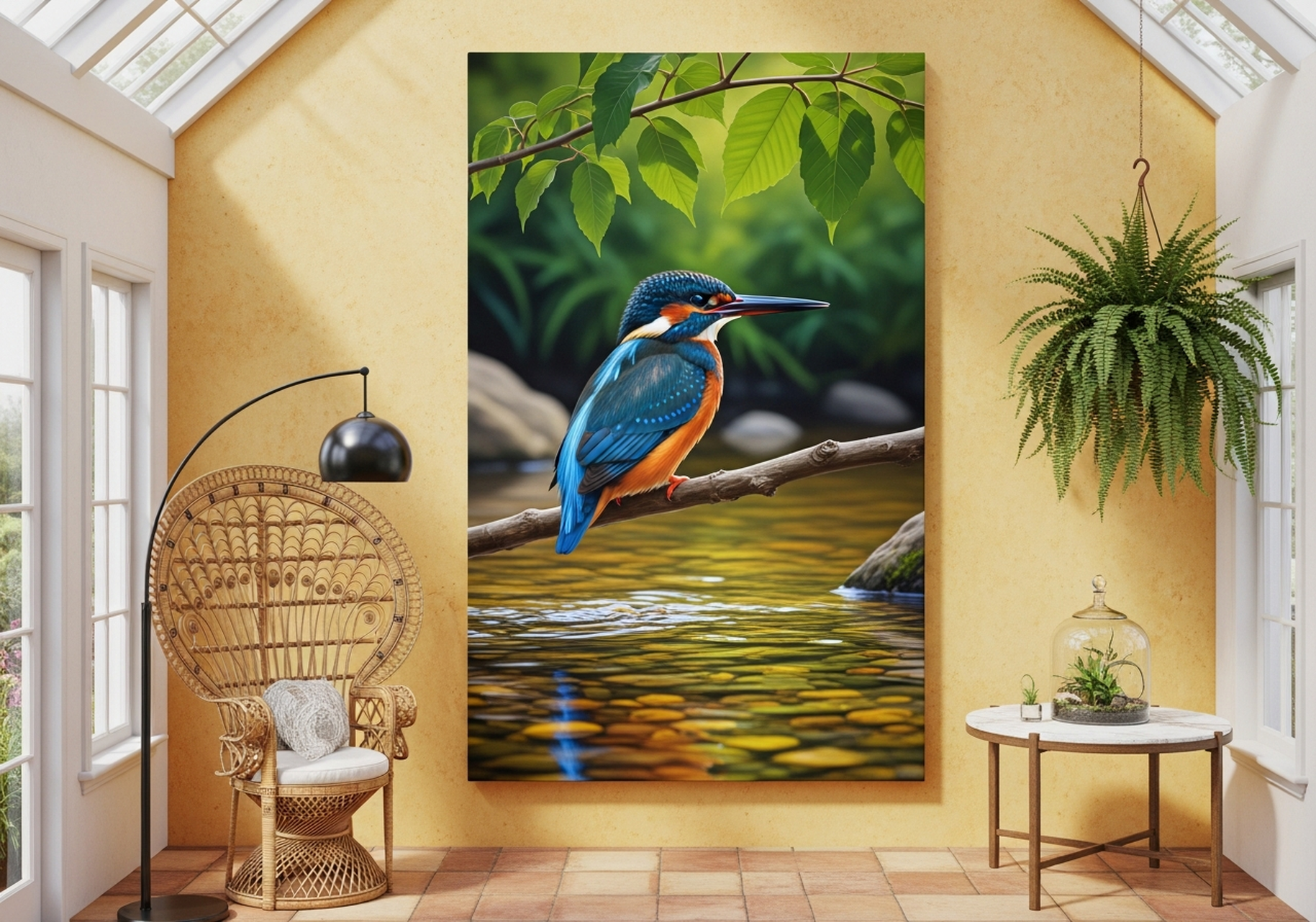
Nature-themed art brings the outdoors into rooms that may lack large windows or green views. This kingfisher canvas captures the bird perched above water with rich teal, orange, and green tones against a soft, diffused background. The blurred background creates depth of field, the same technique photographers use to make subjects pop while the surroundings recede. Hung in a small bathroom, laundry room, or hallway, it transforms a purely functional space into one that feels connected to nature. The teal tones pair beautifully with white tile and natural wood accents commonly found in small bathrooms.
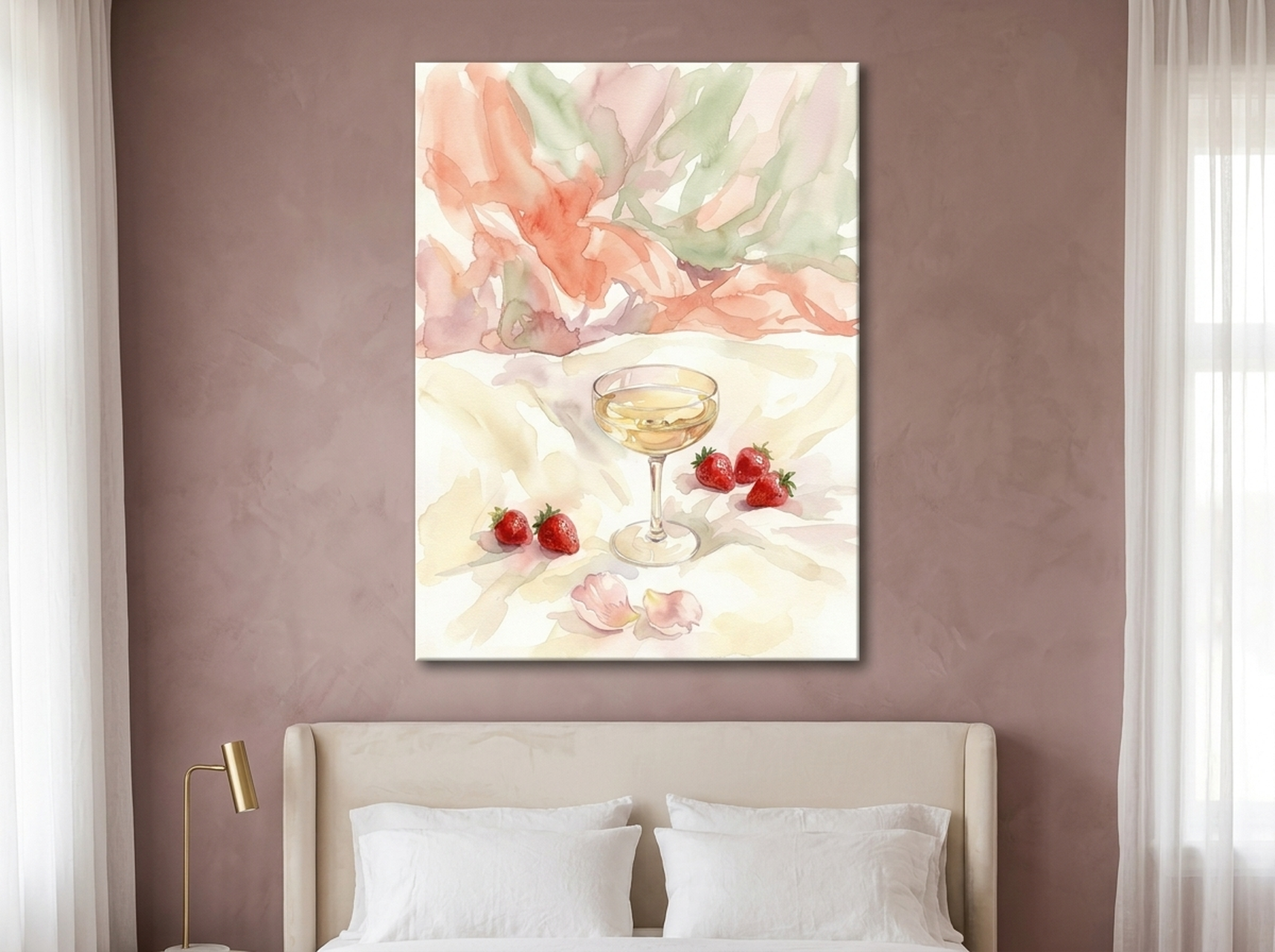
6. Champagne and Strawberry Watercolor Canvas
Blush pink and champagne gold are among the lightest warm tones available, making this watercolour canvas a natural fit for small bedrooms and dressing rooms. The soft, translucent washes of colour let the white canvas ground show through, maintaining maximum lightness on the wall. The subject is playful and intimate, a champagne glass with strawberries rendered in loose, effortless brushwork that feels spontaneous rather than heavy. In a small bedroom with white or blush bedding, this piece ties the room together without adding any visual weight. It also works beautifully in a compact powder room or vanity area.
View the Champagne and Strawberry Canvas
Small-Space Sizing Guide
Getting the size right is the single biggest factor in making art work in a small room. Too large and the canvas overwhelms the wall, making the space feel cramped. Too small and the art looks lost, drawing attention to how little wall space there actually is. Here are the rules that professional designers follow:
- Above a sofa or bed: The canvas should span 50 to 75 percent of the furniture width. For a small two-seater sofa measuring 140 cm (55 inches) wide, that means art between 70 and 105 cm (28 to 41 inches) wide.
- On an empty wall: The art should cover roughly 60 to 75 percent of the available wall width. For a 120 cm (47 inch) wall section, choose art between 72 and 90 cm (28 to 35 inches) wide.
- Above a console table or shelf: Match the art width to the furniture width or go slightly narrower. A 60 cm (24 inch) console gets a 45 to 60 cm (18 to 24 inch) piece.
- In a hallway: Narrow vertical pieces work best. A 30 by 45 cm (12 by 18 inch) or 40 by 60 cm (16 by 24 inch) portrait-orientation canvas keeps the walls from closing in.
- Hanging height: Centre the canvas at 145 cm (57 inches) from the floor, which is average eye level. In a room where you are mostly seated (bedroom, reading nook), drop the centre to 130 cm (51 inches).
When in doubt, cut a piece of kraft paper or newspaper to the size you are considering and tape it to the wall. Live with it for a day before committing. This 30-second test prevents the two most common small-space art mistakes: going too big and going too small.
5 Common Mistakes When Choosing Art for Small Rooms
Mistake 1: Choosing Art That Is Too Small
A tiny 20 by 25 cm (8 by 10 inch) print on a blank wall does not save space. It creates a visual void that makes the wall look larger and emptier than it is, which paradoxically makes the room feel smaller. The eye has nowhere to land, so it notices the bare wall surrounding the print. Instead, choose one well-proportioned piece that fills the wall with purpose. A single 60 by 90 cm (24 by 36 inch) canvas is almost always better than a cluster of tiny frames in a small room.
Mistake 2: Hanging Too Many Pieces
Gallery walls are beautiful in large living rooms and wide hallways, but in a small room they can create visual chaos. Every frame, every gap, every different colour and style adds visual information that the brain has to process. In a tight space, that processing load translates to a feeling of clutter and confinement. Stick to one piece per wall in rooms under 10 square metres (108 square feet). Two pieces maximum in rooms up to 15 square metres (161 square feet).
Mistake 3: Using Dark, Heavy Frames
An ornate black or dark walnut frame adds 5 to 10 cm (2 to 4 inches) of visual weight around the entire canvas. In a small room, that border becomes a thick, dark line that draws attention to the edge of the art rather than the open composition inside it. Switch to a slim frame in white, natural wood, or thin gold. The frame should be nearly invisible so the art's light colours and airy composition can do their space-expanding work uninterrupted.
Mistake 4: Ignoring the Colour Relationship Between Art and Walls
Hanging a piece with colours that clash with the wall paint creates a visual jarring effect that makes the art feel like it is sitting on top of the wall rather than integrated into it. In a small room, you want the art to feel like a natural extension of the wall surface. Choose art with at least one dominant tone that appears in the wall colour, trim, or adjacent textiles. A cream wall pairs naturally with art featuring cream, gold, or soft warm tones. A pale grey wall pairs with art in cool blues, silvers, and whites.
Mistake 5: Cluttering the Wall Below the Art
Placing a bookshelf, a cluster of photos, candles, and a plant directly below a canvas creates a visual stack that makes the wall feel heavy and the ceiling feel low. Leave 20 to 30 cm (8 to 12 inches) of clear wall space between the bottom edge of the canvas and whatever sits below it. This gap lets the art breathe and maintains the upward pull that makes the room feel taller.
Frequently Asked Questions
What is the best wall art size for a small bedroom?
For a small bedroom, a single canvas measuring 60 by 90 cm (24 by 36 inches) hung above the headboard is the sweet spot. It fills the wall without overwhelming the space. If your bed is narrower than 140 cm (55 inches), scale down to a 50 by 70 cm (20 by 28 inch) piece. The canvas should span roughly two-thirds the width of the headboard or bed frame.
Do light-coloured prints really make a room look bigger?
Yes. Light tones reflect ambient light, making walls appear to recede. A canvas dominated by white, cream, blush, or pastel tones maintains the open feeling of a light-painted room, while dark or heavily saturated art absorbs light and visually pulls the wall closer. This does not mean avoiding colour entirely, but the dominant tone of the piece should be light.
Should I use vertical or horizontal art in a small room?
It depends on which dimension feels tight. Vertical (portrait) art draws the eye upward and makes ceilings feel higher, ideal for rooms with standard or low ceilings. Horizontal (landscape) art draws the eye side to side and makes narrow rooms feel wider. Diagnose your room's weakest dimension and choose the orientation that stretches it.
Is a gallery wall a good idea for a small room?
In most cases, no. Gallery walls add multiple frames, colours, and styles that create visual clutter in tight quarters. A single, well-proportioned canvas delivers more impact with less visual noise. If you love the gallery wall look, limit it to three pieces maximum, use matching frames, and keep the colour palette consistent across all pieces.
Do your canvas prints come framed and ready to hang?
Yes. Every canvas print ships in a sturdy frame with pre-installed hanging hardware. Choose from four frame colours: black, white, espresso, or natural wood. For small rooms, we recommend the white or natural wood frame option to keep the visual weight light. The canvas is printed on premium matte material and arrives ready to hang.
How high should I hang wall art in a small room?
Hang the centre of the canvas at 145 cm (57 inches) from the floor in rooms where you spend most time standing. In seated rooms like bedrooms and reading nooks, lower the centre to 130 cm (51 inches). Hanging too high is a common mistake that disconnects the art from the furniture below and leaves an awkward gap.
Quick Reference Table
| Product | Best For | Dominant Colours | Link |
|---|---|---|---|
| Lotus Flower Gold Leaf | Small bedroom, meditation nook | Black, gold, white | View |
| Hummingbird Watercolor | Sunroom, hallway, breakfast nook | Green, red, white | View |
| Allium Floral Impasto | Compact bedroom, reading corner | Lavender, green, cream | View |
| Yin Yang Cranes | Home office, entryway, guest room | Black, white, red | View |
| Kingfisher River Bird | Small bathroom, hallway, laundry | Teal, orange, green | View |
| Champagne and Strawberry | Dressing room, powder room, bedroom | Blush pink, gold, white | View |
Transform Your Small Space Today
Small rooms are not a limitation. They are an invitation to be intentional with every design choice, and wall art is the highest-impact, lowest-effort change you can make. A single well-chosen canvas in the right size, colour, and orientation can make a compact room feel open, bright, and deeply personal. Start with one piece that speaks to you, hang it at the right height, and watch the room breathe.
Browse Our Small-Space Friendly Collection